Search

Invitrogen™
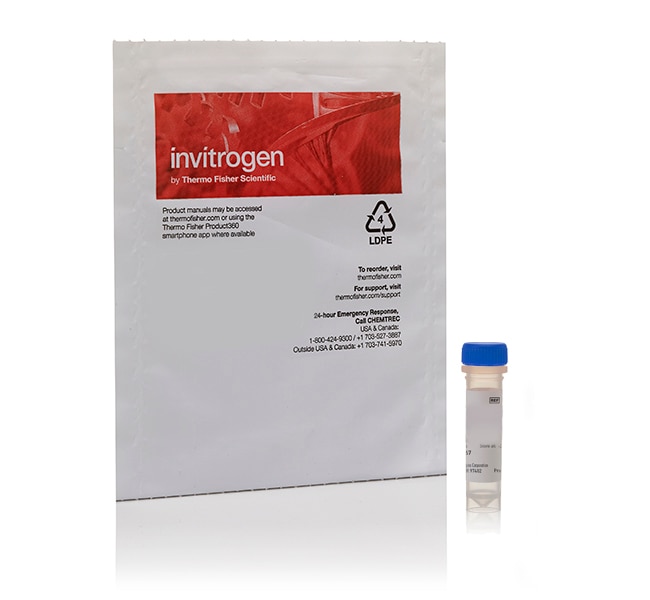
Staphylococcus aureus (Wood strain without protein A) BioParticles™, Alexa Fluor™ 594 conjugate
The Molecular Probes™ BioParticles™ product line consists of a series of fluorescently labeled, heat- or chemically killed bacteria and yeast자세히 알아보기
| 카탈로그 번호 | 수량 |
|---|---|
| S23372 | 2 mg |
카탈로그 번호 S23372
제품 가격(KRW)
381,000
온라인 행사
Ends: 30-Sep-2026
448,000할인액 67,000 (15%)
Each
수량:
2 mg
제품 가격(KRW)
381,000
온라인 행사
Ends: 30-Sep-2026
448,000할인액 67,000 (15%)
Each
The Molecular Probes™ BioParticles™ product line consists of a series of fluorescently labeled, heat- or chemically killed bacteria and yeast in a variety of sizes, shapes, and natural antigenicities. These fluorescent BioParticles™ products have been employed to study phagocytosis by fluorescence microscopy, quantitative spectrofluorometry, and flow cytometry.
We offer E. coli (K-12 strain), S. aureus (Wood strain, without protein A) and zymosan (S. cerevisiae) BioParticles™ conjugates covalently labeled with a variety of different fluorophores (special care has been taken to remove free dye after conjugation). Unlike the fluorescence of fluorescein-labeled BioParticles™ conjugates, which is partially quenched in acidic environments, the fluorescence of the Alexa Fluor™, BODIPY™ FL, tetramethylrhodamine and Texas Red™ dye conjugates is uniformly intense over the pH range from 3 to 10.
BioParticles Specifications:
• Label (Ex/Em): Alexa Fluor™ 594 (∼590/617 nm)
• Particle: S. aureus (Wood strain, without protein A)
• Opsonizing reagent available
Using BioParticles Products
BioParticles™ conjugates are provided as lyophilized powders. There are approximately 3 x 10⁸ E. coli or S. aureus particles per mg solid and approximately 2 x 10⁷ zymosan particles per mg solid. BioParticles™ conjugates can be reconstituted in the buffer of your choice for use in phagocytosis assays. The fluorescence of BioParticles™ conjugates that are bound to the surface of the cell (but not internalized) can be quenched by ethidium bromide, trypan blue, or other quenchers. In addition to cellular applications, fluorescent BioParticles™ conjugates may be effective as flow cytometry calibration references when sorting bacteria and yeast mutants. These small particles may also be useful references for light scattering studies because their sizes and shapes differ in characteristic ways.
Find More BioParticles™ Products
We offer a large range of dye-labeled and unlabeled E. coli (K-12 strain), S. aureus (Wood strain, without protein A), and zymosan (S. cerevisiae) BioParticles™ products. Find out about these products and their applications by reviewing Probes for Following Receptor Binding and Phagocytosis—Section 16.1 in the Molecular Probes™ Handbook.
For pH-sensitive endocytosis assays, see our pHrodo™ BioParticles™ conjugates.
For Research Use Only. Not for human or animal therapeutic or diagnostic use.
We offer E. coli (K-12 strain), S. aureus (Wood strain, without protein A) and zymosan (S. cerevisiae) BioParticles™ conjugates covalently labeled with a variety of different fluorophores (special care has been taken to remove free dye after conjugation). Unlike the fluorescence of fluorescein-labeled BioParticles™ conjugates, which is partially quenched in acidic environments, the fluorescence of the Alexa Fluor™, BODIPY™ FL, tetramethylrhodamine and Texas Red™ dye conjugates is uniformly intense over the pH range from 3 to 10.
BioParticles Specifications:
• Label (Ex/Em): Alexa Fluor™ 594 (∼590/617 nm)
• Particle: S. aureus (Wood strain, without protein A)
• Opsonizing reagent available
Using BioParticles Products
BioParticles™ conjugates are provided as lyophilized powders. There are approximately 3 x 10⁸ E. coli or S. aureus particles per mg solid and approximately 2 x 10⁷ zymosan particles per mg solid. BioParticles™ conjugates can be reconstituted in the buffer of your choice for use in phagocytosis assays. The fluorescence of BioParticles™ conjugates that are bound to the surface of the cell (but not internalized) can be quenched by ethidium bromide, trypan blue, or other quenchers. In addition to cellular applications, fluorescent BioParticles™ conjugates may be effective as flow cytometry calibration references when sorting bacteria and yeast mutants. These small particles may also be useful references for light scattering studies because their sizes and shapes differ in characteristic ways.
Find More BioParticles™ Products
We offer a large range of dye-labeled and unlabeled E. coli (K-12 strain), S. aureus (Wood strain, without protein A), and zymosan (S. cerevisiae) BioParticles™ products. Find out about these products and their applications by reviewing Probes for Following Receptor Binding and Phagocytosis—Section 16.1 in the Molecular Probes™ Handbook.
For pH-sensitive endocytosis assays, see our pHrodo™ BioParticles™ conjugates.
For Research Use Only. Not for human or animal therapeutic or diagnostic use.
For Research Use Only. Not for use in diagnostic procedures.
사양
검출 방법Fluorescence
염료 유형Alexa Fluor™ 594
형태Lyophilized Powder
수량2 mg
배송 조건Room Temperature
종S. aureus
용도 (장비)Fluorescence Microscope
제품라인Alexa Fluor, BioParticles
제품 유형Bioparticle Conjugate
pH3 to 10
Unit SizeEach
구성 및 보관
Store in freezer (-5 to -30°C) and protect from light.