Search


인용 및 참조 문헌 (2)
Invitrogen™
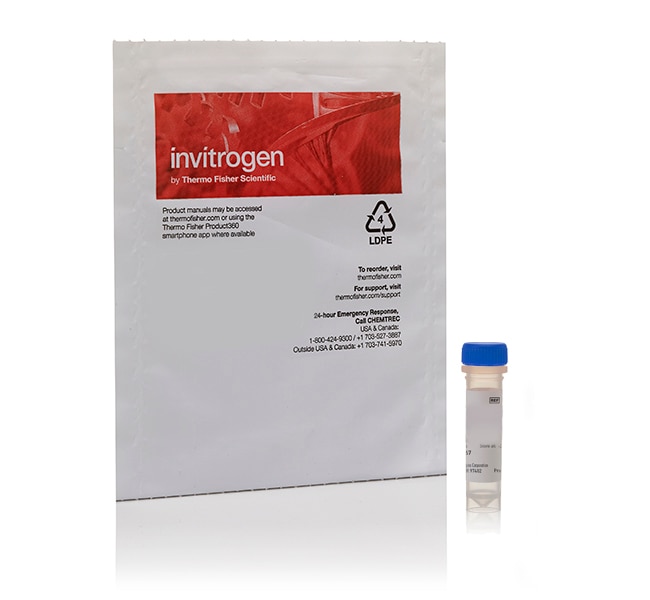
ThiolTracker™ Violet (glutathione detection reagent)
ThiolTracker™ Violet is a brighter and more robust intracellular thiol probe for reproducible GSH detection. Since reduced glutathione represents the자세히 알아보기
| 카탈로그 번호 | 수량 |
|---|---|
| T10096 | 5 Microplate(s) |
카탈로그 번호 T10096
제품 가격(KRW)
446,000
온라인 행사
Ends: 30-Sep-2026
524,000할인액 78,000 (15%)
5 microplates
수량:
5 Microplate(s)
제품 가격(KRW)
446,000
온라인 행사
Ends: 30-Sep-2026
524,000할인액 78,000 (15%)
5 microplates
ThiolTracker™ Violet is a brighter and more robust intracellular thiol probe for reproducible GSH detection. Since reduced glutathione represents the majority of intracellular free thiols in the cell, ThiolTracker™ Violet can be used in estimating the cellular level of reduced glutathione.
ThiolTracker™ Violet offers the following;
• 10X brighter than mBCL
• UV or 405 nm excitation, 525 nm emission
• Easy to use
• Reproducible results
• Can be fixed with aldehydes and permeabilized by Triton® X-100 (0.5%)
• Formaldehyde fixable and suvives detergent extraction
• Can be used in multiplex assays including cytotoxicity studies
Subcellular detection and localization of GSH is important in understanding the modulation of redox status, the effect of drugs, and the mechanisms of detoxification. Furthermore, differences in GSH levels in response to oxidative stress in subpopulations of cells have been reported, underscoring the importance of detection methods amenable to flow cytometry and automated fluorescence detection. ThiolTracker™ Violet can be used for Flow Cytometry, HCS imaging, and epifluorescent microscopy.
ThiolTracker™ Violet offers the following;
• 10X brighter than mBCL
• UV or 405 nm excitation, 525 nm emission
• Easy to use
• Reproducible results
• Can be fixed with aldehydes and permeabilized by Triton® X-100 (0.5%)
• Formaldehyde fixable and suvives detergent extraction
• Can be used in multiplex assays including cytotoxicity studies
Subcellular detection and localization of GSH is important in understanding the modulation of redox status, the effect of drugs, and the mechanisms of detoxification. Furthermore, differences in GSH levels in response to oxidative stress in subpopulations of cells have been reported, underscoring the importance of detection methods amenable to flow cytometry and automated fluorescence detection. ThiolTracker™ Violet can be used for Flow Cytometry, HCS imaging, and epifluorescent microscopy.
For Research Use Only. Not for use in diagnostic procedures.
사양
색상Violet
검출 방법Fluorescence
염료 유형ThiolTracker™ Violet
방출Visible
여기 파장 범위405⁄526
용도(장비)Fluorescence Microscope, Flow Cytometer
형태Lyophilized
형식Tube(s), 96-well plate, Slide(s)
제품라인Molecular Probes, ThiolTracker
수량5 Microplate(s)
배송 조건Room Temperature
라벨 유형Other Labels or Dyes
제품 유형Glutathione Detection Reagent
Unit Size5 microplates
구성 및 보관
Store at ≤–20°C, L protect material from long-term exposure to light; may be exposed to light for short periods of time, requires DMSO
자주 묻는 질문(FAQ)
Is ThiolTracker Violet a fluorogenic reagent?
Will ThiolTracker Violet bind to proteins as well as glutathione?
인용 및 참조 문헌 (2)
인용 및 참조 문헌
Abstract
Detection of intracellular glutathione using ThiolTracker violet stain and fluorescence microscopy.
Journal:Curr Protoc Cytom
PubMed ID:20578109
Glutathione plays an important role in protecting mammalian cells from oxidative stress and cell death. Because reduced glutathione (GSH) represents the large majority of intracellular free thiols, cell-permeant, thiol-reactive fluorescent probes represent potentially useful indicators of intracellular GSH. The ThiolTracker Violet stain (a registered trademark of Invitrogen) is a bright
Using acetaminophen's toxicity mechanism to enhance cisplatin efficacy in hepatocarcinoma and hepatoblastoma cell lines.
Journal:Neoplasia
PubMed ID:19794959
BACKGROUND/AIMS: Acetaminophen overdose causes hepatotoxicity mediated by toxic metabolites generated through the cytochrome P450 enzyme. The objective of this study was to investigate whether acetaminophen (AAP) can enhance cisplatin (CDDP) cytotoxicity against human hepatocarcinoma and hepatoblastoma cells in vitro and whether this effect can be prevented by N-acetylcysteine (NAC). METHODS: