Search


Citations & References (4)
Invitrogen™
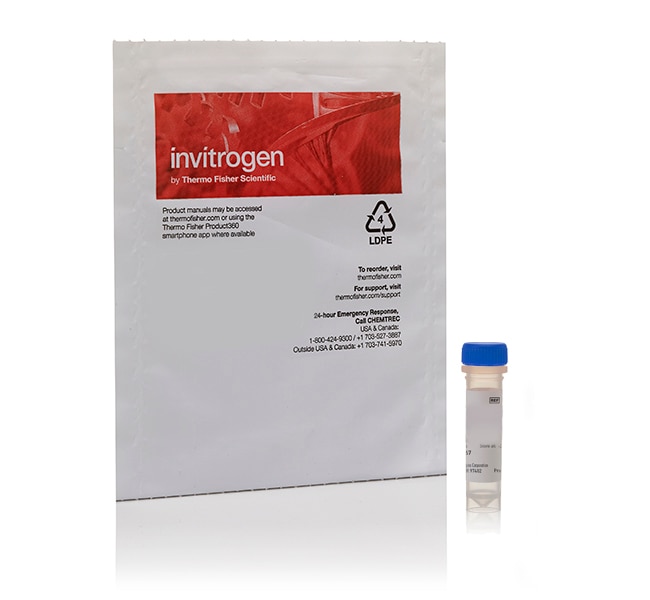
Click-IT™ GlcNAz Metabolic Glycoprotein Labeling Reagent (tetraacetylated N-Azidoacetylglucosamine)
The Click-iT™ GlcNAz metabolic glycoprotein labeling reagent provides the first part of a simple and robust two-step technique to identifyRead more
| Catalog Number | Quantity |
|---|---|
| C33367 | 5.2 mg |
Catalog number C33367
Price (MXN)
-
Quantity:
5.2 mg
The Click-iT™ GlcNAz metabolic glycoprotein labeling reagent provides the first part of a simple and robust two-step technique to identify and characterize intracellular O-GlcNAc glycoproteins. In step one, cultured cells are incubated with the azide-modified glucosamine (GlcNAc). The azido-sugar is incorporated into intracellular O-GlcNAc-containing glycoproteins through the permissive nature of the oligosaccharide biosynthesis pathway. In step two, via the chemoselective ligation or click reaction between an azide and an alkyne, the azido-labeled glycoproteins can then detected with a Click-iT™ Glycoprotein Detection kit for gels (TAMRA or Dapoxyl™ alkyne) or Western blots (biotin alkyne). The Click-iT™ glycoprotein products are compatible with LC-MS⁄MS and Multiplexed Proteomics™ technologies for in-depth analyses of the glycoproteome.
For Research Use Only. Not for use in diagnostic procedures.
Specifications
Detection MethodBiotin-based, Fluorescence
Product LineClick-iT
Product TypeLabeling Reagent
Quantity5.2 mg
Shipping ConditionRoom Temperature
Labeling TargetProteins
Label or DyeAlexa Fluor 488, Alexa Fluor 555, Alexa Fluor 594, Alexa Fluor 647, Biotin, Oregon Green 488, TMR (Tetramethylrhodamine)
Unit SizeEach
Contents & Storage
Store in freezer -5°C to -30°C.
Citations & References (4)
Citations & References
Abstract
Metabolic labeling of glycans with azido sugars for visualization and glycoproteomics.
Journal:Methods Enzymol
PubMed ID:17116478
'The staggering complexity of glycans renders their analysis extraordinarily difficult, particularly in living systems. A recently developed technology, termed metabolic oligosaccharide engineering, enables glycan labeling with probes for visualization in cells and living animals, and enrichment of specific glycoconjugate types for proteomic analysis. This technology involves metabolic labeling of glycans
Dynamic monitoring of newly synthesized proteomes: up-regulation of myristoylated protein kinase A during butyric acid induced apoptosis.
Journal:Angew Chem Int Ed Engl
PubMed ID:21678537
Doubly charged: A double metabolic incorporation approach capable of proteome-wide profiling of post-translational modification dynamics on newly synthesized proteins has been developed (see scheme; blue box: methionine surrogate, orange diamond: PTM probe). This strategy reveals for the first time that up-regulation of myristoylated PKA protein is necessary for the occurrence
The chemical neurobiology of carbohydrates.
Journal:Chem Rev
PubMed ID:18452339
The problems associated with oligosaccharide analysis have hindered efforts to understand the biology of oligosaccharides yet have given chemists a unique opportunity to develop new methods to overcome these challenges. The development of chemical tools for the analysis of glycan structure and function is essential to advance our understanding of
A functional RNAi screen links O-GlcNAc modification of ribosomal proteins to stress granule and processing body assembly.
Journal:Nat Cell Biol
PubMed ID:18794846
Stress granules (SGs) and processing bodies (PBs) are microscopically visible ribonucleoprotein granules that cooperatively regulate the translation and decay of messenger RNA. Using an RNA-mediated interference-based screen, we identify 101 human genes required for SG assembly, 39 genes required for PB assembly, and 31 genes required for coordinate SG and