Search


Citations & References (39)
Invitrogen™
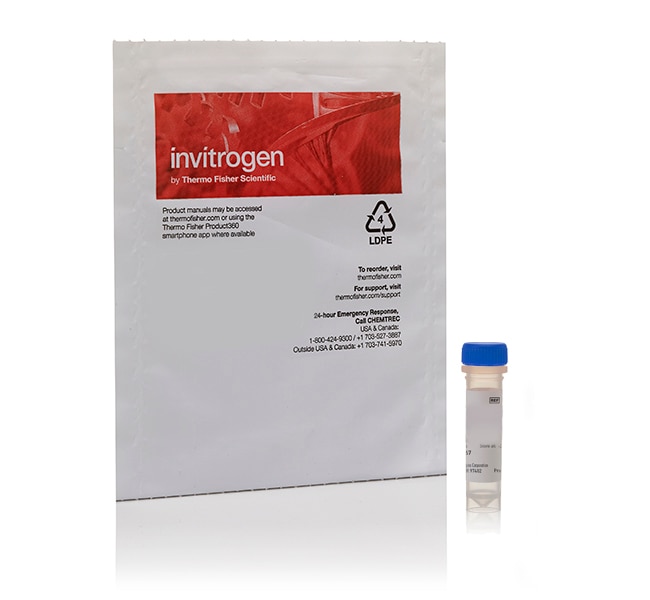
2-NBDG (2-(N-(7-Nitrobenz-2-oxa-1,3-diazol-4-yl)Amino)-2-Deoxyglucose)
2-NBDG is a fluorescent glucose analog that has been used to monitor glucose uptake in live cells, as an indicator of cell viability.
| Catalog Number | Quantity |
|---|---|
| N13195 | 5 mg |
Catalog number N13195
Price (MXN)
-
Quantity:
5 mg
2-NBDG is a fluorescent glucose analog that has been used to monitor glucose uptake in live cells, as an indicator of cell viability. Although sensitive to its environment NBD fluorescence typically displays excitation/emission maxima of ∼465/540 nm and can be visualized using optical filters designed for fluorescein.
Dissolve the dye in water or 1X PBS (pH 7.2) to prepare a stock solution up to 10 mg/mL. Stock solutions should be prepared fresh and used on same day.
For Research Use Only. Not for use in diagnostic procedures.
Specifications
Detection MethodFluorescence
Dye TypeOther Label(s) or Dye(s)
FormatTube(s), Slide(s)
Quantity5 mg
Shipping ConditionRoom Temperature
For Use With (Equipment)Fluorescence Microscope, Flow Cytometer
Product Type2-NBDG
Unit SizeEach
Contents & Storage
Store in freezer (-5°C to -30°C) and protect from light.
Frequently asked questions (FAQs)
What are the final concentrations of 2-NBDG and 6-NBDG, and incubation times that may be used?
What solvents can be used to resolubilize either 2-NBDG or 6-NBDG to make a stock solution, and how should this stock solution be stored?
Citations & References (39)
Citations & References
Abstract
Measurement of glucose uptake and intracellular calcium concentration in single, living pancreatic beta-cells.
Journal:J Biol Chem
PubMed ID:10748091
'There has been no method previously to measure both glucose transport and its effect on the various intracellular functions in single, living mammalian cells. A fluorescent derivative of d-glucose, 2-[N-(7-nitrobenz-2-oxa-1, 3-diazol-4-yl)amino]-2-deoxy-d-glucose (2-NBDG), that we have developed has made such measurements possible. COS-1 cells that overexpress the human glucose transporter GLUT2
Glutamate triggers rapid glucose transport stimulation in astrocytes as evidenced by real-time confocal microscopy.
Journal:J Neurosci
PubMed ID:12917367
'Glutamate stimulates glycolysis in astrocytes, a phenomenon that couples astrocytic metabolism with neuronal activity. However, it is not known whether glutamate also affects glucose transporter-1 (GLUT1), the transporter responsible for glucose entry into astrocytes. To address this question, two different real-time single-cell hexose uptake assays were applied to cultured hippocampal
Fluorescent microplate cell assay to measure uptake and metabolism of glucose in normal human lung fibroblasts.
Journal:Toxicol In Vitro
PubMed ID:12020600
'This is the first report of a fluorimetric microplate assay to assess glucose uptake and metabolism in eukaryotic cells. The assay was carried out incubating normal human lung fibroblasts in the wells of microtiter trays with a fluorescent D-glucose derivative, 2-N-7-(nitrobenz-2-oxa-1,3-diazol-4-yl)amino-2-deoxy-D-glucose (2-NBDG). This dye could be incorporated by glucose transporting
Rapid viability assessment of yeast cells using vital staining with 2-NBDG, a fluorescent derivative of glucose.
Journal:Int J Food Microbiol
PubMed ID:12038577
'A fluorescent glucose analogue, 2-[N-(7-nitrobenz-2-oxa-1,3-diazol-4-yl) amino]-2-deoxy-D-glucose (2-NBDG), which had been developed previously for the analysis of glucose uptake activity by living cells, was investigated to evaluate its applicability for assaying the viability of yeasts. Fluorescence intensities of the yeast population were measured by fluorescence spectrophotometry upon exposure to antifungal agents
Intracellular fate of 2-NBDG, a fluorescent probe for glucose uptake activity, in Escherichia coli cells.
Journal:Biosci Biotechnol Biochem
PubMed ID:8987871
'A fluorescent derivative of D-glucose, 2-NBDG, which was previously developed for the evaluation of glucose uptake activity by living cells, was used on Escherichia coli cells and its fate after incorporation in the cells was investigated. 2-NBDG was converted to another fluorescent derivative (2-NBDG metabolite) immediately after it was taken