Search


Citations & References (145)
Invitrogen™
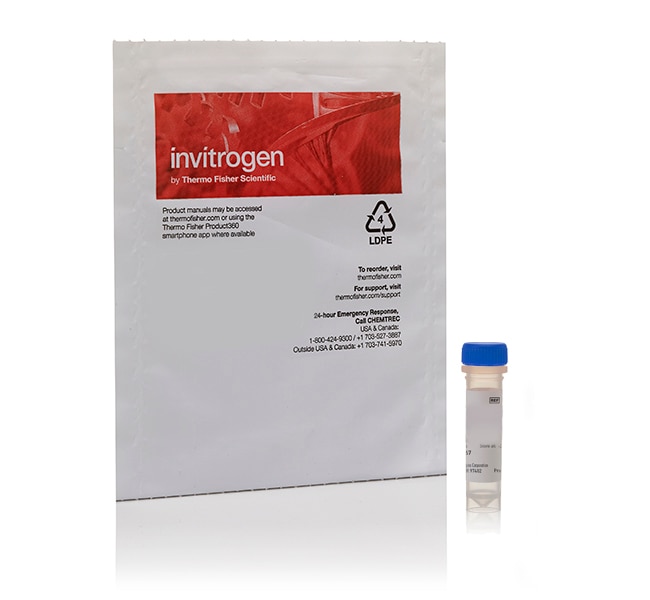
Pluronic™ F-127 (20% Solution in DMSO)
Pluronic F-127 *20% solution in DMSO* is a nonionic, surfactant polyol (molecular weight approximately 12,500 daltons) that has been foundRead more
| Catalog Number | Quantity |
|---|---|
| P3000MP | 1 mL |
Catalog number P3000MP
Price (MXN)
-
Quantity:
1 mL
Pluronic F-127 *20% solution in DMSO* is a nonionic, surfactant polyol (molecular weight approximately 12,500 daltons) that has been found to facilitate the solubilization of water-insoluble dyes and other materials in physiological media. Pluronic F-127 is commonly used to help disperse the acetoxymethyl (AM) esters of our ion indicators as well as our cell tracer dyes such as CFDA-SE.
Learn more about ion indicators including calcium, potassium, pH, and membrane potential indicators ›
Learn more about ion indicators including calcium, potassium, pH, and membrane potential indicators ›
For Research Use Only. Not for use in diagnostic procedures.
Specifications
Physical FormLiquid
Recommended StorageStore at room temperature.
Quantity1 mL
Unit SizeEach
Frequently asked questions (FAQs)
I am using your FreeStyle Max 293 Expression System and my cell viability is at most 87-90%. Is this normal? Do you have any tips to increase the cell viability? I am using 125 mL and 250 mL non-baffled, polycarbonate shaker flasks with vented caps. Will using baffled flasks help? Should I add Pluronic reagent to the medium?
Citations & References (145)
Citations & References
Abstract
Rescue of vasopressin V2 receptor mutants by chemical chaperones: specificity and mechanism.
Journal:Molecular biology of the cell
PubMed ID:16267275
Because missense mutations in genetic diseases of membrane proteins often result in endoplasmic reticulum (ER) retention of functional proteins, drug-induced rescue of their cell surface expression and understanding the underlying mechanism are of clinical value. To study this, we tested chemical chaperones and sarco(endo)plasmic reticulum Ca(2+) ATPase pump inhibitors on
Indo-1 binding to protein in permeabilized ventricular myocytes alters its spectral and Ca binding properties.
Journal:Biophys J
PubMed ID:1420876
We have examined the binding of the fluorescent Ca indicator indo-1 to cellular protein in permeabilized ventricular myocytes and also to soluble and particulate myocyte protein. Using either a filtration technique or equilibrium dialysis, and conditions similar to those in a cardiac myocyte patch clamped with 100 microM indo-1 in
Long-term regulation of neuronal calcium currents by prolonged changes of membrane potential.
Journal:J Neurosci
PubMed ID:1315850
'Although rapid-onset, short-term regulation of neuronal Ca currents by neurotransmitters and second messengers is well documented, little is known about conditions that can cause longer-lasting changes in Ca channel function. We report here that persistent depolarization is accompanied by slowly developing long-term reduction of neuronal Ca currents. Rat myenteric neurons
Regulation of cytosolic free calcium concentration by intrasynaptic mitochondria.
Journal:Mol Biol Cell
PubMed ID:1550964
'By the use of digitonin permeabilized presynaptic nerve terminals (synaptosomes), we have found that intrasynaptic mitochondria, when studied "in situ," i.e., surrounded by their cytosolic environment, are able to buffer calcium in a range of calcium concentrations close to those usually present in the cytosol of resting synaptosomes. Adenine nucleotides
Intracellular astrocyte calcium waves in situ increase the frequency of spontaneous AMPA receptor currents in CA1 pyramidal neurons.
Journal:J Neurosci
PubMed ID:14736858
'Spontaneous neurotransmitter release and activation of group I metabotropic glutamate receptors (mGluRs) each play a role in the plasticity of neuronal synapses. Astrocytes may contribute to short- and long-term synaptic changes by signaling to neurons via these processes. Spontaneous whole-cell AMPA receptor (AMPAR) currents were recorded in CA1 pyramidal cells