Search


Citations & References (109)
Invitrogen™
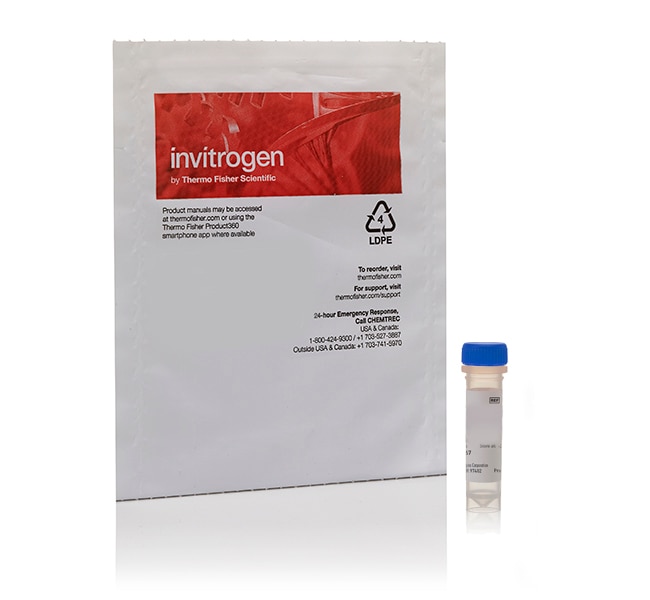
SYTO™ Green Fluorescent Nucleic Acid Stains
SYTO Green Fluorescent Nucleic Acid Stains exhibit bright, green fluorescence upon binding to nucleic acids. These dyes are cell-permeant and can be used to stain RNA and DNA in live cells, dead cells, and bacteria.
Have Questions?
Change view

| Catalog Number | Dye Type | Quantity |
|---|---|---|
| S7572 | SYTO Green Dyes 11-14, 16, 21, 24, and 25 | 1 Kit (50 μL each) |
| S34854 | SYTO 9 Green | 100 μL |
| S7573 | SYTO 11 Green | 250 μL |
| S7574 | SYTO 12 Green | 315 μL |
| S7575 | SYTO 13 Green | 250 μL |
| S7576 | SYTO 14 Green | 250 μL |
| S7578 | SYTO 16 Green | 250 μL |
| S7556 | SYTO 21 Green | 250 μL |
| S7559 | SYTO 24 Green | 250 μL |
| S34855 | SYTO BC Green | 100 μL |
| S32703 | SYTO RNASelect Green | 100 μL |
Catalog number S7572
Price (MXN)
-
Dye Type:
SYTO Green Dyes 11-14, 16, 21, 24, and 25
Quantity:
1 Kit (50 μL each)
The SYTO Green Fluorescent Nucleic Acid Stains exhibit bright, green fluorescence upon binding to nucleic acids. These dyes are cell-permeant and can be used to stain RNA and DNA in live cells, dead cells, and bacteria. Because the dye characteristics and staining pattern of the SYTO dyes may vary, we offer 10 different SYTO Green Fluorescent Nucleic Acid Stains available individually along with the SYTO Green Fluorescent Nucleic Acid Stain Sampler Kit #1 (containing SYTO 11–14, 16, 21, 24, and 25) to enable researchers to find the most appropriate green-fluorescent SYTO stain for their system . We also provide the SYTOX Green Nucleic Acid Stain (Cat. No. S7020 and R37109), which is a cell-impermeant green-fluorescent stain used for staining dead cells or performing nuclear counterstaining in fixed cells.
SYTO Green Fluorescent Nucleic Acid Stains are cell-permeant nucleic acid stains that show a large fluorescence enhancement upon binding nucleic acids. The SYTO dyes can be used to stain RNA and DNA in both live and dead eukaryotic cells, as well as in Gram-positive and Gram-negative bacteria.
The SYTO stains share several important characteristics:
- Permeability to virtually all cell membranes, including mammalian cells and bacteria
- High molar absorptivity, with extinction coefficients >50,000 cm-1 M-1 at visible absorption maxima
- Extremely low intrinsic fluorescence, with quantum yields typically <0.01 when not bound to nucleic acids
- Quantum yields that are typically >0.4 when bound to nucleic acids.
SYTO Green-Fluorescent Nucleic Acid Stains excitation/emission wavelengths
- SYTO 9—RNA 486/501 nm; DNA 485/498 nm
- SYTO 11—RNA 510/530 nm; DNA 508/527 nm
- SYTO 12—RNA 500/519 nm; DNA 499/522 nm
- SYTO 13—RNA 491/514 nm; DNA 488/509 nm
- SYTO 14—RNA 521/547 nm; DNA 517/549 nm
- SYTO 16—RNA 494/525 nm; DNA 488/518 nm
- SYTO 21—DNA 494/517 nm
- SYTO 24—DNA 490/515 nm
- SYTO BC—RNA 487/504 nm; DNA 485/500 nm
- SYTO RNASelect—RNA 490/530 nm
SYTO dyes differ from each other in one or more characteristics, including cell permeability, fluorescence enhancement upon binding nucleic acids, excitation and emission spectra, DNA/RNA selectivity, and binding affinity. The SYTO dyes are compatible with a variety of fluorescence-based instruments that use laser excitation or a conventional broadband illumination source (e.g., mercury- and xenon-arc lamps). Filter sets that are suitable for imaging cells labeled with fluorescein (FITC), Alexa Fluor 488, or GFP will work well for imaging cells stained with SYTO Green Nucleic Acid Stains.
SYTO nucleic acid stains have been used in diverse applications from staining DNA spotted on microarrays to staining live and fixed cells. The SYTO dyes do not act exclusively as nuclear stains in live cells and should not be equated with DNA-selective compounds such as DAPI (Cat. Nos. D1306, D21490) or Hoechst 33342 (Cat. Nos. H1399, H3570), which stain nuclei in live animal cells. Eukaryotic cells incubated with SYTO dyes generally show cytoplasmic or mitochondrial staining, as well as nuclear staining. The SYTO Green Fluorescent Nucleic Acid Stains have proven valuable in a broad range of research applications as well as used in flow cytometry and fluorescence microscopy.
Specific staining applications for some of the SYTO Green Fluorescent Nucleic Acid Stains
The SYTO 9 stain has been shown to stain live and dead Gram-positive and Gram-negative bacteria. It is a component of the LIVE/DEAD BacLight Bacterial Viability Kits (Cat. Nos. L7007, L7012, L13152).
The SYTO 11 stain (Cat. No. S7573) has been used in conjunction with time-lapse microscopy to examine the cleavage orientation of dividing cells in the developing cerebral cortex.
The SYTO 13 stain (Cat. No. S7575) has been used in combination with propidium iodide (Cat. Nos. P1304, P3566) to monitor glutamate-induced necrosis in cerebellar granule cells.
The SYTO 14 stain (Cat. No. S7576) binds to cytoplasmic RNA, allowing its use in tracking RNA granule transport in living neurons.
Several reports describe the use of SYTO dyes for detecting apoptosis. A series of SYTO nucleic acid stains was screened for the ability to discriminate between apoptotic and non-apoptotic mouse thymocytes, and the SYTO 16 stain (Cat. no. S7578) was found to be optimal for this application. The SYTO 16 stain has also been used with propidium iodide to differentiate live and dead COS-7 cells with a laser-based scanning cytometer.
The SYTO BC Green Fluorescent Nucleic Acid Stain is a mixture of some of our best SYTO dyes for bacterial staining and is a component of the Bacteria Counting Kit (Cat. No. B7277) for bacterial counting in flow cytometry.
The SYTO RNASelect Green Fluorescent Cell Stain is a cell-permeant nucleic acid stain that selectively stains RNA. Although virtually nonfluorescent in the absence of nucleic acids, the SYTO RNASelect stain exhibits bright green fluorescence when bound to RNA (absorption/emission maxima ∼490/530 nm), but only a weak fluorescent signal when bound to DNA. It has been used for staining RNA cargo in exosomes in both live cell samples and isolated exosomes.
SYTO Green Fluorescent Nucleic Acid Stain Sampler Kit
The SYTO Green Fluorescent Nucleic Acid Stain Sampler Kit #1 contains our collection of cell-permeant, green-fluorescent SYTO nucleic acid stains. Because the dyes may demonstrate different staining behaviors with various tissues and cells, it may be necessary to test the dyes to find the optimal dye for a specific application. The kit contains 50 μL each of SYTO 11–14, 16, 21, 24, and 25 dyes.
Any physiological buffer between pH 7.0–8.0, including PBS, can be used to dilute the SYTO dyes for the staining solution.
For Research Use Only. Not for use in diagnostic procedures.
Specifications
ColorGreen
Detection MethodFluorescence
Dye TypeSYTO Green Dyes 11-14, 16, 21, 24, and 25
EmissionSYTO 11 DNA: 527 nm/RNA: 530 nm, SYTO 14 DNA: 549 nm/RNA: 547 nm, SYTO 16 DNA: 518 nm/RNA: 525 nm, SYTO 21 DNA 517 nm, SYTO 24 DNA: 515 nm
Excitation Wavelength RangeSYTO 11 DNA: 508 nm/RNA: 510 nm, SYTO 14 DNA: 517 nm/RNA: 521 nm, SYTO 16 DNA: 488 nm/RNA: 494 nm, SYTO 21 DNA: 494 nm, SYTO 24 DNA: 490 nm
For Use With (Application)Fluorescent Labeling, Live Cell Imaging, Microarray
For Use With (Equipment)Fluorescence Microscope, High Content Imager, Flow Cytometer
Product LineSYTO
Quantity1 Kit (50 μL each)
Shipping ConditionRoom Temperature
Volume (Metric)50 μL
Label TypeFluorescent Dye
Product TypeStains Dimer Sampler Kit
Sub Cellular LocalizationNucleic Acids
Unit SizeEach
Contents & Storage
The kit contains 50 μL each of SYTO 11-14, 16, 21, 24, and 25 dyes.
Store in freezer at -5°C to -30°C and protect from light.
Store in freezer at -5°C to -30°C and protect from light.
Frequently asked questions (FAQs)
How do SYTO dyes bind to DNA?
Does the SYTO Green Fluorescent Nucleic Acid Stain Sampler Kit #1 -SYTO dyes 11-16 - 50 µL each (Cat. No. S7572) bind to single-stranded or double-stranded DNA?
Citations & References (109)
Citations & References
Abstract
A cluster of noninvoluting endocytic cells at the margin of the zebrafish blastoderm marks the site of embryonic shield formation.
Journal:Developmental biology
PubMed ID:8948584
Abnormal regulation of retinoic acid receptor beta2 expression and compromised allograft rejection in transgenic mice expressing antisense sequences to retinoic acid receptor beta1 and beta3.
Journal:J Immunol
PubMed ID:9300677
Transgenic mice carrying antisense sequences common to the retinoic acid receptors (RAR) beta1 and beta3 were produced to examine roles of RARbeta1 and beta3 in the immune system. There were no significant changes of endogenous RARbeta1/beta3 expression at the mRNA level in T cells, B cells, and macrophages of the
Analysis of the distribution of MRI contrast agents in the livers of small animals by means of complementary microscopies.
Journal:Cytometry A
PubMed ID:12541284
BACKGROUND: Magnetic resonance imaging (MRI) contrast agents contain magnetic molecules such as iron (Fe) or gadolinium (Gd) that are injected in vivo into rats or mice to study their distribution inside the liver. Fluorescent europium (Eu) can be used as a model of Gd to obtain comparable information of this
Relationships among Bacterial Cell Size, Productivity, and Genetic Diversity in Aquatic Environments using Cell Sorting and Flow Cytometry.
Journal:Microb Ecol
PubMed ID:11029083
The study of relationships between cell size and productivity is of key importance in microbial ecology to understand which members of natural aquatic communities are responsible for the overall activity and/or productivity. Flow sorting of microorganisms from different environmental samples was used to analyze the activity of bacterial cells depending
Systematic characterization of nuclear proteome during apoptosis: a quantitative proteomic study by differential extraction and stable isotope labeling.
Journal:Mol Cell Proteomics
PubMed ID:16540461
'Identification and characterization of the nuclear proteome is important for detailed understanding of multiple signaling events in eukaryotic cells. Toward this goal, we extensively characterized the nuclear proteome of human T leukemia cells by sequential extraction of nuclear proteins with different physicochemical properties using three buffer conditions. This large scale