Search

Invitrogen™
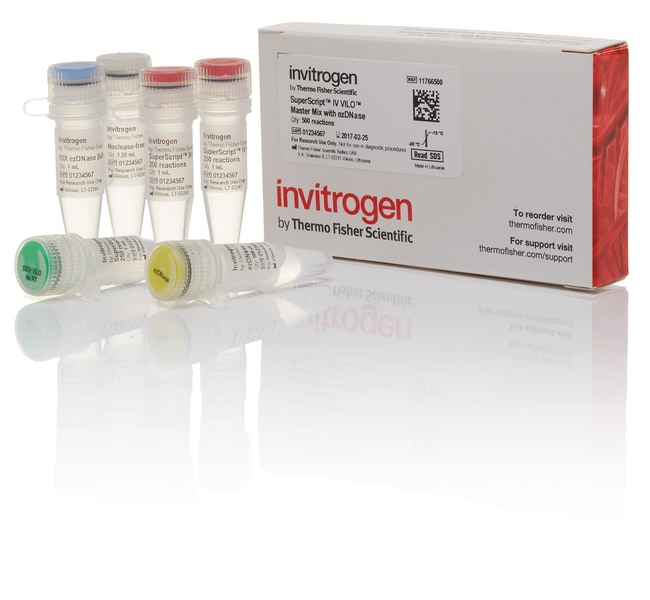
Mezcla maestra SuperScript™ IV VILO™
La mezcla maestra SuperScript™ IV VILO™ (SSIV VILO) es una mezcla maestra de reacción diseñada para una síntesis del ADNcMás información
Have Questions?
Cambiar vista

| Número de catálogo | Incluye | N.º de reacciones |
|---|---|---|
| 11766500 | Kit with ezDnase | 500 reacciones |
| 11756050 | Kit only | 50 reacciones |
| 11756500 | Kit only | 500 reacciones |
| 11766050 | Kit with ezDnase | 50 reacciones |
Número de catálogo 11766500
Precio (MXN)
-
Incluye:
Kit with ezDnase
N.º de reacciones:
500 reacciones
La mezcla maestra SuperScript™ IV VILO™ (SSIV VILO) es una mezcla maestra de reacción diseñada para una síntesis del ADNc rápida, sensible y reproducible en aplicaciones de RT-qPCR.
Las características de la mezcla maestra SuperScript IV VILO incluyen:
• Reacciones de RT superrápidas en solo 10 minutos
• Rendimiento superalto: valores de CT más lentos en más de 2 ciclos por delante de todos los demás reactivos de transcripción inversa
• Mezcla maestra de reacción de ADNc de un tubo supercómoda para RT-qPCR de dos pasos
• Reacción muy eficiente incluso con cantidades bajas de moldes y muestras de pureza subóptima
La mezcla maestra SSIV VILO eleva la fiable tecnología VILO al siguiente nivel con la transcriptasa inversa altamente procesiva y termoestable SuperScript IV™ y un tampón aún más optimizado. Estos componentes permiten la síntesis eficiente de ADNc a altas temperaturas y en menos tiempo. La mezcla maestra SSIV VILO proporciona una excelente sensibilidad y rendimiento de ADNc incluso con plantillas escasas o de pureza subóptima. Es su nueva herramienta para una RT-qPCR más eficaz y reproducible.
Para un rendimiento aún mejor, también ofrecemos mezcla maestra SuperScript IV VILO con DNAasa ez. La DNAasa ez acelera aún más el flujo de trabajo de RT-qPCR a través de un paso extremadamente simplificado de eliminación del ADN genómico. Esto reduce considerablemente el tiempo de todo el protocolo de transcripción inversa y reduce la variación posible en la expresión génica debido a la pérdida de ARN o de daños durante el tratamiento convencional con ADNasa.
La mezcla maestra SSIV VILO le ofrece más ADNc en menos tiempo con menos pipeteo, menos variación, una menor inhibición a la reacción, menos interferencia de ADNg y con menor cantidad de muestra que el resto de kits de síntesis de ADNc o mezclas maestras para RT-qPCR.
Fuente
Purificación a partir de E. coli que expresa el gen pol de M-MLV, modificada para aumentar la termoestabilidad, la vida útil media, la capacidad de procesamiento y la resistencia a inhibidores, así como para reducir la actividad de ribonucleasa (ARNasa) H.
Pruebas de rendimiento y calidad
Ensayos de exodesoxirribonucleasa, endodesoxiribonucleasa y ribonucleasa, además de producción y longitud del producto ADNc.
Las características de la mezcla maestra SuperScript IV VILO incluyen:
• Reacciones de RT superrápidas en solo 10 minutos
• Rendimiento superalto: valores de CT más lentos en más de 2 ciclos por delante de todos los demás reactivos de transcripción inversa
• Mezcla maestra de reacción de ADNc de un tubo supercómoda para RT-qPCR de dos pasos
• Reacción muy eficiente incluso con cantidades bajas de moldes y muestras de pureza subóptima
La mezcla maestra SSIV VILO eleva la fiable tecnología VILO al siguiente nivel con la transcriptasa inversa altamente procesiva y termoestable SuperScript IV™ y un tampón aún más optimizado. Estos componentes permiten la síntesis eficiente de ADNc a altas temperaturas y en menos tiempo. La mezcla maestra SSIV VILO proporciona una excelente sensibilidad y rendimiento de ADNc incluso con plantillas escasas o de pureza subóptima. Es su nueva herramienta para una RT-qPCR más eficaz y reproducible.
Para un rendimiento aún mejor, también ofrecemos mezcla maestra SuperScript IV VILO con DNAasa ez. La DNAasa ez acelera aún más el flujo de trabajo de RT-qPCR a través de un paso extremadamente simplificado de eliminación del ADN genómico. Esto reduce considerablemente el tiempo de todo el protocolo de transcripción inversa y reduce la variación posible en la expresión génica debido a la pérdida de ARN o de daños durante el tratamiento convencional con ADNasa.
La mezcla maestra SSIV VILO le ofrece más ADNc en menos tiempo con menos pipeteo, menos variación, una menor inhibición a la reacción, menos interferencia de ADNg y con menor cantidad de muestra que el resto de kits de síntesis de ADNc o mezclas maestras para RT-qPCR.
Fuente
Purificación a partir de E. coli que expresa el gen pol de M-MLV, modificada para aumentar la termoestabilidad, la vida útil media, la capacidad de procesamiento y la resistencia a inhibidores, así como para reducir la actividad de ribonucleasa (ARNasa) H.
Pruebas de rendimiento y calidad
Ensayos de exodesoxirribonucleasa, endodesoxiribonucleasa y ribonucleasa, además de producción y longitud del producto ADNc.
Para uso exclusivo en investigación. No apto para uso en procedimientos diagnósticos.
Especificaciones
Tipo de producto finalPrimera cadena de ADNc
FormatoMezcla maestra
IncluyeKit with ezDnase
N.º de reacciones500 reacciones
Temperatura óptima de reacción50 °C
CantidadEach
Formato de reacciónMaster Mix
Tipo de reactivoTranscripción reversa
Transcriptasa inversaSuperScript IV
Actividad de la ribonucleasa HReducido
Condiciones de envíoHielo seco
Tamaño (producto final)10 kb o menos
Material de partidaARN
TécnicaTranscripción reversa
Concentración5X
Método de detecciónSonda de cebado
Para utilizar con (aplicación)Real Time PCR (qPCR)
GC-Rich PCR PerformanceAlto
Velocidad de reacción10 min
Unit SizeEach
Contenido y almacenamiento
• Mezcla maestra SuperScript IV VILO, 2 x 1 ml
• Mezcla maestra de control No RT SuperScript IV VILO, 1 ml
• Enzima DNAasa ez, 500 μl
• Tampón de DNAasa ez (10X), 1 ml
• Agua sin nucleasas, 1,25 ml
Almacenar a una temperatura de entre -5 y -30 °C.
• Mezcla maestra de control No RT SuperScript IV VILO, 1 ml
• Enzima DNAasa ez, 500 μl
• Tampón de DNAasa ez (10X), 1 ml
• Agua sin nucleasas, 1,25 ml
Almacenar a una temperatura de entre -5 y -30 °C.