Search

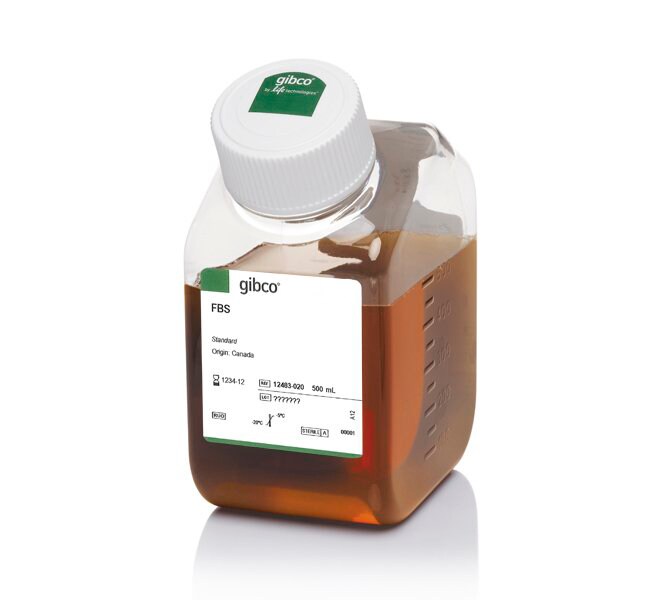
Gibco™
Fetal Bovine Serum, qualified, Canada
Presentamos el nuevo frasco de SBF Gibco™ One Shot™ de 50 ml sin alícuotas. Diseñado para eliminar la necesidad de dividir en alícuotas, y el riesgo de contaminación y variabilidad que conlleva. Y eso mejora sus posibilidades de obtener resultados consistentes.
| Número de catálogo | Cantidad | Formato |
|---|---|---|
| 12483020 | 500 mL | Frasco(s) |
Our improved Value Fetal Bovine Serum (FBS) features enhanced specifications with unchanged stability, manufacturing, storage, and transport processes.
Número de catálogo 12483020
Los sueros bovinos fetales Gibco ofrecen un excelente valor para el cultivo celular básico, la investigación especializada y los ensayos específicos, ganando la confianza de los investigadores con una calidad uniforme y un soporte galardonado que ayuda a satisfacer sus necesidades de investigación y presupuesto.
Categoría de los sueros:Valor (estándar)
Origen: Canadá
Nivel de endotoxinas: ≤50 EU/ml (niveles habituales ≤10 EU/ml)
Nivel de hemoglobina: ≤25 mg/dl
Frasco libre de alícuotas de 50 ml
El frasco Gibco One Shot de 50 ml está diseñado para eliminar la necesidad de dividir en alícuotas, y el riesgo de contaminación y variabilidad que conlleva, mejorando sus posibilidades de obtener resultados consistentes.
Las características incluyen:
• Boca ancha, borde biselado y forma curva para facilitar el vertido y el pipeteo
• Diseñado para congelar/descongelar sin dividir ni romper
• Se ajusta a las gradillas de tubos de ensayo y libera espacio en el congelador
• No hay contratiempos de etiquetado, ya que la etiqueta de nuestro envase fácil es de fácil lectura y contiene toda la información que necesita
• 33 % menos de residuos generados que la división en alícuotas a partir de frascos de 500 ml
Todos los productos pueden no estar disponibles en todas las regiones debido a las regulaciones de importación. Póngase en contacto con su representante de ventas local para obtener información sobre la disponibilidad del producto en su país.
Categoría de los sueros:Valor (estándar)
Origen: Canadá
Nivel de endotoxinas: ≤50 EU/ml (niveles habituales ≤10 EU/ml)
Nivel de hemoglobina: ≤25 mg/dl
Frasco libre de alícuotas de 50 ml
El frasco Gibco One Shot de 50 ml está diseñado para eliminar la necesidad de dividir en alícuotas, y el riesgo de contaminación y variabilidad que conlleva, mejorando sus posibilidades de obtener resultados consistentes.
Las características incluyen:
• Boca ancha, borde biselado y forma curva para facilitar el vertido y el pipeteo
• Diseñado para congelar/descongelar sin dividir ni romper
• Se ajusta a las gradillas de tubos de ensayo y libera espacio en el congelador
• No hay contratiempos de etiquetado, ya que la etiqueta de nuestro envase fácil es de fácil lectura y contiene toda la información que necesita
• 33 % menos de residuos generados que la división en alícuotas a partir de frascos de 500 ml
Todos los productos pueden no estar disponibles en todas las regiones debido a las regulaciones de importación. Póngase en contacto con su representante de ventas local para obtener información sobre la disponibilidad del producto en su país.
For research use or further manufacturing use only. Serum and blood proteins are not for direct administration into humans or animals.
Especificaciones
Grado de pureza o calidadCalidad para investigación, cualificado
Condiciones de envíoCongelado
EspecieGanado/bovino
AgeFetal
País de origenCanadá
FormatoFrasco(s)
Tipo de productoFetal Bovine Serum
Cantidad500 mL
Serum TreatmentEstándar (esterilizado mediante filtro)
EsterilidadEstéril
Unit SizeEach
Contenido y almacenamiento
Condiciones de almacenamiento: ≤10 °C
Condiciones de envío: Congelado
Condiciones de envío: Congelado