Search


Citas y referencias (28)
Invitrogen™
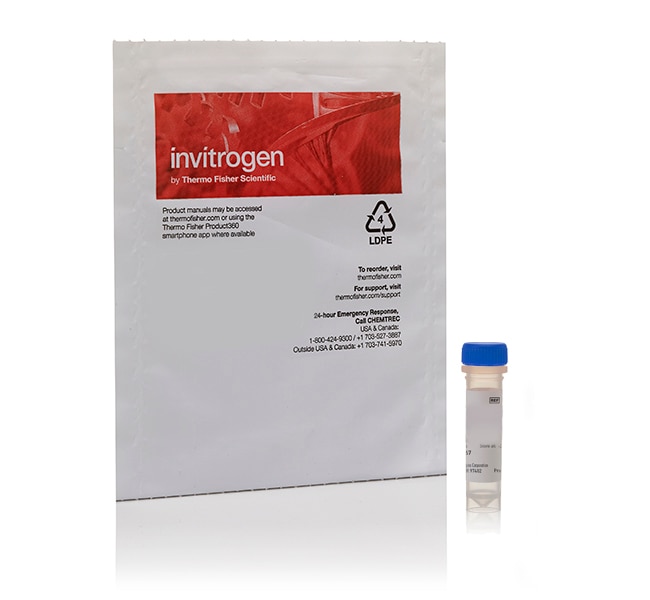
BODIPY™ FL C12 (ácido 4,4-difluoro-5,7-dimetil-4-bora-3a,4a-diaza-s-indaceno-3-dodecanoico)
Fluorescente en ambientes acuosos y lipídicos
| Número de catálogo | Cantidad |
|---|---|
| D3822 | 1 mg |
Número de catálogo D3822
Precio (MXN)
-
Cantidad:
1 mg
El ácido graso verde fluorescente, BODIPY™ FL C12 se puede utilizar como un precursor sintético de una gran variedad de fosfolípidos fluorescentes. A diferencia de los fluoróforos como el pireno, la DPH y la NBD, BODIPY™ es relativamente insensible al medio ambiente y es fluorescente tanto en entornos acuosos como lipídicos.
Para uso exclusivo en investigación. No apto para uso en procedimientos diagnósticos.
Especificaciones
Nombre del producto químico o materialÁcidos grasos
Almacenamiento recomendadoAlmacenar en el congelador (de – 5 a – 30 °C) y proteger de la luz.
Peso molecular (g/mol)418.33
Forma físicaSolid
Línea de productosBODIPY
Cantidad1 mg
Unit SizeEach
Preguntas frecuentes
What is the recommended solvent and concentration for BODIPY FL C12 (4,4-Difluoro-5,7-Dimethyl-4-Bora-3a,4a-Diaza-s-Indacene-3-Dodecanoic Acid) (Cat. No. D3822) stock solution?
Citations & References (28)
Citations & References
Abstract
Lipid-dependent bidirectional traffic of apolipoprotein B in polarized enterocytes.
Journal:Mol Biol Cell
PubMed ID:14565984
'Enterocytes are highly polarized cells that transfer nutrients across the intestinal epithelium from the apical to the basolateral pole. Apolipoprotein B (apoB) is a secretory protein that plays a key role in the transepithelial transport of dietary fatty acids as triacylglycerol. The evaluation of the control of apoB traffic by
Lipid transfer from human epithelial cells to Pneumocystis carinii in vitro.
Journal:J Infect Dis
PubMed ID:9041339
'Pneumocystis carinii lipids are similar to host lipids, but it is not known if some of these lipids are acquired from host cells. The ability of P. carinii to incorporate a fluorescent fatty acid analogue (Bodipy-C12) was analyzed, the metabolism of the incorporated lipid by P. carinii was characterized, and
Murine FATP alleviates growth and biochemical deficiencies of yeast fat1Delta strains.
Journal:Eur J Biochem
PubMed ID:10880966
'Saccharomyces cerevisiae is an ideal model eukaryote for studying fatty-acid transport. Yeast are auxotrophic for unsaturated fatty acids when grown under hypoxic conditions or when the fatty-acid synthase inhibitor cerulenin is included in the growth media. The FAT1 gene encodes a protein, Fat1p, which is required for maximal levels of
Liver fatty acid-binding protein colocalizes with peroxisome proliferator activated receptor alpha and enhances ligand distribution to nuclei of living cells.
Journal:Biochemistry
PubMed ID:14992586
'Although it is hypothesized that long-chain fatty acyl CoAs (LCFA-CoAs) and long-chain fatty acids (LCFAs) regulate transcription in the nucleus, little is known regarding factors that determine the distribution of these ligands to nuclei of living cells. Immunofluorescence colocalization showed that liver fatty acid-binding protein (L-FABP; binds LCFA-CoA as well
Molar quantification by flow cytometry of fatty acid binding to cells using dipyrrometheneboron difluoride derivatives.
Journal:Cytometry
PubMed ID:8742176
'Fatty acid analogs of a dipyrrometheneboron difluoride fluorophore (BDY-FA) have recently been developed. Relative to other fluorescent fatty acids, some of these have the advantages of excitation and emission spectra similar to those of fluorescein and of high quantum yield, which permits their use in conventional argon laser cytometry or