Search


Citas y referencias (40)
Invitrogen™
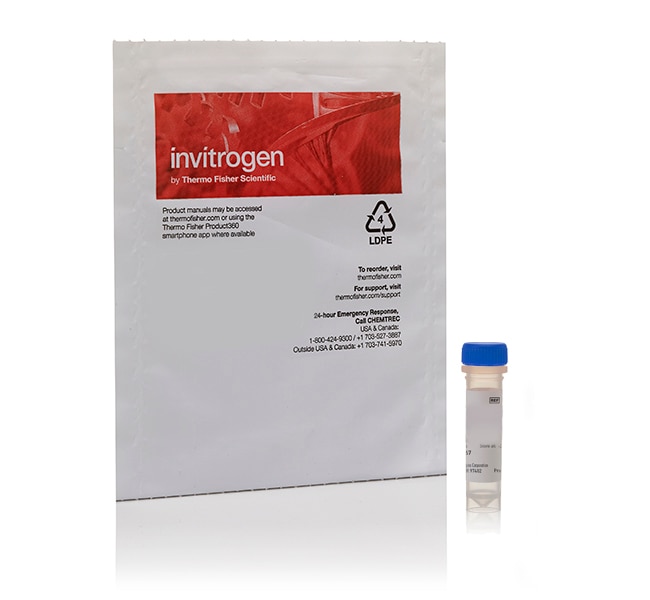
Isolectin GS-IB4 From Griffonia simplicifolia, Alexa Fluor™ 488 Conjugate
Isolectin GS-IB4 is a 114,000-dalton glycoprotein that is part of a family of five tetrameric type I isolectins (IA4, IA3B,Más información
| Número de catálogo | Cantidad |
|---|---|
| I21411 | 500 μg |
Número de catálogo I21411
Precio (MXN)
-
Cantidad:
500 μg
Isolectin GS-IB4 is a 114,000-dalton glycoprotein that is part of a family of five tetrameric type I isolectins (IA4, IA3B, IA2B2, IAB3, and IB4) isolated from the seeds of the tropical African legume Griffonia simplicifolia. The A subunit prefers N-acetyl-D-galactosamine end groups while the B subunit is selective for terminal a-D-galactosyl residues. The green fluorescent Alexa Fluor™ 488 isolectin GS-IB4 conjugate can be used in fluorescence microscopy or flow cytometry.
View complete list of fluorescent dye-conjugated lectins ›
View complete list of fluorescent dye-conjugated lectins ›
For Research Use Only. Not for use in diagnostic procedures.
Especificaciones
Tipo de etiquetaAlexa Fluor Dyes
Línea de productosAlexa Fluor
Subtipo de proteínaLectins
Cantidad500 μg
Condiciones de envíoRoom Temperature
FuenteAfrica Shrub legume
ConjugadoAlexa Fluor 488
FormularioLyophilized
Unit SizeEach
Contenido y almacenamiento
Store in freezer (-5 to -30°C) and protect from light.
Preguntas frecuentes
How do I know which tracer to choose for my experiment?
Citations & References (40)
Citations & References
Abstract
Acid-sensing ion channels ASIC2 and ASIC3 do not contribute to mechanically activated currents in mammalian sensory neurones.
Journal:J Physiol
PubMed ID:14990679
'The molecular basis of mechanosensory transduction by primary sensory neurones remains poorly understood. Amongst candidate transducer molecules are members of the acid-sensing ion channel (ASIC) family; nerve fibre recordings have shown ASIC2 and ASIC3 null mutants have aberrant responses to suprathreshold mechanical stimuli. Using the neuronal cell body as a
Fibroblast growth factor 2 promotes microvessel formation from mouse embryonic aorta.
Journal:Am J Physiol Cell Physiol
PubMed ID:12388106
'To delineate the roles that oxygen and fibroblast growth factors (FGFs) play in the process of angiogenesis from the embryonic aorta, we cultured mouse embryonic aorta explants (thoracic level to lateral vessels supplying the mesonephros and metanephros) in a three-dimensional type I collagen gel matrix. During 8 days of culture
MFG-E8 mediates primary phagocytosis of viable neurons during neuroinflammation.
Journal:J Neurosci
PubMed ID:22357850
'Milk-fat globule EGF factor-8 (MFG-E8, SED1, lactadherin) is known to mediate the phagocytic removal of apoptotic cells by bridging phosphatidylserine (PS)-exposing cells and the vitronectin receptor (VR) on phagocytes. However, we show here that MFG-E8 can mediate phagocytosis of viable neurons during neuroinflammation induced by lipopolysaccharide (LPS), thereby causing neuronal
Lectin mapping reveals stage-specific display of surface carbohydrates in in vitro and haemolymph-derived cells of the entomopathogenic fungus Beauveria bassiana.
Journal:Microbiology
PubMed ID:19608611
'The entomopathogenic fungus Beauveria bassiana and its insect host target represent a model system with which to examine host-pathogen interactions. Carbohydrate epitopes on the surfaces of fungal cells play diverse roles in processes that include adhesion, non-self recognition and immune invasion with respect to invertebrate hosts. B. bassiana produces a
Early activation, motility, and homing of neonatal microglia to injured neurons does not require protein synthesis.
Journal:Glia
PubMed ID:16715500
'Neuronal injury in CNS tissues induces a rapid activation and mobilization of resident microglia (MG). It is widely assumed that changes in gene expression drive the morphological transformation of MG and regulate their mobilization during activation. Here, we used acutely excised neonatal rat brain slices to test whether the morphological