Search




Thermo Scientific™
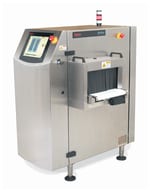
Sistemas de detección con rayos X NextGuard™
Realice una transición sencilla y rápida de la detección de metales a la inspección de rayos X y garantice a sus clientes productos más seguros con un sistema de detección de rayos X.
Have Questions?
Cambiar vista

| Número de catálogo | Alturas de transportadores disponibles | Peso máximo del producto transportable | Normas de seguridad radiológica | Longitudes del sistema/transportador disponibles |
|---|---|---|---|---|
| NEXTGUARDC330 | 800 mm (31,5 in), 900 mm (35,4 in), 1000 mm (39,4 in), 1100 mm (43,3 in) todos ± 80 mm | 10 kg (22 lb) | CFR 21 sección 1020.40 de la FDA, ley RED (Radiation Emitting Devices: dispositivos que emiten radiación) (Canadá), IRR99 (RU), NCF 74-100 (Francia), UNE 73-302 (España), GB18871-2002 (China) y otros. Nota: RU, Canadá y España requieren protección ampliada opcional y Francia requiere blindaje ampliado opcional | Longitud estándar 1 m (3,3 ft), C330: extendida 1,4 m (4,6 ft) |
| NEXTGUARDC500 | 800 mm (31,5 in), 900 mm (35,4 in), 1000 mm (39,4 in), 1100 mm (43,3 in) todos ± 80 mm | 11 kg (25 lb) | CFR 21 sección 1020.40 de la FDA, ley RED (Radiation Emitting Devices: dispositivos que emiten radiación) (Canadá), IRR99 (RU), NCF 74-100 (Francia), UNE 73-302 (España), GB18871-2002 (China) y otros. Nota: RU, Canadá y España requieren protección ampliada opcional y Francia requiere blindaje ampliado opcional | 1,2 m (47,4 ft) |
| NEXTGUARDPRO | 800/950/1100 mm (31,5/37,4/43,3 in) ± 75 mm (3,0 in) | 11 kg (25 lb) a 50 kg (110 lb) | FDA CFR 21 apartado 1020.40, ley RED (Radiation Emitting Devices: dispositivos que emiten radiación) (Canadá) y otros Nota Canadá, Reino Unido, España y Francia requieren protección adicional | 1,5 m (59 in) estándar con extremos de transportador opcionales que extienden el sistema 200/400/600/800/1000 mm (7,9/15,8/23,6/31,5/39,4 in) en los extremos de entrada o salida. |
Número de catálogo NEXTGUARDC330
Precio (MXN)
-
Alturas de transportadores disponibles:
800 mm (31,5 in), 900 mm (35,4 in), 1000 mm (39,4 in), 1100 mm (43,3 in) todos ± 80 mm
Peso máximo del producto transportable:
10 kg (22 lb)
Normas de seguridad radiológica:
CFR 21 sección 1020.40 de la FDA, ley RED (Radiation Emitting Devices: dispositivos que emiten radiación) (Canadá), IRR99 (RU), NCF 74-100 (Francia), UNE 73-302 (España), GB18871-2002 (China) y otros. Nota: RU, Canadá y España requieren protección ampliada opcional y Francia requiere blindaje ampliado opcional
Longitudes del sistema/transportador disponibles:
Longitud estándar 1 m (3,3 ft), C330: extendida 1,4 m (4,6 ft)
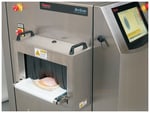
Detecte objetos extraños metálicos y no metálicos y elimine los efectos de elementos húmedos comunes a los detectores de metales con los sistemas de detección con rayos X Thermo Scientific™ NextGuard™. Los sistemas NextGuard, diseñados para una gran variedad de aplicaciones alimentarias, ofrecen mejores funciones para la inspección de productos envasados que permite determinar si faltan piezas o componentes, si se han llenado hasta el nivel adecuado o cualquier otro problema de calidad con un software de visualización sencillo y personalizable. Tanto los modelos C500 como el transportador son sistemas fáciles de usar, rentables y con un cuidado diseño que eliminan los obstáculos frecuentes al migrar de la detección de metales a la inspección de rayos X.
Características del nuevo y mejorado sistema de detección de rayos X NextGuard:
- Opción de software de verificación del producto que permite a los usuarios realizar una gran variedad de inspecciones de tamaño, posición y recuento.
- El software de división de paquetes permite la detección precisa de un producto faltante, o un producto faltante parcial, dentro del empaque para productos que están en un formato apilado.
- Los diversos algoritmos adicionales están destinados a la detección de sustancias contaminantes menos densas, como el vidrio o las rocas en productos texturizados complejos, como cajas de bolsas de té o frutos secos.
- El software de estimación de masa opcional utiliza la información de densidad de la imagen de rayos X para calcular el peso y detectar productos que se han llenado insuficiente o excesivamente.
- Configurable para realizar un rechazo doble, que separa los productos contaminados de otros errores de calidad.
- El procesador del sistema estándar es ahora seis veces más rápido que la primera generación del sistema NextGuard, lo que facilita la inspección y detección a alta velocidad de sustancias contaminantes y mejora la capacidad de respuesta a las acciones del usuario.
- El detector opcional de píxeles 0,4 mm-píxel ofrece una resolución 3,2 veces mejor para una detección de metales mejorada en productos homogéneos y ligeros, como polvos o queso.
Ventajas adicionales:
- Diseño compacto que facilita su uso e instalación
- Detector no lineal exclusivo para eliminar los puntos ciegos de la inspección
- Transportador extraíble que permite un sencillo mantenimiento y cambio direccional
- Software e interfaz de usuario intuitivos de Thermo Scientific™ VersaWeigh™
- Diseño modular para un alto grado de fiabilidad y diagnóstico y reparación rápidos
- Indicadores de vida útil del detector y la fuente para minimizar los costosos tiempos de inactividad
- Supervisión remota integrada para la rápida determinación de problemas
Opciones para personalizar el sistema:
- Completos sistemas de rechazo o mecanismos de rechazo para su uso en transportadores posteriores
- Aire acondicionado de acero inoxidable para entornos de lavado
- Alarma audible, sin cortinas de plomo, ruedas giratorias, raíles guía
- Medidores de seguridad radiológica
- CE, cCSAus
- Kits de piezas de repuesto
Especificaciones
Material de la correaUSDA/FDA Approved Urethane
Velocidad de la correaC330SPSR, C330 HPSR, C330 HPHR: 10-80m/min (33-262ft/min), C330HPSR: 10-120m/min (33-393ft/min)
Certificaciones/conformidadISO9001 certified facility
Alturas de transportadores disponibles800 mm (31,5 in), 900 mm (35,4 in), 1000 mm (39,4 in), 1100 mm (43,3 in) todos ± 80 mm
Resolución del detector0.8 mm standard
Entradas digitalesFour inputs, 24VDC 25 mA, NPN/PNP (jumper selectable), assignable function
Salidas digitalesFour outputs, 24VDC 0.5A, assignable function
Requisitos eléctricos208 to 250 VAC, 50/60 Hz, autosensing, single phase, 10 amps
Conformidad normativa de exportación/seguridadCE, cCSAus
Interfaz hombre-máquinaWindows Operating System, touchscreen, 307 mm (12.1 in) diagonal
Algoritmos de inspección disponiblesImage processing/thresholding/blob analysis, grayscale profiling and mass estimation
Idiomas de la interfazEnglish, Spanish, French, Italian, German, Chinese, Russian, Polish, Czech, Portuguese, Dutch, Thai, Indonesian. Contact factory for additional languages
Peso máximo del producto transportable10 kg (22 lb)
Puerto de redWatertight Ethernet port standard
Temperatura de funcionamiento5°C to 30°C (41°F to 86°F) with cooling fan or 5°C to 40°C (41°F to 104°F); with air conditioner
SalidasExcel, PDF, or xml format selectable
Normas de seguridad radiológicaCFR 21 sección 1020.40 de la FDA, ley RED (Radiation Emitting Devices: dispositivos que emiten radiación) (Canadá), IRR99 (RU), NCF 74-100 (Francia), UNE 73-302 (España), GB18871-2002 (China) y otros. Nota: RU, Canadá y España requieren protección ampliada opcional y Francia requiere blindaje ampliado opcional
RechazadorIntegrated variable speed conveyors. Air blast or pusher. Lockable reject bin and reject/bin full photo sensors. Dual rejectors possible
Humedad relativa20 to 90% non-condensing
Características de seguridadX-ray power key, four level password system, emergency X-ray/conveyor stop button, lead/lead-free curtains, failsafe LED x-ray imminent and on indication light
Sensibilidad
≥ 1mm diameter for Fe, non-Fe, SS, >=3mm for other dense contaminants such as glass or stone (always verify application performance via a product test)
Longitudes del sistema/transportador disponiblesLongitud estándar 1 m (3,3 ft), C330: extendida 1,4 m (4,6 ft)
Puerto USBWatertight USB 2.0 Standard
Peso (imperial)780 lb
Peso (métrico)354 kg
Material de la cortina de rayos XTeflon coated (no-lead)
Potencia de rayos X100 W (80 kV/1.25mA) or 160 W (80 kV/2mA)
Detection Algorithms AvailableSimple Threshold, Gradient, Morphologies and Contaminant Area Measure
Velocidad de barrido del detectorUp to 1667 Lines/sec.
Clasificación IPIP65 with air conditioner, IP54 with cooling fans
Unit SizeEach