Search


Citas y referencias (3)
Invitrogen™
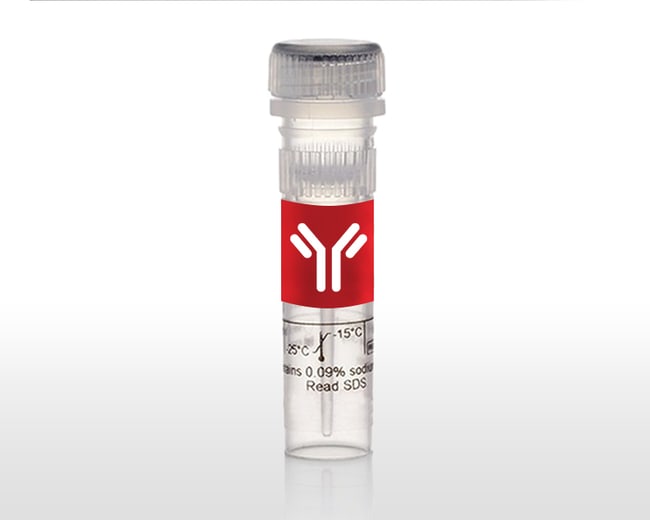
SAIVI™ Rapid Antibody Labeling Kit, Alexa Fluor™ 750
Kit de etiquetado rápido de anticuerpos SAIVI™, Alexa Fluor™ 750
| Número de catálogo | Cantidad |
|---|---|
| S30046 | 1 kit |
Número de catálogo S30046
Precio (MXN)
-
Cantidad:
1 kit
El kit de etiquetado de anticuerpos Alexa Fluor™ 750 SAIVI™ proporciona un medio práctico para marcar anticuerpos con un grado óptimo de marcación para aplicaciones de adquisición de imágenes in vivo (DOL; ∼2) en un rango de concentración de anticuerpos multiplicado por seis sin necesidad de ajustes en el volumen de reacción, la concentración de colorante o la concentración de anticuerpos. Mediante este procedimiento, los anticuerpos etiquetados de forma óptima están listos para las aplicaciones que requieren reactivos sin azida, como las imágenes de células vivas o la inyección directa en animales.
Para uso exclusivo en investigación. No apto para uso en procedimientos diagnósticos.
Especificaciones
Colorinfrarrojo
Método de detecciónFluorescencia
Excitación/emisión749/775
Tipo de etiquetaColorantes Alexa Fluor
Escala de etiquetadoDe 0,5 a 3 mg
Línea de productosAlexa Fluor, SAIVI
Tipo de productoKit de etiquetado de anticuerpos
Cantidad1 kit
Condiciones de envíoTemperatura ambiente
Labeling TargetAnticuerpos
Etiqueta o tinteAlexa Fluor 750
Unit SizeEach
Contenido y almacenamiento
Almacenar en el refrigerador (de 2 °C a 8 °C) y proteger de la luz.
Preguntas frecuentes
What amount of conjugated antibody should I inject to image tumors?
What size needle should I use for small animal in vivo imaging?
What are the optimal and maximal volumes of reagent that can be injected into a mouse?
What type of mice are the best for in vivo imaging?
Citations & References (3)
Citations & References
Abstract
Affibody Molecules for In vivo Characterization of HER2-Positive Tumors by Near-Infrared Imaging.
Journal:Clin Cancer Res
PubMed ID:18559604
'PURPOSE: HER2 overexpression has been associated with a poor prognosis and resistance to therapy in breast cancer patients. We are developing molecular probes for in vivo quantitative imaging of HER2 receptors using near-infrared (NIR) optical imaging. The goal is to provide probes that will minimally interfere with the studied system,
Blocking ephrinB2 with highly specific antibodies inhibits angiogenesis, lymphangiogenesis, and tumor growth.
Journal:Blood
PubMed ID:22446484
Membrane-anchored ephrinB2 and its receptor EphB4 are involved in the formation of blood and lymphatic vessels in normal and pathologic conditions. Eph/ephrin activation requires cell-cell interactions and leads to bidirectional signaling pathways in both ligand- and receptor-expressing cells. To investigate the functional consequences of blocking ephrinB2 activity, 2 highly specific
A leukocyte-mimetic magnetic resonance imaging contrast agent homes rapidly to activated endothelium and tracks with atherosclerotic lesion macrophage content.
Journal:Arterioscler Thromb Vasc Biol
PubMed ID:22499989
Endothelial cell activation is an important mediator of monocyte recruitment to sites of vascular inflammation. We hypothesized that high-affinity dual-ligand microparticles of iron oxide (MPIO), targeted to P-selectin and vascular cell adhesion molecule-1 (PV-MPIO), would identify activated endothelial cells during atherosclerosis progression. In vivo magnetic resonance imaging in apolipoprotein E-deficient