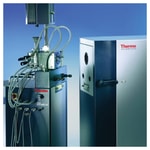
HAAKE™ Rheomix OS Lab Mixers for the HAAKE™ PolyLab™ OS system
Actual product may vary
HAAKE™ Rheomix OS Lab Mixers for the HAAKE™ PolyLab™ OS system
Thermo Scientific™

HAAKE™ Rheomix OS Lab Mixers for the HAAKE™ PolyLab™ OS system

HAAKE™ Rheomix Lab Mixers for the HAAKE™ PolyLab™ OS System torque rheometer platform are focused on batch testing of many highly viscous substances. Intelligent modular torque rheometer system for the simulation of industrial processes in the lab or pilot plants.
Have Questions?
Change viewbuttonViewtableView
Catalog NumberMax. TemperatureMax. Torque
567-1040350°C300 Nm
567-1000450°C160 Nm
567-1010350°C160 Nm
567-1020400°C160 Nm
567-1030400°C300 Nm
Catalog number 567-1040
Price (TWD)
-
Max. Temperature:
350°C
Max. Torque:
300 Nm
HAAKE™ Rheomix Lab Mixers for the HAAKE™ PolyLab™ OS System torque rheometer platform are focused on batch testing of many highly viscous substances. Intelligent modular torque rheometer system for the simulation of industrial processes in the lab or pilot plants.

In a small-scale customers can characterize materials like polymers, elastomers, additives and fillers to avoid problems in their production.

Mixing, kneading, compounding and plasticizing

A typical mixer test is run at a defined speed (shear rate) versus time, and the material's response is recorded as torque. The mixing chamber is temperature-controlled precisely by independent heating and cooling zones, but due to the frictional heat in the mixing bowl, a change in the material's melt temperature is observed and recorded as measuring signal. This “Rheogram” (torque, melt temperature vs. time at constant speed) is characteristic for different materials or blends and often used as a “fingerprint” in Quality Control for incoming or outgoing product inspection. Different additives in type and concentration can be measured and quantified objectively through the melting behavior, consumed energy or melt viscosity (recorded torque).

Typical investigations

  • Testing the melting and degradation behavior of polymer melts
  • Quantifying viscosity when adding nano-particles or other additives
  • Testing the gelation- and plasticizing behavior of PVC dry-blends
  • Measuring the flow- and curing behavior of thermosetting plastics
  • Characterizing the influences of different additives such as carbon black, fillers, lubricants, accelerators or sulphur for rubber mixtures
  • Recording the masticating and vulcanizing behavior of elastomers
  • Measuring the oil absorption of carbon black
  • Quantifying the absorption of DOP for PVC dry-blends
  • Measuring the stable torque in regard to individual and combined influences of fillers and additives such as stabilizers, lubricants and color pigments
  • Testing high performance plastics to check processability
  • Performing electric conductivity measurements for rubber mixtures
Specifications
Control and Evaluation SoftwareWindows based Software: PolySoft
DescriptionRheomix 3010 OS
Height (Metric)125 cm
Length (English)25.9 in.
Length (Metric)66 cm
Max. Temperature350°C
Max. Torque300 Nm
Measuring Sensor ConnectionCANopen
Measuring Sensors3
Rotor TypeRoller, Cam, Sigma and Banbury Rotor available
Temperature ControlLiquid
Volume (Metric)Approx. 300 ccm
Width (Metric)52 cm
Max. Speed250 rpm
Torque RheometerYes
Unit SizeEach

Frequently asked questions (FAQs)

When should I choose a Thermo Scientific HAAKE Rheomix laboratory mixer instead of a Thermo Scientific HAAKE Rheomex laboratory extruder?

Choose a Thermo Scientific HAAKE Rheomix laboratory mixer when your primary goal is to evaluate mixing behavior, formulation development, and material characteristics using small laboratory sample volumes. HAAKE Rheomix laboratory mixers measure torque and melt temperature during controlled mixing, making them well suited for investigating plastification, curing, melt viscosity, additive dispersion, formulation consistency, and processability.

Choose a Thermo Scientific HAAKE Rheomex laboratory extruder when you need to evaluate continuous extrusion processes, material flow, pressure development, extrusion stability, or process conditions that more closely represent production extrusion. HAAKE Rheomex laboratory extruders are well suited for extrusion process development, material evaluation, and optimization of continuous polymer processing.

Because both processing units are compatible with the HAAKE PolyLab OS torque rheometer platform, laboratories can use the same modular drive system

How does a Thermo Scientific HAAKE Rheomix laboratory mixer support formulation development?

Choose a Thermo Scientific HAAKE Rheomix laboratory mixer to evaluate how formulation changes affect material processing behavior before moving to larger-scale processing.

By measuring torque and melt temperature during controlled mixing, the system can be used to compare the effects of fillers, pigments, stabilizers, lubricants, nanoparticles, and other additives on melting behavior, plastification, viscosity, curing, and material stability. These laboratory-scale measurements help optimize formulations, compare candidate materials, and support process development while using relatively small sample quantities. When additional process evaluation is needed, the HAAKE Rheomix laboratory mixer can be used as part of the HAAKE PolyLab OS platform together with laboratory extruders for further material characterization.

What material properties can I evaluate with a Thermo Scientific HAAKE Rheomix laboratory mixer?

A Thermo Scientific HAAKE Rheomix laboratory mixer helps evaluate material behavior under process-relevant conditions by recording torque and melt temperature during controlled mixing.

The resulting rheogram can be used to investigate melting behavior, plastification, curing, degradation, melt viscosity, additive effects, energy consumption, and formulation consistency. These measurements support material development, process optimization, and quality control by helping compare materials and formulations under consistent laboratory conditions.

Which materials can be evaluated with a Thermo Scientific HAAKE Rheomix laboratory mixer?

Thermo Scientific HAAKE Rheomix laboratory mixers can be used to characterize a wide range of highly viscous materials, including thermoplastics, thermosets, elastomers, rubber compounds, polymer blends, and formulations containing fillers, pigments, nanoparticles, lubricants, stabilizers, or other additives.

Typical investigations include melting behavior, plastification, curing, degradation, melt viscosity, additive dispersion, and processability using laboratory-scale sample volumes.

Which Thermo Scientific HAAKE Rheomix laboratory mixer is right for my application?

Choose the Thermo Scientific HAAKE Rheomix laboratory mixer based on your material type, temperature requirements, and laboratory batch size.

  • Rheomix 600 – General-purpose laboratory mixer for testing thermoplastics.
  • Rheomix 610 – Similar to the Rheomix 600, with liquid temperature control for applications requiring temperatures below 100° C.
  • Rheomix 540 – Designed for thermosetting materials and applications where easy removal of cured samples is important.
  • Rheomix 3000 – Large-volume mixer for producing larger laboratory batches and testing rubber compounds.
  • Rheomix 3010 – Similar to the Rheomix 3000, with liquid temperature control for lower-temperature applications.

All models are compatible with the HAAKE PolyLab OS torque rheometer platform and support material characterization, formulation development, and quality control.