Search


Citations & References (10)
Invitrogen™
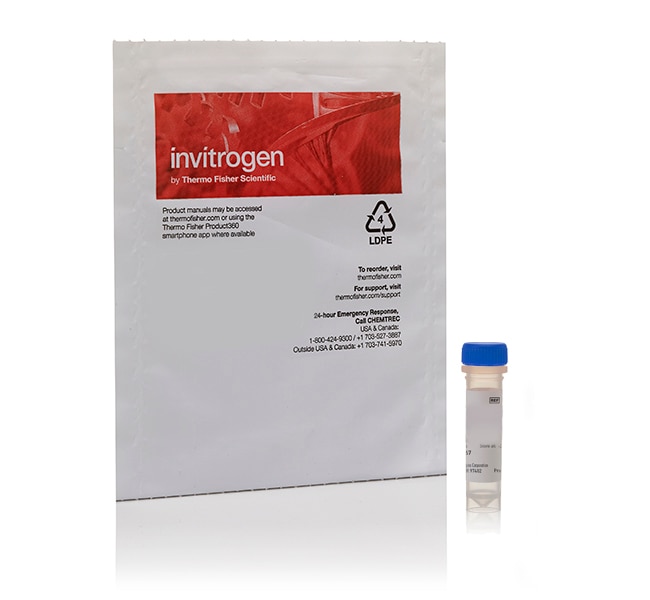
HCS NuclearMask™ Stains
Easily identify cell nuclei and other features of interest during high-content screening (HCS) assays with the versatile HCS NuclearMask Blue, Red, and Deep Red stains, which can be used with live and fixed cells and in multiparametric analyses.
Have Questions?
Change view

| Catalog Number | Color |
|---|---|
| H10294 | Far-Red, Deep Red |
| H10325 | Blue |
| H10326 | Red |
Catalog number H10294
Price (TWD)
11,830.00
線上優惠
Ends: 30-Sep-2026
16,900.00Save 5,070.00 (30%)
Each
Color:
Far-Red, Deep Red
Price (TWD)
11,830.00
線上優惠
Ends: 30-Sep-2026
16,900.00Save 5,070.00 (30%)
Each
Easily identify cell nuclei in high-content screening (HCS) assays with the versatile HCS NuclearMask Blue, Red, and Deep Red stains, which survive standard formaldehyde-based fixation and detergent-based permeabilization methods and can be applied to live and fixed cells. Because their dyes are easily discriminated from other fluorophores, the HCS NuclearMask stains can be used in multiparametric analyses. They can also label the entire cell (i.e., cytoplasm and nucleus) and provide an accurate backdrop against which to assess the features of interest.
The versatile HCS NuclearMask Blue, HCS NuclearMask Red, and HCS NuclearMask Deep Red stains can be used to measure DNA content and perform cell demarcation with formaldehyde-fixed cells on high content imaging and analysis (HCS) platforms. HCS NuclearMask Blue, HCS NuclearMask Red, and HCS NuclarMask Deep Red stains have excitation/emission maxima of 355/460 nm, 622/645 nm, and 638/686 nm, respectively, when bound to DNA. HCS NuclearMask Blue stain is easily discriminated from visible- and near-IR wavelength fluorophores, HCS NuclearMask Red stain is easily discriminated from green- and even orange-fluorescent fluorophores, and HCS NuclearMask Deep Red is easily discriminated from visible wavelength fluorophores when used in multiparametric analyses.
If total cell staining is desired, HCS CellMask stains label the entire cell (cytoplasm and nucleus) and provide an accurate backdrop against which the features of interest can be assessed. HCS CellMask stains are available in a choice of colors for multiplexing flexibility. Sufficient volume quantities are provided to stain ten 96-well plates using an assay volume of 100 μL per well.
If total cell staining is desired, HCS CellMask stains label the entire cell (cytoplasm and nucleus) and provide an accurate backdrop against which the features of interest can be assessed. HCS CellMask stains are available in a choice of colors for multiplexing flexibility. Sufficient volume quantities are provided to stain ten 96-well plates using an assay volume of 100 μL per well.
For Research Use Only. Not for human or animal therapeutic or diagnostic use.
Specifications
ColorFar-Red, Deep Red
DescriptionHCS NuclearMask™ Deep Red Stain (250X Concentrate in DMSO)
Detection MethodFluorescence
Dye TypeHCS NuclearMask™ Deep Red stain
EmissionNear IR
For Use With (Equipment)High Content Instrument
Product LineNuclearMask
Quantity400 μL
Shipping ConditionRoom Temperature
Volume (Metric)400 μL
Label TypeFluorescent Dye
Product TypeStain
Sub Cellular LocalizationNucleic Acids, Nucleus
Unit SizeEach
Contents & Storage
Store at ≤-20°C, desiccate, and protect from light.
Citations & References (10)
Citations & References
Abstract
Simultaneous multiplane imaging of human ovarian cancer by volume holographic imaging.
Journal:
PubMed ID:24676382
'Ovarian cancer is the most deadly gynecologic cancer, a fact which is attributable to poor early detection and survival once the disease has reached advanced stages. Intraoperative laparoscopic volume holographic imaging has the potential to provide simultaneous visualization of surface and subsurface structures in ovarian tissues for improved assessment of
The intraviral protein interaction network of hepatitis C virus.
Journal:
PubMed ID:24797426
'Hepatitis C virus (HCV) is a global health problem and one of the main reasons for chronic liver diseases such as cirrhosis and hepatocellular carcinoma. The HCV genome is translated into a polyprotein which is proteolytically processed into 10 viral proteins. The interactome of the HCV proteins with the host
Detection of intracellular glutathione using ThiolTracker violet stain and fluorescence microscopy.
Journal:Curr Protoc Cytom
PubMed ID:20578109
Glutathione plays an important role in protecting mammalian cells from oxidative stress and cell death. Because reduced glutathione (GSH) represents the large majority of intracellular free thiols, cell-permeant, thiol-reactive fluorescent probes represent potentially useful indicators of intracellular GSH. The ThiolTracker Violet stain (a registered trademark of Invitrogen) is a bright
A High-Content Screening Approach to Identify MicroRNAs Against Head and Neck Cancer Cell Survival and EMT in an Inflammatory Microenvironment.
Journal:Front Oncol
PubMed ID:31788442
Water-Soluble Blue Fluorescent Nonconjugated Polymer Dots from Hyaluronic Acid and Hydrophobic Amino Acids.
Journal:ACS Omega
PubMed ID:34308024