Search
 項目搜尋
項目搜尋 結構搜尋
結構搜尋


Thermo Scientific Chemicals
Glycine, 0.2M buffer soln., pH 3.0
CAS: 56-40-6 | C2H5NO2 | 75.07 g/mol
Have Questions?
變更視圖


化學識別
CAS56-40-6
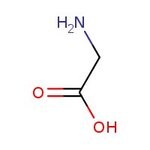
IUPAC Name2-aminoacetic acid
Molecular FormulaC2H5NO2
InChI KeyDHMQDGOQFOQNFH-UHFFFAOYSA-N
SMILESNCC(O)=O
檢視更多
規格 規格表
規格表
規格表pH3.0 ± 0.2
FormLiquid
CommentComponent is dissolved in UV treated 18.2 megohm-cm ± 1 water, followed by pH adjustment and filtered through 1 micron filter.
Appearance (Color)Clear colorless
Glycine is widely used as a buffer for a variety of immunological applications. It is frequently used in the preparation of TG Buffers where the buffer is used as a running and/or transfer buffer for polyacrylamide gel electrophoresis and western blotting. Glycine is also used as an eluent in column chromatography. Glycine has been reported for use in the enzymatic determination of lactate using lactic dehydrogenase.
This Thermo Scientific Chemicals brand product was originally part of the Alfa Aesar product portfolio. Some documentation and label information may refer to the legacy brand. The original Alfa Aesar product / item code or SKU reference has not changed as a part of the brand transition to Thermo Scientific Chemicals.
Applications
Glycine is widely used as a buffer for a variety of immunological applications. It is frequently used in the preparation of TG Buffers where the buffer is used as a running and/or transfer buffer for polyacrylamide gel electrophoresis and western blotting. Glycine is also used as an eluent in column chromatography. Glycine has been reported for use in the enzymatic determination of lactate using lactic dehydrogenase.
Solubility
Not miscible or difficult to mix in water. Slightly soluble in acetone. Insoluble in alcohol, and ether.
Notes
Store away from heat and oxidizing agents. Keep the container tightly closed and place it in a cool, dry and well ventilated condition. Keep it refrigerated.
Glycine is widely used as a buffer for a variety of immunological applications. It is frequently used in the preparation of TG Buffers where the buffer is used as a running and/or transfer buffer for polyacrylamide gel electrophoresis and western blotting. Glycine is also used as an eluent in column chromatography. Glycine has been reported for use in the enzymatic determination of lactate using lactic dehydrogenase.
Solubility
Not miscible or difficult to mix in water. Slightly soluble in acetone. Insoluble in alcohol, and ether.
Notes
Store away from heat and oxidizing agents. Keep the container tightly closed and place it in a cool, dry and well ventilated condition. Keep it refrigerated.
RUO – Research Use Only
General References:
- H Towbin, et al. Electrophoretic transfer of proteins from polyacrylamide gels to nitrocellulose sheets: procedure and some applications.Proc Natl Acad Sci U S A.,1979,76(9), 4350-4354.
- Laemmli UK, et al. Cleavage of structural proteins during the assembly of the head of bacteriophage T4.Nature.,1970,227(5259), 680-5.