Search


引用資料與參考文獻 (9)
Invitrogen™
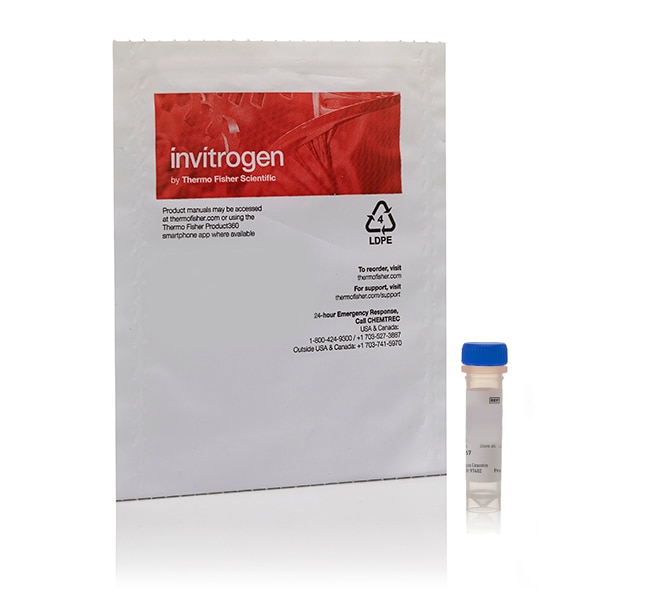
Qdot™ 800 ITK™ Carboxyl Quantum Dots
Qdot™ 800 ITK™ carboxyl quantum dots are the ideal starting material for preparing custom conjugates that require high loading of深入閱讀
| 產品號碼 | Quantity |
|---|---|
| Q21371MP | 250 μL |
產品號碼 Q21371MP
價格 (TWD)
23,040.00
Online offer
Ends: 31-Dec-2026
28,800.00您節省 5,760.00 (20%)
Each
Quantity:
250 μL
價格 (TWD)
23,040.00
Online offer
Ends: 31-Dec-2026
28,800.00您節省 5,760.00 (20%)
Each
Qdot™ 800 ITK™ carboxyl quantum dots are the ideal starting material for preparing custom conjugates that require high loading of biomolecules. These materials are carboxylate functionalized and can be coupled to amine groups of proteins and modified oligonucleotides using EDC-mediated condensation. The coatings of these probes provides more binding sites than our Qdot™ ITK™ amino quantum dots, but lacks PEG linkers that help to prevent non-specific interactions. These materials can be conjugated to X-PEG-amine bi-functional linkers for custom reactivity and higher specificity. Our Qdot™ ITK™ carboxyl quantum dots are provided as 8 μM solutions and are available in all 9 Qdot™ probe colors.
Important Features of Qdot™ ITK™ Carboxyl Quantum Dots:
• Qdot™ 800 ITK™ carboxyl quantum dot has emission maxima of ∼800 nm
• Extremely photostable and bright fluorescence
• Efficiently excited with single-line excitation sources
• Narrow emission, large Stokes shift
• Available in multiple colors
• Ideal labeling and tracking applications
Properties of Qdot™ Nanocrystals
Qdot™ probes are ideal for imaging and labeling applications that require bright fluorescent signals and/or real-time tracking. Unique among fluorescent reagents, all nine available colors of Qdot™ probes can be simultaneously excited with a single (UV to blue-green) light source. This property makes these reagents excellent for economical and user-friendly multiplexing applications. Qdot™ labels are based on semiconductor nanotechnology and are similar in scale to moderately sized proteins.
About the Innovator’s Tool Kit Qdot™ ITK™ Reagents
These Qdot™ ITK™ probes are ideal for researchers who wish to prepare specific (non-stocked) conjugates for their applications and need customizable conjugation functionality.
Other Forms of Qdot™ Nanocrystals are Available
In addition to the carboxyl-derivatized form, we offer Qdot™ ITK™ quantum dots with amino and aliphatic hydrocarbon modifications. We’ve also developed a wide range of Qdot™ nanocrystals conjugates and labeling kits. Investigate the properties of Qdot™ nanocrystals or read the Molecular Probes™ Handbook Section 6.6—Qdot™ Nanocrystals to find out more.
For Research Use Only. Not intended for any animal or human therapeutic or diagnostic use.
For Research Use Only. Not for use in diagnostic procedures.
規格
Chemical ReactivityAmine
Concentration8 μM
Emission800
Label or DyeQdot™ 800
Product TypeQuantum Dot
Quantity250 μL
Reactive MoietyCarboxylic Acid
Shipping ConditionRoom Temperature
Label TypeQdot Nanocrystals
Product LineITK, Qdot
Unit SizeEach
內容物與存放
Store in refrigerator (2–8°C).
引用資料與參考文獻 (9)
引用資料與參考文獻
Abstract
Human stem cell delivery for treatment of large segmental bone defects.
Journal:Proc Natl Acad Sci U S A
PubMed ID:20133731
'Local or systemic stem cell delivery has the potential to promote repair of a variety of damaged or degenerated tissues. Although various stem cell sources have been investigated for bone repair, few comparative reports exist, and cellular distribution and viability postimplantation remain key issues. In this study, we quantified the
Perturbational profiling of nanomaterial biologic activity.
Journal:Proc Natl Acad Sci U S A
PubMed ID:18492802
'Our understanding of the biologic effects (including toxicity) of nanomaterials is incomplete. In vivo animal studies remain the gold standard; however, widespread testing remains impractical, and the development of in vitro assays that correlate with in vivo activity has proven challenging. Here, we demonstrate the feasibility of analyzing in vitro
Immunomodulation of delayed-type hypersensitivity responses by mesenchymal stem cells is associated with bystander T cell apoptosis in the draining lymph node.
Journal:J Immunol
PubMed ID:20802154
'Disease amelioration by mesenchymal stem cells (MSCs) has been shown to be closely related to their immunomodulatory functions on the host immune system in many disease models. However, the underlying mechanisms of how these cells affect the immune cells in vivo are not fully understood. In this study, we report
Targeted tumor cell internalization and imaging of multifunctional quantum dot-conjugated immunoliposomes in vitro and in vivo.
Journal:Nano Lett
PubMed ID:18712930
'Targeted drug delivery systems that combine imaging and therapeutic modalities in a single macromolecular construct may offer advantages in the development and application of nanomedicines. To incorporate the unique optical properties of luminescent quantum dots (QDs) into immunoliposomes for cancer diagnosis and treatment, we describe the synthesis, biophysical characterization, tumor
Bioconjugation of the estrogen receptor hER(a) to a quantum dot dye for a controlled immobilization on a SiO(2) surface.
Journal:J Colloid Interface Sci
PubMed ID:21216405
'We investigated the immobilization of the estrogen receptor hER(a) on silanized SiO(2) surfaces for biosensor applications. The conjugation of the estrogen receptor hER(a) to the quantum dot dye QD655 was achieved. In order to obtain an optimal immobilization of the estrogen receptor hER(a) on the functionalized SiO(2) surface, the bioconjugate