Search
Genotyping by Sequencing in Plants

Whether used for the discovery and identification of SNPs or as a screen for panels of thousands of known markers, genotyping by sequencing (GBS) using next-generation sequencing technologies is becoming increasingly important as a cost-effective and unique tool for association studies and genomics-assisted breeding in a range of plant species—including those with complex genomes that lack a reference sequence. The Ion PGM™ Sequencer is the perfect tool for GBS due to its scalability, simplicity, and speed.
What are the advantages of genotyping by sequencing with Ion PGM™ Sequencer?

- Faster, simpler protocol than traditional restriction site associated DNA (RAD) method or full de novo sequencing
- Allows de novo marker (SNP) discovery, even in cases where there is no reference genome
- High accuracy of SNP calling
- Low cost makes it an attractive option for large number of markers or individuals
- Low amounts of input DNA needed
- Simplified computational analysis
- One instrument, many plant applications: de novo and targeted resequencing, transcriptome sequencing, etc. View all
Overview of Genotyping by Sequencing Workflows
The workflow below illustrates two different approaches to genotyping by sequencing with the Ion PGM™ System:
- Restriction Enzyme digestion approach (A): In plants that have no specific SNPs identified, this workflow is ideal for discovering new markers for programs of marker-assisted selection. The complexity of the genome is reduced by digesting the DNA with one or two selected restriction enzymes prior to the ligation of the adapters.
- Multiplex enrichment PCR (B): In cases where a set of SNPs has been defined for a section of the genome, this approach uses PCR primers designed to amplify the areas of interest.
Genotyping by Sequencing Workflows: Day 1
1DNA Isolation and Purification
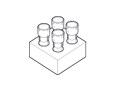
Life Technologies offers an extensive portfolio of kits and reagents for this step of the workflow.
Select the right DNA purification solution here.
2RE Digestion / Enrichment PCR
A. SNP Discovery: Restriction of gDNA with restriction enzyme, amount and type depend on actual plant species.
B. SNP Validation: Amplification of regions of interest with specific primer sets and incorporate barcodes.
3Ligate Barcoded Adapters
A. Ligation of sequencing adapters specific to restriction site; adapters contain barcode sequence.
B. Ligation of sequencing adapters (specific to common anchor sequences from step 2).
4Pre-amplify Fragments
In case of two restriction sites a pre-amplification of the desired restriction fragment is required, (fragment that has both restriction sites).
Day 2
5Prepare Template
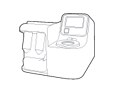
The Ion OneTouch™ System for template preparation is fully automated and requires just minutes of hands-on time
6Run Sequence
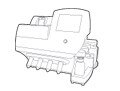
The Ion PGM™ Sequencer is ideal for GBS applications as well as sequencing small genomes, sets of genes, or performing gene expression profiling. See all you can do for plant applications here.
7Analyze Data
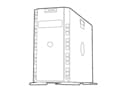
Torrent Suite analysis software delivers significant improvement in base-call accuracy while cutting analysis time to a minimum.
GBS with the Ion PGM™ Sequencer: Case Studies

- Barley (Hordeum vulgare): Drs. Nils Stein (IPK, Gatersleben, Germany) and Jesse Poland (USDA-ARS2, Manhattan, KS, USA) partnered with Life Technologies to develop a protocol for GBS in barley using two restriction enzymes. From their first pilot, they concluded that Ion PGM™ Sequencer has a great potential for large GBS studies due to the high SNP calling accuracy, attractive cost per sample, and unmatched speed in the sequencing workflow.
Learn more
Interview with Dr. Poland
For Research Use only, not intended for diagnostic purposes.
Resources | SupportNeed help?
| |||
