Hamburger Menu Button
Thermo Fisher Scientific Logo
登入
還沒有帳戶嗎 ? 立即註冊
  • 產品
    • Antibodies
    • Oligos, Primers, Probes and Genes
    • TaqMan Real-Time PCR Assays
    • Cell Culture Media
    • Chemicals
    • Western Blot Products
    • Chromatography Columns and Cartridges
    • Lab Equipment
    • Lab Plasticware and Supplies
    • Microplates
    • Greener Products
    • 查看所有產品類別
  • 應用
    • 生物製程
    • 細胞培養和轉染
    • 食品和飲料
    • 實驗室解決方案
    • 製藥和生物製藥
    • 即時定量PCR
    • 半導體分析
    • 臨床和診斷
    • 數位解決方案
    • 分子光譜、同位素與元素分析
    • 查看所有應用與技術
  • 服務
    • 360° CDMO 和 CRO 服務
    • CDMO 服务
    • 临床试验 CRO 服务
    • 客製化服務
    • 金融與租賃服務
    • 儀器服務
    • 實驗室資訊學
    • 授權與商業供應
    • 培訓服務
    • 查看所有服務
  • 支援
    • 線上訂購協助
    • 數位解決方案
    • 產品支持
    • 技術相關資訊
    • 培訓與教育
    • 查看所有協助與支援
  • 熱門商品
    • TaqMan Real-Time PCR Assays
      TaqMan Real-Time PCR Assays
    • Antibodies
      Antibodies
    • Oligos, Primers & Probes
      Oligos, Primers & Probes
    • GeneArt Gene Synthesis
      GeneArt Gene Synthesis
    • Cell Culture Plastics
      Cell Culture Plastics
  • 我們的服務對象
    • 生物技術
    • 生物製藥
    • CDMO
    • 實驗室診斷
    • 工業與應用科學
  • 特價商品
  • 聯絡我們
  • 快速訂購
  • 訂單狀態與貨物追蹤
  • 文件和證書
Thermo Fisher Scientific Logo

Search

Search All
Search button
          • 訂單查詢
          • 快速訂購
          • 登入
            登入
            還沒有帳戶嗎 ? 立即註冊
            • 帳戶
            • 訂單
            • Connect: Lab, Data, Apps
            • 客製化產品與項目
            • 儀器管理
          • Primary Antibodies ›
          • CD206 (MMR) Antibodies

          Invitrogen

          CD206 (MMR) Monoclonal Antibody (MR6F3), eFluor™ 450, eBioscience™

          69 Published Figures
          47 References
          View all (61) CD206 (MMR) antibodies

          {{$productOrderCtrl.translations['antibody.pdp.commerceCard.promotion.promotions']}}

          {{$productOrderCtrl.translations['antibody.pdp.commerceCard.promotion.viewpromo']}}

          {{$productOrderCtrl.translations['antibody.pdp.commerceCard.promotion.promocode']}}: {{promo.promoCode}} {{promo.promoTitle}} {{promo.promoDescription}}. {{$productOrderCtrl.translations['antibody.pdp.commerceCard.promotion.learnmore']}}

          Datasheet
          Certificates
          Protocols
          Questions & Answers
          Tech Support
          Datasheet
          Certificates
          Protocols
          Questions & Answers
          Tech Support
          Datasheet
          Certificates
          Protocols
          Questions & Answers
          Tech Support

          Cite CD206 (MMR) Monoclonal Antibody (MR6F3), eFluor™ 450, eBioscience™

          Additional Information:
          {{banner.description}}
          {{$ctrl.isSkuNotesCollapsed ? 'View more' : 'View less'}}
          • Antibody Testing Data (1)
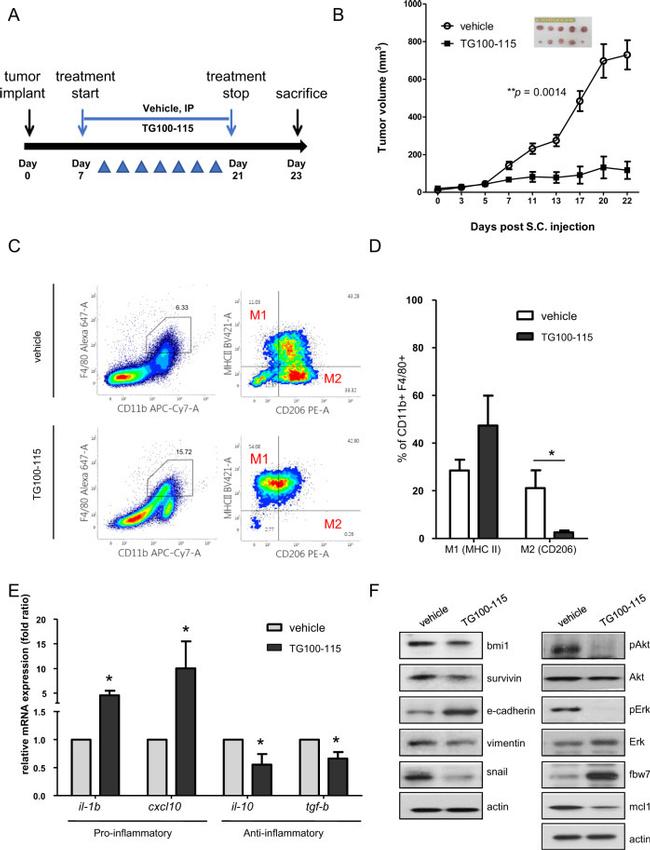
          • Published Figures (69)
          CD206 (MMR) Antibody in Flow Cytometry (Flow)
          Group 53 Created with Sketch.
          CD206 (MMR) Antibody in Flow Cytometry (Flow)
          Group 53 Created with Sketch.

          FIGURE: 1 / 70

          {{ $ctrl.currentElement.advancedVerification.fullName }}
          {{ $ctrl.currentElement.advancedVerification.text }}

          CD206 (MMR) Antibody (48-2061-82) in Flow

          BALB/c mouse resident peritoneal exudate cells were stained with F4/80 Monoclonal Antibody, APC (Product # 17-4801-82) followed by fixation and permeabilization with the Intracellular Fixation and Permeabilization Buffer Set (Product # 88-8824-00). Cells were then intracellularly stained with 0.25 µg of Rat IgG2b kappa Isotype Control, eFluor 450 (Product # 48-4031-82) (left) or 0.25 µg of CD206 (MMR) Monoclonal Antibody, eFluor 450 (right). Total viable cells were used for analysis. {{ $ctrl.currentElement.advancedVerification.fullName }} validation info. View more
          Published figure supplied by benchsci-logo
          PMID: {{$ctrl.currentElement.benchSciPubmedId}}
          View Product

          {{$ctrl.videoDesc}}

          {{$ctrl.videoLongDesc}}

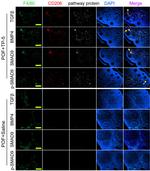
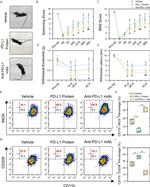
          CD206 (MMR) Antibody in Flow Cytometry (Flow)
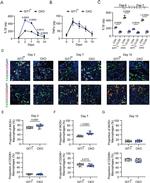
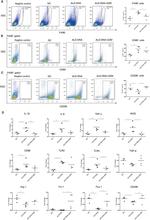
          CD206 (MMR) Antibody in Flow Cytometry (Flow)
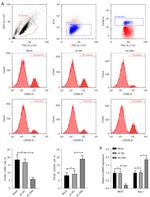
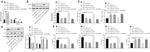
          CD206 (MMR) Antibody in Flow Cytometry (Flow)
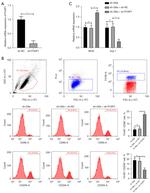
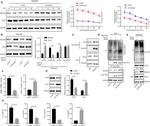
          CD206 (MMR) Antibody in Flow Cytometry (Flow)
          CD206 (MMR) Antibody in Flow Cytometry (Flow)
          CD206 (MMR) Antibody in Flow Cytometry (Flow)
          CD206 (MMR) Antibody in Immunocytochemistry (ICC/IF)
          CD206 (MMR) Antibody in Immunocytochemistry (ICC/IF)
          CD206 (MMR) Antibody in Western Blot (WB)
          CD206 (MMR) Antibody in Western Blot (WB)
          CD206 (MMR) Antibody in Flow Cytometry (Flow)
          CD206 (MMR) Antibody in Flow Cytometry (Flow)
          CD206 (MMR) Antibody in Flow Cytometry (Flow)
          CD206 (MMR) Antibody in Flow Cytometry (Flow)
          CD206 (MMR) Antibody in Flow Cytometry (Flow)
          CD206 (MMR) Antibody in Flow Cytometry (Flow)
          CD206 (MMR) Antibody in Flow Cytometry (Flow)
          CD206 (MMR) Antibody in Flow Cytometry (Flow)
          CD206 (MMR) Antibody in Flow Cytometry (Flow)
          CD206 (MMR) Antibody in Flow Cytometry (Flow)
          CD206 (MMR) Antibody in Flow Cytometry (Flow)
          CD206 (MMR) Antibody in Flow Cytometry (Flow)
          CD206 (MMR) Antibody in Flow Cytometry (Flow)
          CD206 (MMR) Antibody in Flow Cytometry (Flow)
          CD206 (MMR) Antibody in Flow Cytometry (Flow)
          CD206 (MMR) Antibody in Flow Cytometry (Flow)
          CD206 (MMR) Antibody in Flow Cytometry (Flow)
          CD206 (MMR) Antibody in Flow Cytometry (Flow)
          CD206 (MMR) Antibody in Flow Cytometry (Flow)
          CD206 (MMR) Antibody in Flow Cytometry (Flow)
          CD206 (MMR) Antibody in Flow Cytometry (Flow)
          CD206 (MMR) Antibody in Flow Cytometry (Flow)
          CD206 (MMR) Antibody in Flow Cytometry (Flow)
          CD206 (MMR) Antibody in Flow Cytometry (Flow)
          CD206 (MMR) Antibody in Flow Cytometry (Flow)
          CD206 (MMR) Antibody in Flow Cytometry (Flow)
          CD206 (MMR) Antibody in Flow Cytometry (Flow)
          CD206 (MMR) Antibody in Flow Cytometry (Flow)
          CD206 (MMR) Antibody in Flow Cytometry (Flow)
          CD206 (MMR) Antibody in Flow Cytometry (Flow)
          CD206 (MMR) Antibody in Flow Cytometry (Flow)
          CD206 (MMR) Antibody in Flow Cytometry (Flow)
          CD206 (MMR) Antibody in Flow Cytometry (Flow)
          CD206 (MMR) Antibody in Flow Cytometry (Flow)
          CD206 (MMR) Antibody in Flow Cytometry (Flow)
          CD206 (MMR) Antibody in Flow Cytometry (Flow)
          CD206 (MMR) Antibody in Flow Cytometry (Flow)
          CD206 (MMR) Antibody in Flow Cytometry (Flow)
          CD206 (MMR) Antibody in Flow Cytometry (Flow)
          CD206 (MMR) Antibody in Flow Cytometry (Flow)
          CD206 (MMR) Antibody in Flow Cytometry (Flow)
          CD206 (MMR) Antibody in Flow Cytometry (Flow)
          CD206 (MMR) Antibody in Flow Cytometry (Flow)
          CD206 (MMR) Antibody in Flow Cytometry (Flow)
          CD206 (MMR) Antibody in Flow Cytometry (Flow)
          CD206 (MMR) Antibody in Flow Cytometry (Flow)
          CD206 (MMR) Antibody in Flow Cytometry (Flow)
          CD206 (MMR) Antibody in Flow Cytometry (Flow)
          CD206 (MMR) Antibody in Flow Cytometry (Flow)
          CD206 (MMR) Antibody in Flow Cytometry (Flow)
          CD206 (MMR) Antibody in Flow Cytometry (Flow)
          CD206 (MMR) Antibody in Flow Cytometry (Flow)
          CD206 (MMR) Antibody in Flow Cytometry (Flow)
          CD206 (MMR) Antibody in Flow Cytometry (Flow)
          CD206 (MMR) Antibody in Flow Cytometry (Flow)
          CD206 (MMR) Antibody in Flow Cytometry (Flow)
          CD206 (MMR) Antibody in Flow Cytometry (Flow)
          CD206 (MMR) Antibody in Flow Cytometry (Flow)
          CD206 (MMR) Antibody in Flow Cytometry (Flow)
          CD206 (MMR) Antibody in Flow Cytometry (Flow)

          Product Details

          48-2061-82

          Applications
          Tested Dilution
          Publications

          Western Blot (WB)

          -
          View 1 publication 1 publication

          Immunocytochemistry (ICC/IF)

          -
          View 2 publications 2 publications

          Flow Cytometry (Flow)

          0.5 µg/test
          View 44 publications 44 publications
          Product Specifications

          Species Reactivity

          Mouse

          Published species

          Mouse, Rat

          Host/Isotype

          Rat / IgG2b, kappa

          Recommended Isotype Control

          Rat IgG2b kappa Isotype Control (eB149/10H5), eFluor™ 450, eBioscience™

          Class

          Monoclonal

          Type

          Antibody

          Clone

          MR6F3

          Conjugate

          eFluor™ 450 eFluor™ 450 eFluor™ 450
          • Alexa Fluor 488 
          • Alexa Fluor 700 
          • APC 
          • APC-eFluor 780
          • Brilliant UV 563
          • PE 
          • PE-Cyanine7
          • PE-eFluor 610
          • PerCP-eFluor 710
          • Request custom conjugation

          Excitation/Emission Max

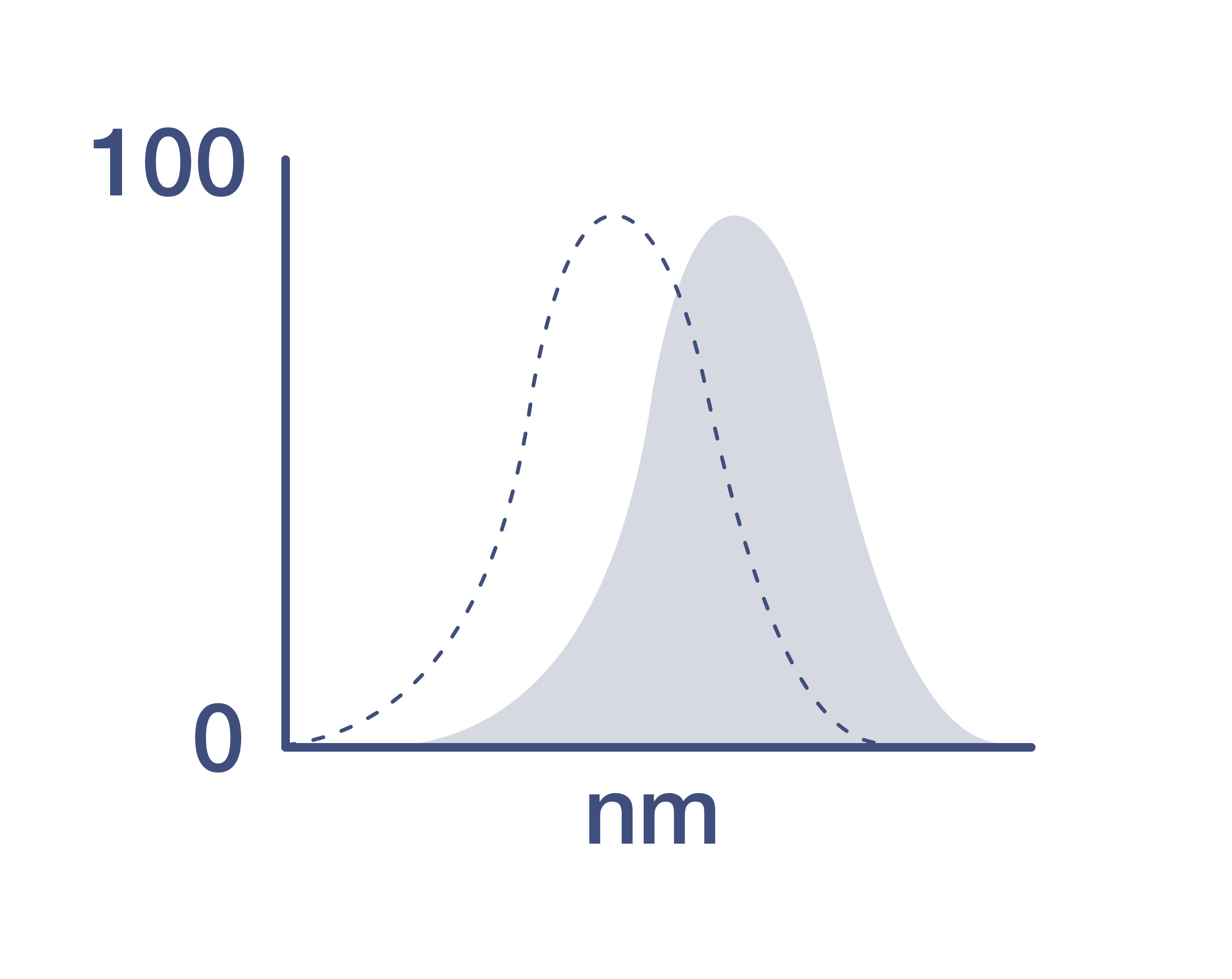
          405/445 nm View spectra spectra

          Form

          Liquid

          Concentration

          0.2 mg/mL

          Purification

          Affinity chromatography

          Storage buffer

          PBS, pH 7.2

          Contains

          0.09% sodium azide

          Storage conditions

          4°C, store in dark, DO NOT FREEZE!

          Shipping conditions

          Ambient (domestic); Wet ice (international)

          RRID

          AB_2762721

          Product Specific Information

          Description: This MR6F3 antibody recognizes mouse CD206 also known as Macrophage Mannose Receptor (MMR) or Mannose Receptor C, Type 1 (MRC1). CD206 is a 175-kDa, type 1 integral membrane glycoprotein receptor that is present in macrophages, some dendritic cells, as well as liver and lymphoid endothelial cells. CD206 belongs to the C-type lectin family. Extracellular regions of CD206 include an N-terminal cysteine-rich (CR) domain that binds sulfated glycoproteins, a fibronectin II (FNII) domain that binds collagens, and eight carbohydrate recognition domains (CRDs) that bind sugars like mannose and fucose with high affinity. CD206 mediates phagocytic and endocytic uptake of fungal, bacterial, protozoan and viral antigens, and plays an important role in immune defense and immune regulation. A soluble form of CD206 is generated by cleavage of the full-length protein, and it can be detected in in vitro macrophage cell culture supernatants and in mouse serum. CD206 is considered to be one of the markers of M2 macrophages. Factors inducing its expression include: IL-4, IL-13, M-CSF, IL-6, IL-10, and glucocorticoids, while TNF-alpha, IFN-gamma, TGF-beta, and LPS have been reported to down-regulate expression of CD206.

          It has been demonstrated that only a small fraction of CD206 is present at the cell surface, therefore, intracellular staining is recommended.

          Applications Reported: This MR6F3 antibody has been reported for use in flow cytometric analysis, and intracellular staining followed by flow cytometric analysis.

          Applications Tested: This MR6F3 antibody has been tested by intracellular staining and flow cytometric analysis of mouse resident peritoneal exudate cells using the Intracellular Fixation and Permeabilization Buffer Set (Product # 88-8824-00) and protocol. This can be used at less than or equal to 0.5 µg per test. A test is defined as the amount (µg) of antibody that will stain a cell sample in a final volume of 100 µL. Cell number should be determined empirically but can range from 10^5 to 10^8 cells/test. It is recommended that the antibody be carefully titrated for optimal performance in the assay of interest.

          eFluor 450 is an alternative to Pacific Blue. eFluor 450 emits at 445 nm and is excited with the violet laser line (405 nm). Please make sure that your instrument is capable of detecting this fluorochrome.

          Excitation: 405 nm; Emission: 445 nm; Laser: Violet Laser.

          Target Information

          CD206 (MSR, Mannose receptor, MRC1) is a 175 kDa transmembrane protein belonging to the group of pattern recognition receptors. CD206 is predominantly expressed in tissue macrophages, dendritic cells, a subpopulation of endothelial cells and sperm cells. CD206 is thought to play a role in the innate and adaptive immune response. CD206 is also expressed on microglia and mato cells of the brain but not astrocytes or neurons. CD206 also mediate the recognition and uptake of a variety of macromolecules, including modified lipoproteins, advanced glycation end (AGEs) products and amyloid b-protein (Abeta). While the normal role of CD206 is associated with cell adhesion and host defense mechanisms, it also has been implicated in the development of atherosclerosis and Amyloid beta deposition in Alzheimer's disease (AD). CD206's gene encodes the class A macrophage scavenger receptors, which include three different types (1, 2, 3) generated by alternative splicing. The isoforms type 1 and type 2 are functional receptors and are able to mediate the endocytosis of modified low density lipoproteins (LDLs). The isoform type 3 does not internalize modified LDL (acetyl-LDL) despite having the domain shown to mediate this function in the types 1 and 2 isoforms. CD206 has an altered intracellular processing and is trapped within the endoplasmic reticulum, making it unable to perform endocytosis. The isoform type 3 can inhibit the function of isoforms type 1 and type 2 when co-expressed, indicating a dominant negative effect and suggesting a mechanism for regulation of scavenger receptor activity in macrophages. Other diseases associated with CD206 dysfunction include leprosy and Gaucher's Disease.

          For Research Use Only. Not for use in diagnostic procedures. Not for resale without express authorization.

          How to use the Panel Builder

          Watch the video to learn how to use the Invitrogen Flow Cytometry Panel Builder to build your next flow cytometry panel in 5 easy steps.

          Bioinformatics

          Protein Aliases: CD206; Macrophage mannose receptor 1; MMR

          View more View less

          Gene Aliases: AW259686; CD206; MR; Mrc1

          View more View less

          UniProt ID: (Mouse) Q61830

          View more View less

          Entrez Gene ID: (Mouse) 17533

          View more View less

          Function(s)
          receptor activity transmembrane signaling receptor activity mannose binding carbohydrate binding
          Process(es)
          endocytosis receptor-mediated endocytosis signal transduction cellular response to lipopolysaccharide cellular response to interferon-gamma cellular response to interleukin-4
          It has to be done as per old AB suggested Products section.

          Disclaimer

          Close

          Clicking the images or links will redirect you to a website hosted by BenchSci that provides third-party scientific content. Neither the content nor the BenchSci technology and processes for selection have been evaluated by us; we are providing them as-is and without warranty of any kind, including for use or application of the Thermo Fisher Scientific products presented.

          guarantee_icon

          Performance Guarantee

          If an Invitrogen™ antibody doesn't perform as described on our website or datasheet,we'll replace the product at no cost to you, or provide you with a credit for a future purchase.*

          Learn more
          help_icon

          We're here to help

          Get expert recommendations for common problems or connect directly with an on staff expert for technical assistance related to applications, equipment and general product use.

          Contact tech support
          產品訂購 Plus Icon Minus Icon
          • 訂單狀態
          • 訂購協助
          • 快速訂購
          • 現貨供應中心
          • 電子採購
          支持 Plus Icon Minus Icon
          • 協助與支持
          • 聯絡我們
          • 技術支持中心
          • 搜尋文件和證書
          • 回報網站問題
          資源 Plus Icon Minus Icon
          • 學習中心
          • 促銷活動
          • 活動和網路研討會
          • 社群媒體
          關於 Thermo Fisher Plus Icon Minus Icon
          • 關於我們 關於我們
          • 人才招募 人才招募
          • 投資者資訊 投資者資訊
          • 新聞 新聞
          • 企業社會責任 企業社會責任
          • 商標
          • 政策和聲明
          品牌 Plus Icon Minus Icon
          • Thermo Scientific
          • Applied Biosystems
          • Invitrogen
          • Gibco
          • Ion Torrent
          • Fisher Scientific
          • Patheon
          • PPD
          • Terms & Conditions
          • Privacy Policy
          • Price & Freight Policy
          © 2006-2026 Thermo Fisher Scientific Inc. All rights reserved. All trademarks are the property of Thermo Fisher Scientific and its subsidiaries unless otherwise specified.
          Taiwan flag icon
          Taiwan

          Your items have has been added!


          Host server : magellan-search-green-7d94cb4b65-mrft7:80/100.66.76.145:80.
          git-commit: c9e08c96761173abe34e68f880379696776a4827
          git-url: https://github.com/thermofisher/magellan-search
          git-branch: release/2.44.1-2026.02.97.1.0