Search
Invitrogen
AHR Monoclonal Antibody (4MEJJ), eFluor™ 660, eBioscience™
{{$productOrderCtrl.translations['antibody.pdp.commerceCard.promotion.promotions']}}
{{$productOrderCtrl.translations['antibody.pdp.commerceCard.promotion.viewpromo']}}
{{$productOrderCtrl.translations['antibody.pdp.commerceCard.promotion.promocode']}}: {{promo.promoCode}} {{promo.promoTitle}} {{promo.promoDescription}}. {{$productOrderCtrl.translations['antibody.pdp.commerceCard.promotion.learnmore']}}
Additional Information:
{{banner.description}}
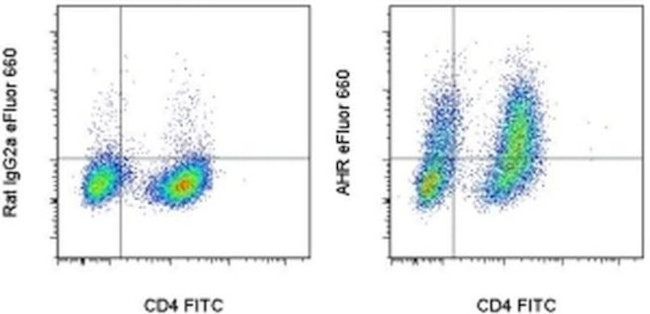
FIGURE: 1 / 4
AHR Antibody (50-5925-82) in Flow
BALB/c splenocytes were polarized under Th17 conditions for 3 days then fixed and permeabilized with Intracellular Fixation & Permeabilization Buffer Set (Product # 88-8824-00), and then intracellularly stained with Anti-Mouse CD4 FITC (Product # 11-0042-82) and 0.5 µg of Rat IgG2a K Isotype Control eFluor® 660 (Product # 50-4321-82) or 0.5 µg of Anti-Mouse AHR eFluor® 660. Total viable cells, as determined by Fixable Viability Dye eFluor® 780 (Product # 65-0865-14), were used for analysis.


Product Details
50-5925-82
Applications
Tested Dilution
Publications
Product Specifications
Species Reactivity
Mouse
Published species
Mouse
Host/Isotype
Rat
/ IgG2a, kappa
Recommended Isotype Control
Class
Monoclonal
Type
Antibody
Clone
4MEJJ
Immunogen
E. coli derived, His-tagged AHR (aa 443-805)
Conjugate
Excitation/Emission Max
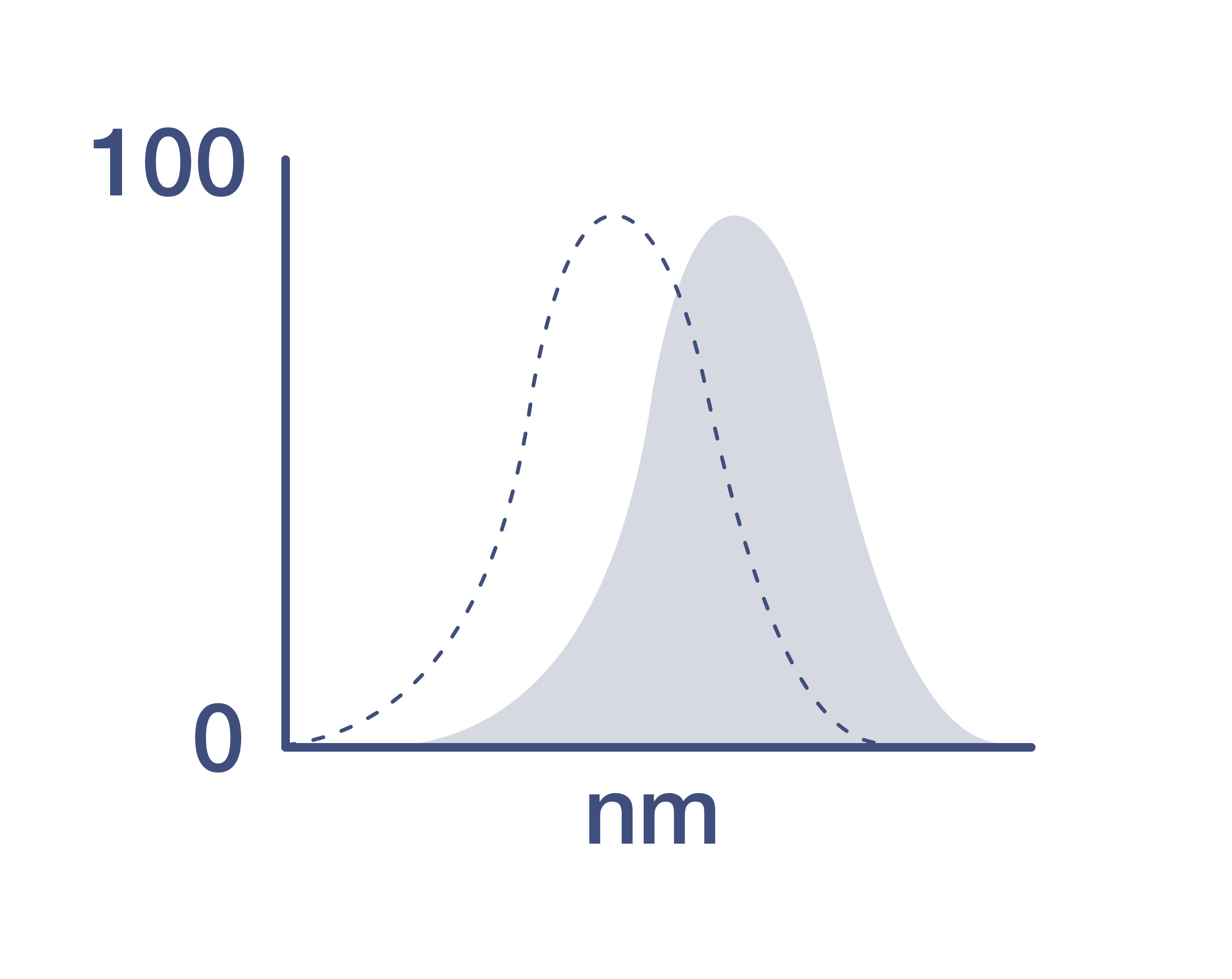
651/668 nm
View spectra
Form
Liquid
Concentration
0.2 mg/mL
Amount
100 µg
Purification
Affinity chromatography
Storage buffer
PBS, pH 7.2
Contains
0.09% sodium azide
Storage conditions
4°C, store in dark, DO NOT FREEZE!
Shipping conditions
Ambient (domestic); Wet ice (international)
RRID
Product Specific Information
Description: This 4MEJJ monoclonal antibody recognizes mouse aryl hydrocarbon receptor (AHR). The AHR is a ligand-activated transcription factor that mediates the toxic effects of a diverse group of environmental contaminants, most notably aryl hydrocarbons such as polychlorinated biphenyls (PCB) and tetrachlorodibenzo-p-dioxin (TCDD). The AHR has also been shown to bind to a number of naturally occurring compounds found in fruits and vegetables as well as compounds generated through normal cellular metabolism. AHR is localized in the cytoplasm in a complex that includes HSP90, p23, and XAP2/AIP/ARA9. Upon ligand-binding, AHR translocates to the nucleus and binds with aryl hydrocarbon receptor nuclear translocator (ARNT), and this complex binds to the consensus DNA sequence, GCGTG, found in the promoter/enhancer regions of many genes such as CYP1A1. The AHR is expressed in many cell types, with highest expression levels found in liver. The AHR has been shown to play a role in the regulation/differentiation of Treg and Th17 cells.
The 4MEJJ monoclonal antibody has been found to recognize the b-1, b-2 and d alleles of mouse AHR but does not cross-react with human AHR.
Applications Reported: This 4MEJJ antibody has been reported for use in intracellular staining followed by flow cytometric analysis.
Applications Tested: This 4MEJJ antibody has been tested by intracellular staining and flow cytometric analysis of TH17 polarized mouse splenocytes using the Intracellular Fixation & Permeabilization Buffer Set (Product # 88-8824-00) and protocol. Please refer to BestProtocols®: Protocol A: Two step protocol for (cytoplasmic) intracellular proteins located under the Resources Tab online. This can be used at less than or equal to 1 µg per test. A test is defined as the amount (µg) of antibody that will stain a cell sample in a final volume of 100 µL. Cell number should be determined empirically but can range from 10^5 to 10^8 cells/test. It is recommended that the antibody be carefully titrated for optimal performance in the assay of interest.
eFluor® 660 is a replacement for Alexa Fluor® 647. eFluor® 660 emits at 659 nm and is excited with the red laser (633 nm). Please make sure that your instrument is capable of detecting this fluorochrome.
Excitation: 633-647 nm; Emission: 668 nm; Laser: Red Laser.
Filtration: 0.2 µm post-manufacturing filtered.
Target Information
AHR (Ah Receptor) belongs to a family of proteins comprised of its dimerization partner ARNT (HIF-1 Beta) and the Drosophila proteins PER and SIM. AHR contains an N-terminal sequence of approximately 200 amino acids termed the PAS domain. AHR, found in a variety of tissues, binds to a specific DNA enhancer sequence and initiates transcription of the mRNA for the cytochrome P-450 (CYPIA1) gene. The gene for AHR encodes a ligand-activated transcription factor involved in the regulation of biological responses to planar aromatic hydrocarbons. AHR has been shown to regulate xenobiotic-metabolizing enzymes such as cytochrome P450, and its ligands included a variety of aromatic hydrocarbons. AHR is a ligand-activated helix/loop/helix transcription factor found in a variety of vertebrate species. The known ligands for AHR are foreign planar aromatic compounds, such as polycyclic aromatic compounds and halogenated aromatic compounds such as 2,3,7,8-tetrachlorodibenzo-p-dioxin (TCDD). Unlike the steroid/thyroid hormone receptors, there is no known physiological ligand for AHR. Studies indicate that in non-ligand activated cells, AHR is found complexed with HSP90 predominantly in the cytoplasm. Upon binding to an agonist, the ligand-activated AhR is believed to transform to a nuclear, DNA binding form, and this transformation process appears to involve dissociation of HSP90 from AhR followed by formation of a heterodimer with AhR nuclear translocator protein (Arnt). Diseases associated with AHR include eosinophilic fasciitis and seborrheic dermatitis.
For Research Use Only. Not for use in diagnostic procedures. Not for resale without express authorization.
How to use the Panel Builder
Watch the video to learn how to use the Invitrogen Flow Cytometry Panel Builder to build your next flow cytometry panel in 5 easy steps.
Bioinformatics
Protein Aliases: Ah receptor; Aryl hydrocarbon receptor; dioxin receptor
Gene Aliases: Ah; Ahh; Ahr; Ahre; bHLHe76; In
UniProt ID: (Mouse) P30561
Entrez Gene ID: (Mouse) 11622
DNA binding
transcription factor activity, sequence-specific DNA binding
transcription factor activity, RNA polymerase II distal enhancer sequence-specific binding
signal transducer activity
aryl hydrocarbon receptor activity
RNA polymerase II transcription factor activity, ligand-activated sequence-specific DNA binding
protein binding
transcription factor binding
enhancer binding
sequence-specific DNA binding
transcription regulatory region DNA binding
protein heterodimerization activity
protein dimerization activity
Hsp90 protein binding
E-box binding
basic helix-loop-helix transcription factor
negative regulation of transcription from RNA polymerase II promoter
cell morphogenesis
ovarian follicle development
blood vessel development
patterning of blood vessels
B cell homeostasis
liver development
B-1 B cell homeostasis
blood vessel remodeling
lymphocyte homeostasis
immune system process
negative regulation of systemic arterial blood pressure
cardiac left ventricle morphogenesis
circumferential growth involved in left ventricle morphogenesis
transcription, DNA-templated
regulation of transcription, DNA-templated
regulation of transcription from RNA polymerase II promoter
transcription from RNA polymerase II promoter
xenobiotic metabolic process
response to stress
cell cycle
signal transduction
blood circulation
regulation of blood pressure
response to xenobiotic stimulus
response to toxic substance
regulation of gene expression
response to organic cyclic compound
B cell differentiation
intracellular receptor signaling pathway
prostate gland development
regulation of B cell proliferation
circadian regulation of gene expression
embryonic hemopoiesis
post-embryonic hemopoiesis
camera-type eye development
T cell homeostasis
positive regulation of cell size
negative regulation of transcription, DNA-templated
positive regulation of transcription, DNA-templated
positive regulation of RNA polymerase II transcriptional preinitiation complex assembly
negative regulation of vasoconstriction
positive regulation of growth
rhythmic process
blood vessel morphogenesis
spleen development
reproductive structure development
gland development
smooth muscle tissue development
regulation of blood vessel size
regulation of heart growth
negative regulation of necrotic cell death
venous blood vessel development
kidney morphogenesis
common bile duct development
cellular response to cAMP
glomerulus morphogenesis
Disclaimer

Clicking the images or links will redirect you to a website hosted by BenchSci that provides third-party scientific content. Neither the content nor the BenchSci technology and processes for selection have been evaluated by us; we are providing them as-is and without warranty of any kind, including for use or application of the Thermo Fisher Scientific products presented.

Performance Guarantee
If an Invitrogen™ antibody doesn't perform as described on our website or datasheet,we'll replace the product at no cost to you, or provide you with a credit for a future purchase.*
Learn more
We're here to help
Get expert recommendations for common problems or connect directly with an on staff expert for technical assistance related to applications, equipment and general product use.
Contact tech support