Search
OriGene
FGF2 Polyclonal Antibody
{{$productOrderCtrl.translations['antibody.pdp.commerceCard.promotion.promotions']}}
{{$productOrderCtrl.translations['antibody.pdp.commerceCard.promotion.promocode']}}: {{promo.promoCode}} {{promo.promoTitle}} {{promo.promoDescription}}. {{$productOrderCtrl.translations['antibody.pdp.commerceCard.promotion.learnmore']}}
{{$ctrl.translations['antibody.pdp.skuNotes.additionalInformation']}}:
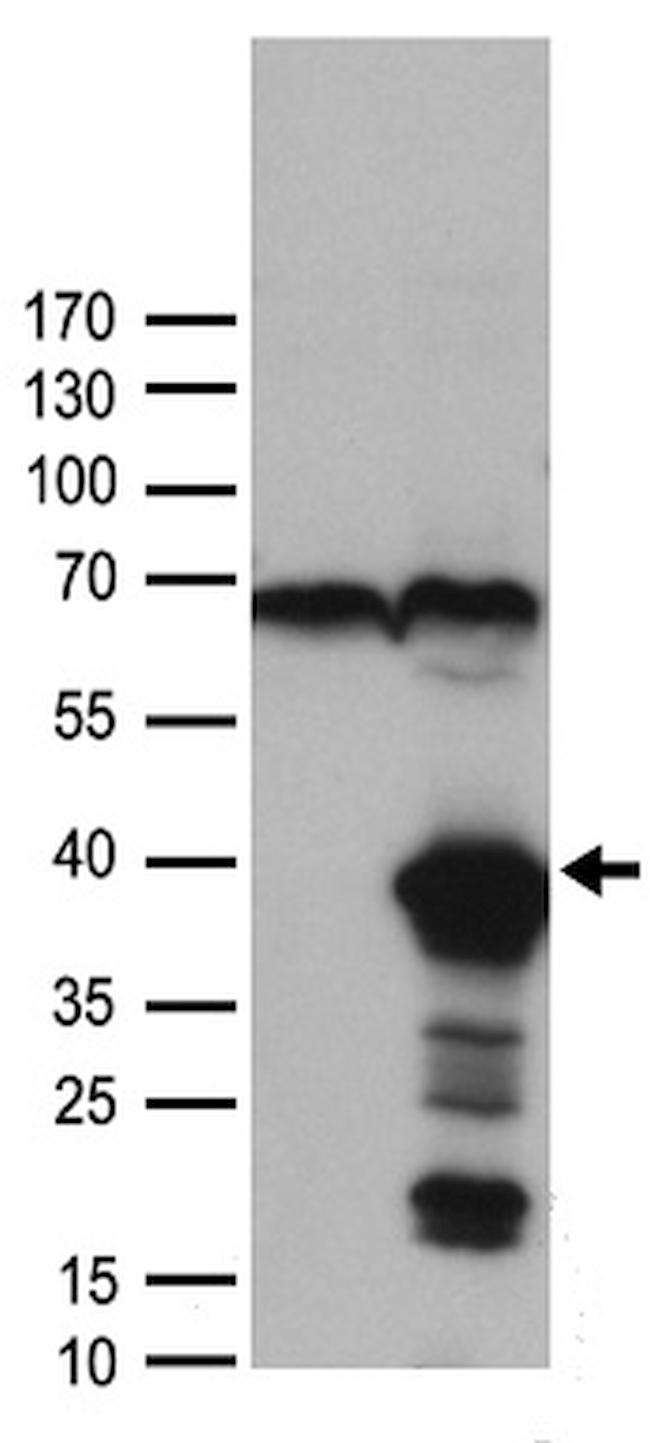
FIGURE: 1 / 2
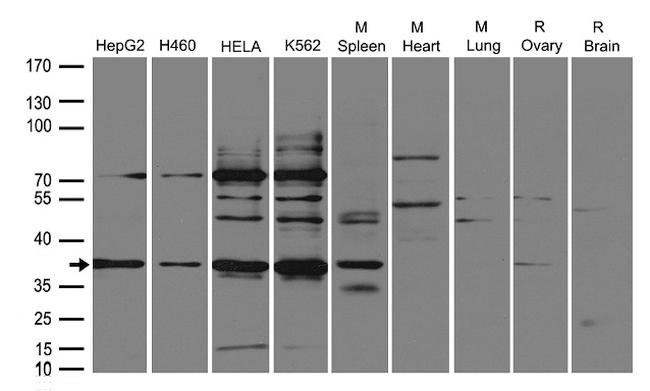
FGF2 Antibody (TA890058) in WB
HEK293T cells were transfected with the pCMV6-ENTRY control (Left lane) or pCMV6-ENTRY FGF2(RC217426, Right lane) cDNA for 48 hrs and lysed. Equivalent amounts of cell lysates (5 µg per lane) were separated by SDS-PAGE and immunoblotted with anti-FGF2 rab. Positive lysates LY400733 (100 µg) and LC400733 (20 µg) can be purchased separately from OriGene.


Please note: We are reviewing Western blot images included in the antibody testing data in our catalog, including those provided by third parties. Unless expressly labeled or annotated as “raw-unedited”, Western blot images included in the antibody testing data in our catalog may have been edited, optimized or otherwise adjusted for presentation.

Product Details
TA890058
Product Specifications
Species Reactivity
Human,
Rat
Host/Isotype
Rabbit
/ IgG
Class
Polyclonal
Type
Antibody
Immunogen
Recombinant protein of human FGF2
Conjugate
Unconjugated
Unconjugated
Unconjugated
Form
Liquid
Concentration
1.17 mg/mL
Amount
117 µg
Purification
Antigen affinity chromatography
Storage buffer
PBS with 50% glycerol
Contains
0.02% sodium azide
Storage conditions
-20°C, Avoid Freeze/Thaw Cycles
Shipping conditions
Ambient (domestic); Wet ice (international)
Target Information
FGF2 (FGFb, fibroblast growth factor basic) belongs to the fibroblast growth factor (FGF) family, and interacts with high-affinity transmembrane receptors to influence cell proliferation and tissue neovascularization. FGF2 exists as five isoforms with distinct intracellular localizations and functions. The 18 kDa isoform is predominantly cytosolic and acts through cell surface receptors, whereas the 22, 22.5, 24 and 34 kDa isoforms are nuclear and may signal independent of transmembrane receptor pathways. In humans, the gene is located on the q arm of chromosome 4. FGF2 has been implicated in diverse biological processes, such as limb and nervous system development, wound healing, and tumor growth. The mRNA for FGF2 contains multiple polyadenylation sites, and is alternatively translated from non-AUG and AUG initiation codons, resulting in five different isoforms with distinct properties. The CUG-initiated isoforms are localized in the nucleus and are responsible for the intracrine effect, whereas, the AUG-initiated form is mostly cytosolic and is responsible for the paracrine and autocrine effects of this FGF. Diseases associated with FGF2 dysfunction include Kaposi Sarcoma and corneal neovascularization.
For Research Use Only. Not for use in diagnostic procedures. Not for resale without express authorization.
References (0)
Have you cited this product in a publication?
Let us know so we can reference it here.
Bioinformatics
Protein Aliases: 18 kd basic fibroblast growth factor; 21 kd basic fibroblast growth factor (ctg start codon; put.); putative; angiogenesis promoting growth factor; basic fibroblast growth factor; basic fibroblast growth factor (ctg start codon); putative; basic fibroblast growth factor bFGF; basic fibroblast growth factor precursor; FGF; fgf basic; FGF-b; FGF2; Fibroblast growth factor; fibroblast growth factor 2 (basic); fibroblast growth factor 2a; Fibroblast growth factor basic; H-FGF-b-147; H-FGF-b-154; HBGF-2; heparin binding growth factor; heparin-binding growth factor 2; M-FGF-b; prostatropin
Gene Aliases: BFGF; FGF-2; Fgf2a; FGFB; HBGF-2
UniProt ID: (Human) P09038, (Rat) P13109
Entrez Gene ID: (Human) 2247, (Rat) 54250
branching involved in ureteric bud morphogenesis
organ induction
positive regulation of protein phosphorylation
positive regulation of endothelial cell proliferation
cell migration involved in sprouting angiogenesis
chromatin organization
positive regulation of cell proliferation
negative regulation of cell proliferation
fibroblast growth factor receptor signaling pathway
embryo development ending in birth or egg hatching
glial cell differentiation
positive regulation of endothelial cell migration
positive regulation of gene expression
negative regulation of fibroblast migration
growth factor dependent regulation of skeletal muscle satellite cell proliferation
substantia nigra development
positive regulation of cerebellar granule cell precursor proliferation
neurogenesis
hyaluronan catabolic process
lung development
regulation of cell migration
paracrine signaling
wound healing
positive regulation of cell fate specification
positive regulation of MAP kinase activity
positive regulation of MAPK cascade
positive regulation of blood vessel endothelial cell migration
negative regulation of blood vessel endothelial cell migration
response to ethanol
positive regulation of cell differentiation
positive regulation of osteoblast differentiation
positive regulation of angiogenesis
positive regulation of transcription from RNA polymerase II promoter
regulation of retinal cell programmed cell death
behavioral response to ethanol
positive regulation of smooth muscle cell proliferation
response to axon injury
stem cell development
positive regulation of epithelial cell proliferation
positive chemotaxis
release of sequestered calcium ion into cytosol
regulation of cell cycle
positive regulation of protein kinase B signaling
positive regulation of cardiac muscle cell proliferation
corticotropin hormone secreting cell differentiation
thyroid-stimulating hormone-secreting cell differentiation
chondroblast differentiation
mammary gland epithelial cell differentiation
angiogenesis involved in coronary vascular morphogenesis
negative regulation of wound healing
positive regulation of ERK1 and ERK2 cascade
cellular response to mechanical stimulus
positive regulation of cell migration involved in sprouting angiogenesis
positive regulation of canonical Wnt signaling pathway
positive regulation of lens fiber cell differentiation
negative regulation of oxidative stress-induced neuron intrinsic apoptotic signaling pathway
positive regulation of sprouting angiogenesis
response to wortmannin
positive regulation of vascular smooth muscle cell proliferation
positive regulation of epithelial tube formation
positive regulation of blood vessel branching
positive regulation of vascular endothelial cell proliferation
regulation of endothelial cell chemotaxis to fibroblast growth factor
positive regulation of endothelial cell chemotaxis to fibroblast growth factor
positive regulation of DNA biosynthetic process
positive regulation of endothelial cell chemotaxis
chemotaxis
signal transduction
Ras protein signal transduction
nervous system development
organ morphogenesis
negative regulation of gene expression
negative regulation of fibroblast growth factor receptor signaling pathway
regulation of angiogenesis
embryonic morphogenesis
stem cell proliferation
regulation of cell migration involved in sprouting angiogenesis
positive regulation of pri-miRNA transcription from RNA polymerase II promoter
regulation of blood vessel endothelial cell proliferation involved in sprouting angiogenesis
regulation of morphogenesis of an epithelium
Disclaimer

Clicking the images or links will redirect you to a website hosted by BenchSci that provides third-party scientific content. Neither the content nor the BenchSci technology and processes for selection have been evaluated by us; we are providing them as-is and without warranty of any kind, including for use or application of the Thermo Fisher Scientific products presented.

Performance Guarantee
If an Invitrogen™ antibody doesn't perform as described on our website or datasheet,we'll replace the product at no cost to you, or provide you with a credit for a future purchase.*
Learn more
We're here to help
Get expert recommendations for common problems or connect directly with an on staff expert for technical assistance related to applications, equipment and general product use.
Contact tech support