Hamburger Menu Button
Thermo Fisher Scientific Logo
Iniciar sesión
¿No tiene una cuenta? Crear una cuenta
  • Productos
    • Consumibles de laboratorio
    • Equipos de laboratorio
    • Instrumentos de Laboratorio
    • Clínica y Diagnóstico
    • Cromatografía
    • Espectrometría de Masas
    • Cultivo Celular
    • Análisis Celular
    • Anticuerpos
    • Ver todas las categorías de producto
  • Aplicaciones
    • Cultivo celular y transfección
    • Citometría de flujo
    • Investigación sobre el cáncer
    • Cromatografía
    • Secuenciación
    • PCR
    • Soluciones para laboratorio
    • Diagnóstico de alergias
    • Ver todas las aplicaciones y técnicas
  • Servicios
    • Servicios Personalizados
    • Servicios de Capacitación
    • Informática para laboratorios de ámbito empresarial
    • Servicios financieros y de arrendamiento
    • Servicios 360° de CDMO y CRO
    • Servicios de CDMO
    • Servicios de CRO
    • Ver todos los servicios
  • Ayuda y Soporte
    • Crear una nueva cuenta
    • Cómo hacer el pedido
    • Póngase en contacto con nosotros
    • Cambio de ubicación
    • Ver toda la ayuda y soporte técnico
  • Popular
    • TaqMan Real-Time PCR Assays
      TaqMan Real-Time PCR Assays
    • Antibodies
      Antibodies
    • Oligos, Primers & Probes
      Oligos, Primers & Probes
    • GeneArt Gene Synthesis
      GeneArt Gene Synthesis
    • Cell Culture Plastics
      Cell Culture Plastics
  • A quiénes brindamos nuestros servicios
    • Industria biotecnológica
    • Sector biofarmacéutico
    • CDMO
    • Diagnósticos de laboratorio
    • Ciencias aplicadas e industriales
  • Ofertas especiales
  • Contáctenos
  • Orden Rápida
  • Documentos y certificados
Thermo Fisher Scientific Logo

Search

Buscar
Search button
          • Contáctenos
          • Orden Rápida
          • Iniciar sesión
            Iniciar sesión
            ¿No tiene una cuenta? Crear una cuenta
            • Cuenta
            • Pedidos
            • Productos y proyectos personalizados
          • Primary Antibodies ›
          • WNT1 Antibodies

          Bioss

          Wnt1 Polyclonal Antibody

          View all (13) WNT1 antibodies

          {{$productOrderCtrl.translations['antibody.pdp.commerceCard.promotion.promotions']}}

          {{$productOrderCtrl.translations['antibody.pdp.commerceCard.promotion.viewpromo']}}

          {{$productOrderCtrl.translations['antibody.pdp.commerceCard.promotion.promocode']}}: {{promo.promoCode}} {{promo.promoTitle}} {{promo.promoDescription}}. {{$productOrderCtrl.translations['antibody.pdp.commerceCard.promotion.learnmore']}}

          Datasheet
          Certificates
          Protocols
          Questions & Answers
          Tech Support
          Datasheet
          Certificates
          Protocols
          Questions & Answers
          Tech Support
          Datasheet
          Certificates
          Protocols
          Questions & Answers
          Tech Support

          Cite Wnt1 Polyclonal Antibody

          Additional Information:
          {{banner.description}}
          {{$ctrl.isSkuNotesCollapsed ? 'View more' : 'View less'}}
          • Antibody Testing Data (4)
          Wnt1 Antibody in Immunohistochemistry (Paraffin) (IHC (P))
          Group 53 Created with Sketch.
          Wnt1 Antibody in Immunohistochemistry (Paraffin) (IHC (P))
          Group 53 Created with Sketch.

          FIGURE: 1 / 4

          {{ $ctrl.currentElement.advancedVerification.fullName }}
          {{ $ctrl.currentElement.advancedVerification.text }}

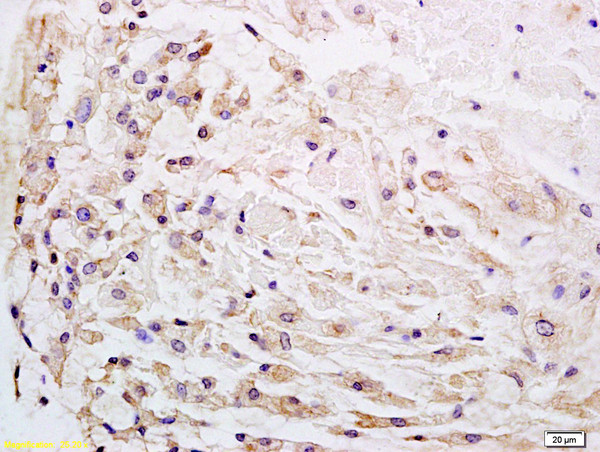
          Wnt1 Antibody (BS-1739R) in IHC (P)

          Formalin-fixed and paraffin embedded human gastric carcinoma labeled with Anti-Wnt1 Polyclonal Antibody, Unconjugated (bs-1739R) at 1:200 followed by conjugation to the secondary antibody and DAB staining. {{ $ctrl.currentElement.advancedVerification.fullName }} validation info. View more
          Published figure supplied by benchsci-logo
          PMID: {{$ctrl.currentElement.benchSciPubmedId}}
          View Product

          {{$ctrl.videoDesc}}

          {{$ctrl.videoLongDesc}}

          Wnt1 Antibody in Immunohistochemistry (Paraffin) (IHC (P))
          Wnt1 Antibody in Immunohistochemistry (Paraffin) (IHC (P))
          Wnt1 Antibody in Immunohistochemistry (Paraffin) (IHC (P))
          Wnt1 Antibody in Western Blot (WB)
          Wnt1 Polyclonal Antibody

          Product Details

          BS-1739R

          Applications
          Tested Dilution
          Publications

          Western Blot (WB)

          1:300
          -

          Immunohistochemistry (Paraffin) (IHC (P))

          1:200
          -

          Immunohistochemistry (Frozen) (IHC (F))

          1:100-1:500
          -

          Immunocytochemistry (ICC/IF)

          1:50-1:200
          -

          ELISA (ELISA)

          1:500-1:1,000
          -
          Product Specifications

          Species Reactivity

          Human, Mouse, Rat

          Host/Isotype

          Rabbit / IgG

          Class

          Polyclonal

          Type

          Antibody

          Immunogen

          KLH conjugated synthetic peptide derived from human Wnt1, amino acids 251-350.
          3D Epitope / Immunogen

          Conjugate

          Unconjugated Unconjugated Unconjugated

          Form

          Liquid

          Concentration

          1 mg/mL

          Amount

          100 µg

          Purification

          Protein A

          Storage buffer

          0.01M TBS, pH 7.4, with 50% glycerol, 1% BSA

          Contains

          0.02% ProClin 300

          Storage conditions

          -20°C

          Shipping conditions

          Ambient (domestic); Wet ice (international)

          Target Information

          Wnt proteins constitute a family of secreted glyocoproteins that activate signal transduction pathways to mediate tissue homeostasis, cell fate, cell proliferation, and self-renewal. The canonical signaling pathway is initiated upon Wnt binding to a Frizzled family receptor and an LRP5/LRP6 coreceptor, which leads to activation of the beta-catenin cascade. Non-canonical Wnt signals are activated by binding to a Frizzled family receptor and ROR2 coreceptor. Extensive research has shown that deregulation of these pathways or its components can lead to cancer. Human Wnt-1 is encoded as a 370 amino acid precursor that, upon secretion, is cleaved into a 343 amino acid (42 kDa) mature form. At the amino acid level, mature human Wnt-1 is approximately 99% identical to mature mouse Wnt-1. Depending on the tissue, Wnt-1 can activate the canonical and non-canonical signaling pathways. Studies have demonstrated its involvement in a variety of functions, including embryonic development and carcinogenesis. Wnt-1 signaling can also induce the phosphorylation and subsequent degradation of c-Myb.

          For Research Use Only. Not for use in diagnostic procedures. Not for resale without express authorization.

          References (0)

          Have you cited this product in a publication?
          Let us know so we can reference it here.
          Cite this product

          Bioinformatics

          Protein Aliases: Proto-oncogene Int-1; Proto-oncogene Int-1 homolog; proto-oncogene protein Wnt-1; Proto-oncogene Wnt-1; wingless-related MMTV integration site 1; Wingless-type MMTV integration site 1 homolog; Wingless-type MMTV integration site 1, homolog; wingless-type MMTV integration site family member 1; wingless-type MMTV integration site family, member 1 (oncogene INT1)

          View more View less

          Gene Aliases: BMND16; Int-1; INT1; OI15; sw; swaying; Wnt-1; WNT1

          View more View less

          UniProt ID: (Human) P04628, (Mouse) P04426

          View more View less

          Entrez Gene ID: (Human) 7471, (Rat) 24881, (Mouse) 22408

          View more View less

          Function(s)
          receptor binding frizzled binding cytokine activity morphogen activity protein domain specific binding receptor agonist activity molecular_function transcription regulatory region DNA binding protein binding intercellular signal molecule
          Process(es)
          embryonic axis specification branching involved in ureteric bud morphogenesis cell-cell signaling myoblast fusion cell proliferation positive regulation of cell proliferation response to wounding positive regulation of lamellipodium assembly negative regulation of cell-substrate adhesion myotube differentiation Wnt signaling pathway spinal cord association neuron differentiation diencephalon development cerebellum development central nervous system morphogenesis cerebellum formation forebrain anterior/posterior pattern specification midbrain-hindbrain boundary maturation during brain development neurogenesis metencephalon development negative regulation of cell-cell adhesion neuron differentiation negative regulation of transforming growth factor beta receptor signaling pathway negative regulation of BMP signaling pathway midbrain development midbrain-hindbrain boundary development organ regeneration T cell differentiation in thymus cell proliferation in midbrain astrocyte-dopaminergic neuron signaling inner ear morphogenesis signal transduction in response to DNA damage negative regulation of apoptotic process positive regulation of insulin-like growth factor receptor signaling pathway cell fate commitment fat cell differentiation negative regulation of cell differentiation negative regulation of fat cell differentiation positive regulation of Notch signaling pathway positive regulation of transcription, DNA-templated positive regulation of transcription from RNA polymerase II promoter positive regulation of fibroblast proliferation neuron fate commitment neuron fate determination Spemann organizer formation canonical Wnt signaling pathway bone development positive regulation of dermatome development hepatocyte differentiation cellular response to peptide hormone stimulus hematopoietic stem cell proliferation dopaminergic neuron differentiation positive regulation of hematopoietic stem cell proliferation negative regulation of oxidative stress-induced neuron intrinsic apoptotic signaling pathway midbrain dopaminergic neuron differentiation embryonic brain development negative regulation of protein ubiquitination involved in ubiquitin-dependent protein catabolic process negative regulation of cellular senescence positive regulation of protein phosphorylation ubiquitin-dependent SMAD protein catabolic process canonical Wnt signaling pathway involved in negative regulation of apoptotic process positive regulation of sequence-specific DNA binding transcription factor activity negative regulation of cell aging signal transduction multicellular organism development organ morphogenesis BMP signaling pathway
          It has to be done as per old AB suggested Products section.

          Disclaimer

          Close

          Clicking the images or links will redirect you to a website hosted by BenchSci that provides third-party scientific content. Neither the content nor the BenchSci technology and processes for selection have been evaluated by us; we are providing them as-is and without warranty of any kind, including for use or application of the Thermo Fisher Scientific products presented.

          guarantee_icon

          Performance Guarantee

          If an Invitrogen™ antibody doesn't perform as described on our website or datasheet,we'll replace the product at no cost to you, or provide you with a credit for a future purchase.*

          Learn more
          help_icon

          We're here to help

          Get expert recommendations for common problems or connect directly with an on staff expert for technical assistance related to applications, equipment and general product use.

          Contact tech support
          Pedidos Plus Icon Minus Icon
          • Estatus del pedido
          • Ayuda para pedidos
          • Orden Rápida
          • Supply Center
          • eProcurement
          Soporte Plus Icon Minus Icon
          • Ayuda y soporte
          • Entre en Contacto
          • Centros de asistencia técnica
          • Consultar documentos y certificados
          • Informar de un problema en la web
          Recursos Plus Icon Minus Icon
          • Centros de aprendizaje
          • Promociones
          • Eventos & Webinars
          • Medios Sociales
          Acerca de Thermo Fisher Plus Icon Minus Icon
          • Acerca de nosotros Acerca de nosotros
          • Empleo Empleo
          • Inversores Inversores
          • Noticias Noticias
          • Responsabilidad social Responsabilidad social
          • Marcas comerciales
          • Políticas y avisos
          Nuestro Portafolio Plus Icon Minus Icon
          • Thermo Scientific
          • Applied Biosystems
          • Invitrogen
          • Gibco
          • Ion Torrent
          • Fisher Scientific
          • Patheon
          • PPD
          • Terms & Conditions
          • Privacy Policy
          • Price & Freight Policy
          © 2006-2026 Thermo Fisher Scientific Inc. All rights reserved. All trademarks are the property of Thermo Fisher Scientific and its subsidiaries unless otherwise specified.
          Chile flag icon
          Chile

          Your items have has been added!


          Host server : magellan-search-blue-67655d8755-zsnhf:80/100.66.75.14:80.
          git-commit: dddaa802cd395f65bf1581942d0e97a089c38f41
          git-url: https://github.com/thermofisher/magellan-search
          git-branch: release/2.46.0-Offline