Labs use up to 10 times more energy than offices. Here’s how you can work to help change the trend by lowering your carbon footprint.

The reality is that labs are a major source of environmental impact.
According to the National Renewable Energy Laboratory, the average lab typically consumes 3-10 times more energy than a typical office building!
As sustainability becomes increasingly central to institutional goals, the lab environment must evolve to reflect these priorities. But simply recycling lab waste is not enough.
Building a sustainable lab requires a holistic approach. A fundamental re-think on how to minimize your environmental impact.
From developing waste-reducing methods to prioritizing sustainable procurement, and even new approaches in green chemistry can help lower your lab’s carbon footprint.
The future is regulated, let’s get ahead of the curve
The push for greener methods is more than an internal movement and now driven by a growing number of regulatory bodies.
Agencies like the European Medicines Agency (EMA) and the U.S. Environmental Protection Agency (EPA) are increasingly prioritizing environmental risk assessments and green chemistry principles. This shift signals that regulations governing solvent usage, waste disposal, and overall environmental impact are becoming more stringent.
And the future of analytical chemistry is one where greener methods may become mandatory by regulators. This potential change makes adopting modern methods and sustainable procurement strategic imperatives for labs seeking to get ahead of the curve.
This need for change is particularly relevant for core analytical techniques used in labs every day, such as High-Performance Liquid Chromatography (HPLC), which are significant sources of emissions and waste.
The primary contributors to the environmental impact of HPLC include:
- Energy consumption of your instrument
- Solvent/chemical usage and toxicity
- Total waste generation volume
- Single use consumables
Beyond the daily operation, sustainability also requires us to look upstream at the manufacturing practices that create our lab equipment.
- Using renewable energy in development and manufacturing
- Percentage of recycled/renewable product packaging
- Longevity, and end-of-life recyclability for products
How to make better choices for our planet
The good news is that you (we!) don’t have to wait for change. Every scientist can make a difference today by carefully considering their choices. The shift toward an eco-conscious lab starts with the small decisions you make every day.
Here are some key ideas to consider for a more sustainable HPLC workflow:
- Adopt modern analytical methods
- Using shorter columns with smaller particles, you can often achieve faster results while significantly reducing the volume of solvents and mobile phase required.
- Avoid using toxic solvents when possible
- Consider replacing hazardous solvents like acetonitrile with greener alternatives like ethanol. This switch not only improves safety but also reduces the environmental impact of your waste stream.
- Re-think your detection
- Omitting the use of derivatization techniques where possible is another way to reduce chemical consumption, as these steps often require toxic reagents and generate more waste.
- Prioritize sustainable suppliers
- Just as we analyze our own practices, we must look at our supply chain. Choose companies that prioritize sustainable growth and manufacturing as their practices—from product design to sustainable packaging—directly impact the planet.
Ultimately, making these choices requires clear, trustworthy information.
This decision making is where ACT labels come in.
What is the ACT label?
To help labs identify sustainable equipment, the non-profit organization My Green Lab developed the ACT® Ecolabel. ACT stands for Accountability, Consistency, and Transparency, and serves as a trusted third-party certification that provides clear, comprehensive information about the environmental impact of laboratory products.
You can think of the ACT label as a nutrition label for your lab supplies. It provides a score based on a product’s Environmental Impact Factor (EIF) across key categories: Manufacturing, User Impact, and End of Life. The criteria within these categories cover everything from energy and water consumption to sustainable packaging and product longevity.
A higher score (Figure 1) indicates a lower environmental impact, making it easy for you to compare products and make purchasing decisions that support your sustainability goals.
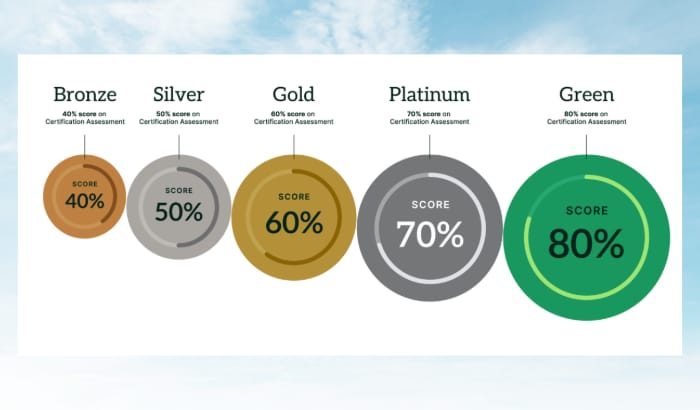
Figure 1. Lab certification levels for ACT labels
Our commitment to ACT Label 2.0
Energy consumption is one of the largest contributors to the lifecycle carbon emissions of an HPLC or UHPLC instrument, having potentially even a greater contribution than solvent consumption or instrument manufacturing.
At Thermo Fisher Scientific, we value the importance of transparency in sustainability and are committed to guiding our customers in making environmentally informed purchasing decisions. To reinforce this commitment, we partnered with My Green Lab to incorporate the new ACT® Ecolabel 2.0 into our product offerings. We’re proud to announce our Thermo Scientific Vanquish HPLC & UHPLC Systems received a Platinum rating (Figure 2)! This rating is the second highest possible certification level, reflecting our dedication to reducing environmental impact across the entire product lifecycle—from design and manufacturing to energy efficiency and end-of-life recyclability.
In addition to instruments, many of our columns, vials, caps, and plates – now carry My Green Lab ACT Ecolabel certification.
By choosing ACT-labeled products, laboratories can build truly sustainable chromatography workflows that prioritize performance and environmental impact.
To explore ACT Ecolabeled chromatography instruments and consumables across your workflow, visit our ACT Ecolabel Database today.
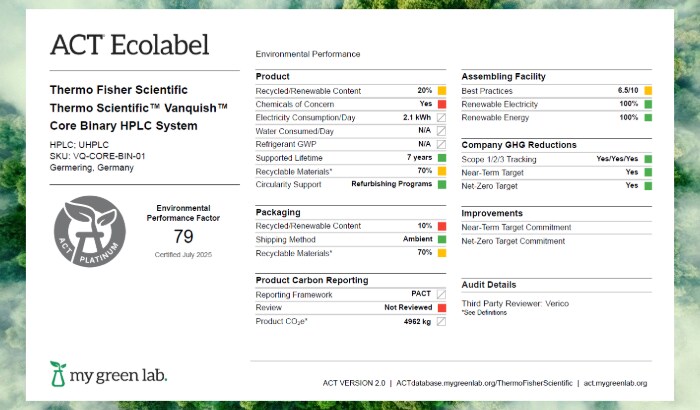
Figure 2. ACT Ecolabel for Vanquish Core Binary HPLC System
Our ongoing pledge to sustainability, in and out of the lab
Explore how moving from traditional HPLC to UHPLC methods can increase your lab’s productivity with higher throughput and less solvent.
- A Helpful Guide to Modernizing Your Old HPLC Methods
- Infographic: Sanofi – Accelerating your lab operations
- Case Study: Transferring methods onto a new UHPLC platform
Discover how we are innovating with the planet in mind and integrating sustainability into our product development.
Visit us on LinkedIn: #LabOfFuture #LiquidChromatography #ClimateChange

When Resolution Changes the Story: Single Quadrupole vs. HRAM GC-MS
In analytical chemistry, there are moments when your instrum...
Read More
An Introduction to Pharmaceutical Analytical Development
What is analytical development? Analytical development focus...
Read More
What Multi-Year Batch Data Reveals About (U)HPLC Column Consistency
Quantifiable consistency. By tracking retention time consist...
Read More
Stability-Indicating HPLC-UV Method for Semaglutide Impurity Analysis
As demand for GLP-1 receptor agonists like semaglutide conti...
Read More