In a recent study published in the Journal of Analytical Toxicology, researchers from Sheffield Teaching Hospitals NHS Foundation Trust validated the Thermo Scientific Tox Explorer method for screening and quantifying drugs and their metabolites in post-mortem vitreous humor. This marks their second publication demonstrating the versatility of this all-in-one LC-MS/MS solution for forensic toxicology.
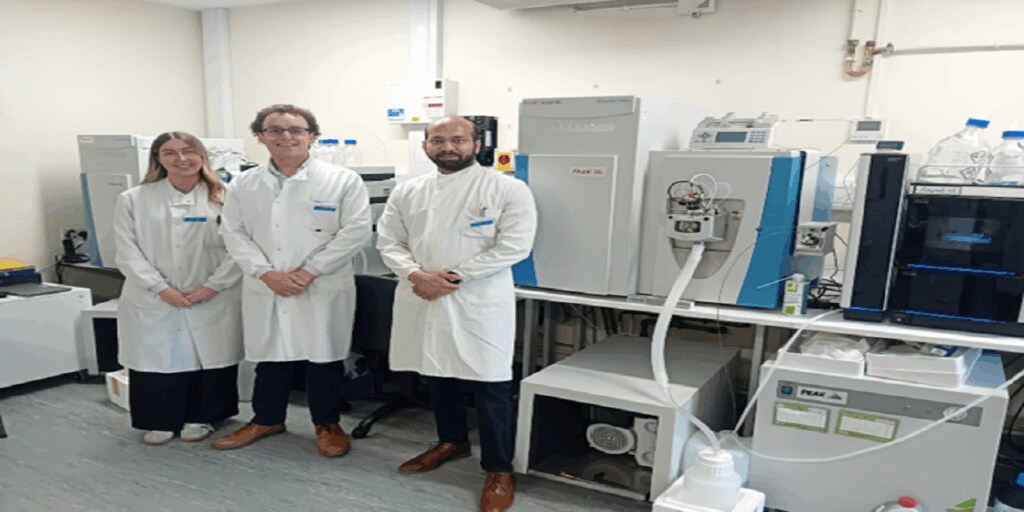
From left to right pictured are Mrs. Ellen Sellers, Dr Edmund Rab and Mr. Mohammad-Sadik Kanu.
Why analyze vitreous humor?
Vitreous humor, the gel-like fluid within the eye, offers several forensic advantages. It’s less prone to post-mortem redistribution, contamination, and decomposition than blood, and often exhibits superior chemical stability. However, its use has traditionally been limited due to small sample volumes and the need for highly sensitive analytical methods.
Dr. Edmund Rab, Consultant Clinical Scientist and Clinical Lead for Clinical Chemistry, Sheffield Teaching Hospitals NHS South Yorkshire and Bassetlaw Pathology, explains:
“Post-mortem redistribution is a perennial problem for the interpretation of post-mortem toxicology results. The measurement of drugs and their metabolites in vitreous humour can help identify whether a high blood analyte concentration is due to excessive use or post-mortem redistribution. This information can be vital when determining how an individual has come about their death.”
To address this, Dr. Rab’s team investigated whether their previously validated blood and urine Tox Explorer method could reliably screen for and quantify compounds in vitreous humor. Their results proved it could.
Method highlights and key findings
Using the Thermo Scientific Tox Explorer HRAM library, the Sheffield team achieved:
- Detection and quantitation of 48 compounds with bias and precision within ±20% across all tested concentrations with LOQs as low as 0.2 ng/mL and ULOLs up to 219 µg/mL.
- Low detection limits, down to 0.0008 mg/L, with minimal ion suppression or carryover.
- Higher detectability of unstable compounds like 6-monoacetylmorphine, codeine, olanzapine, and cocaine in vitreous humor compared to blood.
- Validated dilution integrity and analyte stability, confirming the workflow’s robustness with low-volume samples and sample stability for at least 4 days at 10 degrees Celsius.
Dr. Rab further notes:
“The Tox Explorer workflow is an excellent resource for laboratories performing toxicological analysis. Having an extensive library available for use saves the user the time and expense of developing their own library, but at the same time the library can be easily customised to include the compounds that suit a specific application.”
Insights from real-world cases
The researchers analyzed 129 post-mortem cases. In most, drug profiles in vitreous humor aligned with those found in blood or urine. In some cases, drugs were detectable in vitreous humor even when not present in blood—highlighting its value when traditional matrices are degraded or unavailable.
Tox Explorer: empowering modern forensic workflows
The Tox Explorer Collection is purpose-built to support comprehensive toxicology workflows with unmatched flexibility and ease of use. In addition to including a wide variety of drugs of abuse, including stimulants, opioids, cannabinoids, and benzodiazepines, the Tox Explorer Collection also provides retention times, SRM libraries, and a high-resolution library. It supports both:
- High-resolution accurate mass (HRAM) platforms such as the Thermo Scientific Orbitrap MS
- Triple quadrupole systems like the Thermo Scientific TSQ Plus Mass Spectrometer
Both configurations offer confident screening, confirmation, and quantitation within a single workflow.
Advanced HRAM capabilities include:
- Retrospective data analysis—ideal for emerging substances
- Simultaneous positive/negative ion detection in a single run
- Comprehensive MS/MS spectral acquisition without averaging
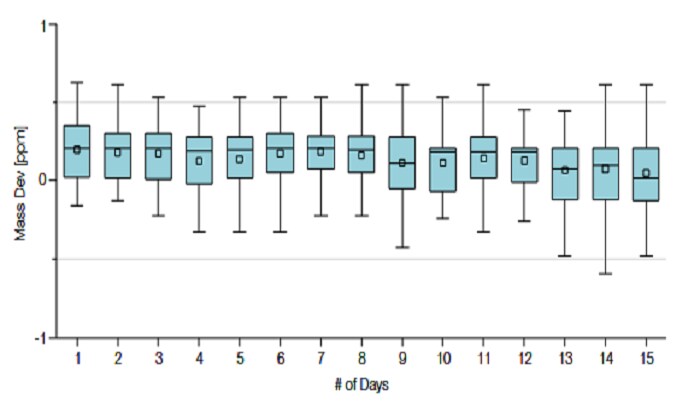
- Exceptional mass accuracy, even at low m/z values over a 15-day period
With built-in retention time libraries, standardized methods, user-friendly software, and onsite applications training, Tox Explorer provides a streamlined, scalable solution from sample preparation through reporting.
A platform built for progress
This latest validation from Sheffield confirms vitreous humor as a viable and valuable matrix for forensic toxicology—and underscores how Tox Explorer continues to expand analytical possibilities across the field. From post-mortem casework to clinical research and forensic labs, Tox Explorer empowers scientists to achieve greater sensitivity, reliability, and confidence in every analysis.
Discover more at Tox Explorer Collection for LC-MS and read the full article Simultaneous screening and quantitation of drugs and their metabolites in post-mortem vitreous humor by liquid chromatography–high resolution mass spectrometry.
Explore more resources and earlier posts in this blog series:
- Part 1 of our toxicology series on Sample Preparation Strategies Demystified: Choosing the Right Fit for Your Toxicology Workflow
- Technical notes by specimen type
Urine
- Utilizing HRAM Orbitrap mass spectrometry to quantitate 106 drugs of abuse in urine
- Utilizing triple quadrupole mass spectrometry to quantitate 106 drugs of abuse in urine
- Screening and Semi-Quantitation of 212 Fentanyl Analog Compounds by the Orbitrap Exploris 120 Mass Spectrometer
- Quantitation of 22 fentanyl analog compounds with a TSQ Altis MD mass spectrometer
- Quantification of Ethyl Glucuronide and Ethyl Sulfate in Human Urine by LC-HRAM(MS) for Clinical Research
- Analysis of ethyl glucuronide and ethyl sulfate in urine with TSQ Quantis MS
- Tomorrow’s quantitation with LC-MS/MS: fast screening and quantitation of drugs of abuse in urine for forensic toxicology
- Quantitative Analysis of Drugs of Abuse and their Metabolites in Urine using PaperSpray Tandem Mass Spectrometry
- Quantitative analysis of cannabinoids in urine and oral fluid using reactive paper spray tandem mass spectrometry for clinical research and forensic toxicology
Whole blood
- Quantification of 78 drugs of abuse in human blood by liquid chromatography – HRAM Orbitrap mass spectrometry for clinical research
- Quantification of drugs of abuse in human blood by TurboFlow chromatography coupled to tandem mass spectrometry for use in clinical research
- Detection of controlled substances in blood samples using the VeriSpray ion source with TSQ Altis MS for clinical research and forensic toxicology
- Combined PaperSpray and FAIMS Technology for Rapid Quantification of Immunosuppressants in Whole Blood
Serum/plasma
- Quantification of 34 Benzodiazepines in Human Plasma by LC-HRAM-MS for Clinical Research
- Quantification of 15 tricyclic antidepressants in human plasma by liquid chromatography- tandem mass spectrometry for clinical research
Oral fluid
- Quantitative analysis of cannabinoids in urine and oral fluid using reactive paper spray tandem mass spectrometry for clinical research and forensic toxicology
- Quantitation of an oral fluid drug panel including THC using the new Stellar mass spectrometer
Visit us on LinkedIn: #ForensicToxicology #HRAM #ToxExplorer #LCMS

Thermo Fisher Scientific at the 75th APHL Annual Conference
Advancing public health through innovation Thermo Fisher Sci...
Read More
When Resolution Changes the Story: Single Quadrupole vs. HRAM GC-MS
In analytical chemistry, there are moments when your instrum...
Read More
What Happens When Glycoproteomics Meets Real-Time LC-MS Decision Making?
Advancing Glycoproteomics with Flexible LC-MS at the Univers...
Read More
Join Thermo Fisher Scientific at ASCLD 2026
The forensic science landscape is evolving rapidly—and sta...
Read More