High-Performance Liquid Chromatography (HPLC) is a cornerstone technique in analytical chemistry, widely used for separating, identifying, and quantifying components in complex mixtures. While traditional detectors like UV-Vis and mass spectrometry (MS) have long been the standard, Charged Aerosol Detection (CAD) is emerging as a powerful and versatile alternative. In this post, we’ll explore the principles of CAD, its advantages, and how it’s transforming the landscape of analytical chemistry.

What is Charged Aerosol Detection (CAD)?
Charged Aerosol Detection is a type of universal detector used in HPLC that provides a consistent response for non-volatile and semi-volatile analytes. Unlike UV-Vis detectors, which require specific chromophores, or MS, which can show varying responses depending on the compound, CAD offers a more uniform response across a wide range of analytes. This makes CAD particularly useful for applications where other detection methods fall short.
How does CAD work?
The operation of CAD can be broken down into four main steps:
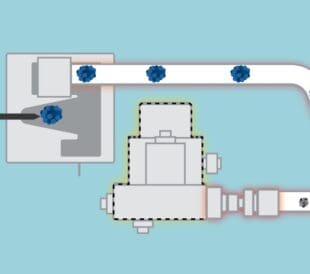
- Nebulization: The liquid eluent from the HPLC column is transformed into a fine aerosol using a nebulizer. This process creates tiny droplets containing the analyte.
- Evaporation: The aerosol passes through a heated drift tube, where the solvent evaporates, leaving behind dried particles of the analyte.
- Charging: The dried particles are then passed through a corona discharge, which imparts a charge to them.
- Detection: An electrometer measures the charged particles, producing a signal that correlates with the concentration of the analyte.
This sequence of steps allows CAD to detect a wide range of compounds with high sensitivity and consistency.

You can find more information in the CAD Technology video
Benefits of Charged Aerosol Detection
- Universal detection: CAD can detect any non-volatile and many semi-volatile compounds, making it more versatile than UV-Vis detectors, which require specific functional groups to absorb light.
- Consistent response: Unlike mass spectrometry, which can show varying responses for different compounds, CAD provides a more uniform response. This simplifies quantification and improves the reliability of results.
- Sensitivity: CAD offers high sensitivity, often in the low nanogram range, making it suitable for trace analysis.
- Robustness: The technique is robust and less prone to matrix effects, providing reliable data even in complex sample matrices.
- Ease of use: CAD systems are relatively easy to operate and maintain, making them accessible to a broad range of laboratories.
Learn more about Benefits of HPLC-CAD Analysis
Applications of CAD
The versatility of CAD has led to its adoption in various fields, including:
- Pharmaceuticals: CAD is extensively used for impurity profiling, stability testing, and quantification of active pharmaceutical ingredients (APIs). Its ability to provide consistent response regardless of the chemical structure makes it ideal for these applications.
- Food and beverages: In the food industry, CAD is used to analyze additives, contaminants, and nutritional components. Its high sensitivity ensures that even trace levels of unwanted substances can be detected.
- Environmental analysis: CAD is employed in the detection of pollutants and monitoring of environmental samples. Its robustness against complex matrices makes it particularly useful for environmental testing.
- Biotechnology: CAD is used in the analysis of biomolecules such as peptides, proteins, and oligonucleotides. Its ability to handle a wide range of compounds makes it a valuable tool in biotech research.
Case study: CAD in pharmaceutical analysis
Charged Aerosol Detection (CAD) has proven to be a powerful tool in pharmaceutical analysis, offering advantages over traditional methods like UV-Vis and mass spectrometry (MS). While UV-Vis struggles with compounds lacking chromophores and MS can be affected by ion suppression, CAD provides consistent and reliable detection across a broad range of pharmaceutical compounds. This reliability is crucial for impurity profiling, where accurate quantification of trace impurities impacts drug safety and efficacy.
In a study analyzing a complex pharmaceutical formulation, CAD detected and quantified multiple impurities that were not easily identifiable by UV-Vis or MS. This capability ensured the quality and safety of the final product and streamlined the analytical workflow, reducing the need for multiple detection methods.
The University of Wuerzburg’s Pharmacy Department has successfully implemented CAD, finding it offers higher sensitivity and precision compared to methods based on light scattering or refractive indices. CAD complements UV detection in hyphenated techniques or for preliminary experiments before MS identification. The integration of CAD with the Thermo Scientific Vanquish Flex UHPLC system allows for comprehensive analysis, combining the strengths of multiple detection methods in a single workflow. In summary, CAD enhances pharmaceutical analysis by providing unparalleled sensitivity and reliability for impurity profiling, ensuring the safety and efficacy of pharmaceutical products.

Learn more about this case study
Conclusion
Charged Aerosol Detection is revolutionizing HPLC by providing a universal, sensitive, and robust detection method. Its ability to detect a wide range of compounds with consistent response makes it an invaluable tool in various industries. As analytical challenges continue to evolve, CAD stands out as a reliable and versatile solution, pushing the boundaries of what can be achieved with HPLC.
Whether you are a seasoned analytical chemist or new to the field, incorporating CAD into your HPLC workflow can significantly enhance your analytical capabilities and provide deeper insights into your samples. As technology advances, CAD is poised to play an even more prominent role in the future of analytical chemistry.
Visit us on LinkedIn: #CAD, #ChargedAerosolDetection #HPLC
Episode 4: Introducing a More Confident Era in HPLC-CAD Analysis
The first Charged Aerosol Detector (launched in 2005) set ne...
Read More
How to Get More Accurate HPLC Quantitation of Semi-Volatiles
Struggling to accurately measure semi-volatile analytes? Str...
Read More
Episode 3: Understanding How Charged Aerosol Detection (CAD) Works
Welcome back to our series on Charged Aerosol Detection (CAD...
Read More
Episode 2: The Benefits of CAD Compared to Other Universal Detectors: ELSD and MALS
Welcome back to our series on Charged Aerosol Detection (CAD...
Read More