Plastics have become part of everything we touch — from the oceans we swim into the air we breathe.
Yet, detecting these tiny invaders and understanding how they move through the environment and even our bodies remains one of the most complex challenges in analytical chemistry.
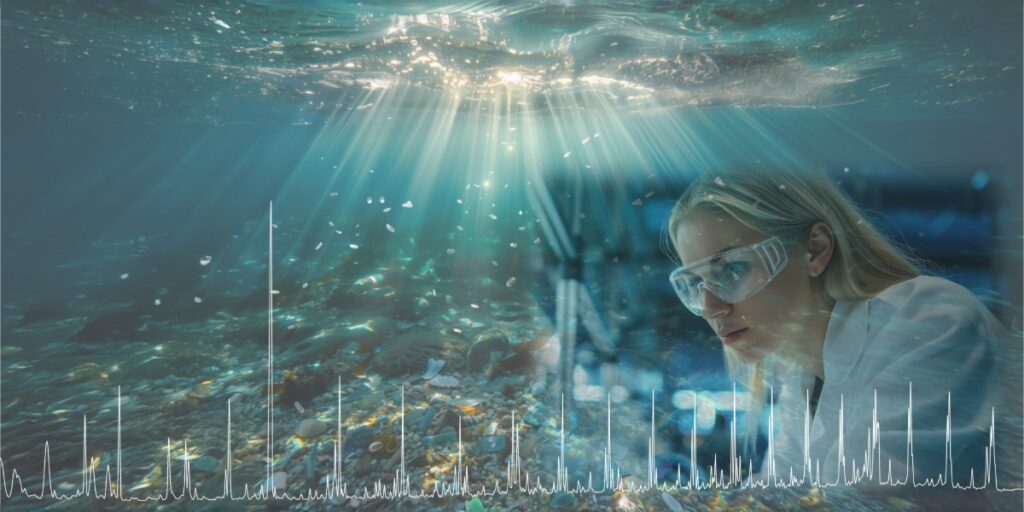
At Thermo Fisher Scientific, we recently brought together two leading experts to share how scalable Pyrolysis-GC/MS workflows are transforming microplastics analysis. Their insights revealed not just the science, but the confidence laboratories can achieve by coupling Frontier Lab Pyrolyzer technology with Thermo Scientific GC-MS systems — from single-quadrupole productivity to Orbitrap high-resolution precision.
Microplastics are ubiquitous — fragments of polymers shed from textiles, packaging, tires, coatings, and countless consumer products. Once released, they persist, fragmenting into ever-smaller particles that accumulate in soil, water, food, and biological tissues. Measuring them reliably across such diverse matrices is a major analytical hurdle. Spectroscopic tools like FT-IR and Raman microscopy can identify particles, but they struggle when samples are complex or degraded. In contrast, Pyrolysis-GC/MS provides a chemical fingerprint: by heating a polymer in an oxygen-free environment, it breaks into small, diagnostic fragments that reveal its molecular identity. Each polymer type — polyethylene, polypropylene, polystyrene, nylon, or PMMA — produces a unique signature, enabling confident identification and quantification even in mixed or contaminated samples.
Human exposure: tracking microplastics in biology
Dr. Kuanliang Shao, Post-Doctoral Fellow at Emory University, opened the discussion by addressing the growing evidence of microplastics inside the human body. His team is using Pyrolysis-GC/High-Resolution Mass Spectrometry (HRMS) to quantify polymeric materials and additives in tissues such as placenta, liver, and kidney.
Using a Thermo Scientific TRACE 1600 GC coupled to a Thermo Scientific Orbitrap Exploris GC HRMS, the group established a scalable, high-throughput workflow based on double-shot pyrolysis: one step for volatile additives and another for complete polymer decomposition. The result is simultaneous detection of additives and polymers with sub-ppm precision and linearity (R² > 0.99) across multiple polymer types.
With this framework, Dr. Shao’s laboratory quantified twelve common polymers, including polypropylene, PET, and nylon, in human placenta samples — a breakthrough in translating environmental chemistry into exposure science. Their use of HRAM Orbitrap technology allowed accurate mass determination of polymer fragments and retrospective data mining, setting a new benchmark for biomonitoring studies.
Environmental monitoring: from research to routine
Where Dr. Shao demonstrated what’s possible at the frontier of research, Dr. Giulia Riccardino of Thermo Fisher Scientific showed how those same principles can be applied in routine laboratory workflows.
Dr. Riccardino used a Multi-Shot Pyrolyzer (Frontier Laboratories Ltd.) combined with a Thermo Scientific TRACE 1610 GC and Thermo Scientific ISQ 7610 single-quadrupole MS to analyze plastic debris collected from Mediterranean beaches.
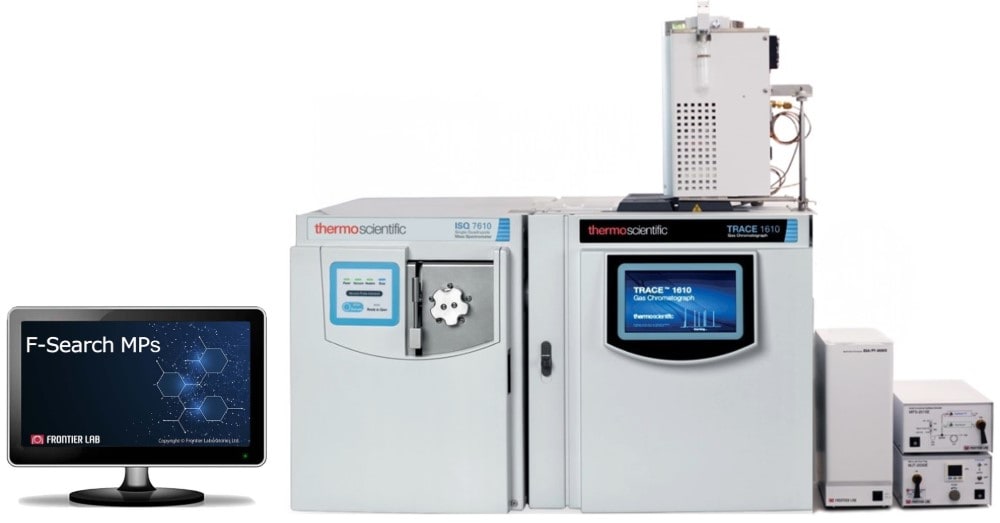
Thermo Scientific ISQ 7610 GC-MS equipped with Multi-shot Pyrolyzer EGA/PY-3030D
By leveraging a commercially available microplastic calibration kit, the method achieved outstanding precision — calibration curves for twelve polymers with coefficients of determination greater than 0.99 and relative standard deviations below 10%.
Even minute fragments of polyethylene, polypropylene, and PMMA were identified in a single 30-minute run. The entire workflow was managed through the Thermo Scientific Chromeleon Chromatography Data System (CDS), with confirmation in F-Search™ MP spectral libraries (Frontier Laboratories Ltd.) for added reliability. This approach provides laboratories with a robust, validated, and easily automatable solution for routine QA/QC and environmental monitoring.
Analytical confidence for a changing regulatory landscape
Global initiatives such as the EU REACH PFAS and microplastics proposals, the UN Plastics Treaty, and forthcoming EPA Method 1649 are redefining how laboratories must monitor plastics and fluorinated compounds.
From advanced exposomics to routine polymer QA/QC, Thermo Scientific Pyrolysis-GC/MS solutions equip scientists with the analytical confidence to meet these evolving standards, providing defensible, reproducible data for regulators and industrial partners alike.
By integrating automation, flexible hardware, and high-resolution detection, these workflows bridge discovery and routine testing — reducing complexity while expanding analytical scope.
Whether the goal is quantifying microplastics in the ocean, profiling industrial polymers, or tracing exposure in biological samples, Pyrolysis-GC/MS has emerged as the technology that connects every layer of this global challenge.
At Thermo Fisher Scientific, we’re proud to empower laboratories worldwide with scalable solutions that make the invisible measurable — and transform data into action for a cleaner, safer future.
Learn More
Watch the full webinar: Scalable Pyrolysis-GC/MS for Mapping Plastic Exposure in Environments and Biology.
Explore Thermo Scientific solutions for microplastics and polymer analysis- Pyrolysis-Gas Chromatography-Mass Spectrometry
Visit us on LinkedIn: #GasChromatography #Microplastics

Chromeleon CDS: Hints and Tips to Help Optimize your GC-MS Workflows
Gas Chromatography-Mass Spectrometry (GC-MS) is a workhorse ...
Read More
Stay Ahead in Developing Green Energy Solutions with FAME Analysis for Jet Fuel
Biofuels, particularly biodiesel, are an attractive, cleaner...
Read More
Pesticide Residue Analysis in the 21st Century: Innovations in Sample Preparation and Detection Using the Thermo Scientific TSQ 9610 GC-MS/MS
Introduction The accurate detection of pesticide residues in...
Read More
GC Orbitrap Guru Series: Dr. Kerstin Krätschmer
It’s been 10 years! Yes, in 2015 “gas chromatography...
Read More