 A More Convenient Approach to Cannabis Testing
A less invasive and more convenient alternative to urine and blood sampling for routine cannabis testing utilizes the collection of hair samples. Tetrahydrocannabinol (THC), one of the main psychoactive components of cannabis, can be detected at low levels in the hair of both active users and non-users through passive adsorption from secondhand smoke. However, hair also allows the identification of THC metabolites, including the secondary metabolite 11-nor-D9-tetrahydrocannabinol-9-carboxylic acid (THCCOOH). Because THCCOOH is not found in smoke and is only formed in the body following active drug use, it is suitable for distinguishing between active drug abuse and passive absorption of cannabis smoke in the hair of non-users. Detection of THCCOOH in hair can be achieved at lower levels and over longer time periods than other biological specimens.
Despite the benefits of hair as a biological matrix for drugs-of-abuse testing, finding an appropriate analysis approach has proven challenging. While immunological assays are fast and easy to use, they tend to elicit high numbers of false positives and negatives. And, while LC-MS delivers consistent and reliable results, confidently determining the ultra-low concentrations of THCOOH in hair can be challenging due to the complex chemical background of the matrix and the small sample size typically employed.
Highly Sensitive GC-MS/MS Cannabis Testing Using Hair
In order to realize the advantages of hair sampling, alternative analysis methods must be considered. Gas chromatography-tandem mass spectrometry (GC-MS/MS) has emerged as a highly sensitive technique for the determination of THCCOOH in hair. While traditional measurement approaches have suffered from low signal to noise ratios that can make confident analysis challenging, the latest GC-MS/MS instruments offer extremely high levels of sensitivity. The Thermo Scientific TSQ 9000 GC-MS/MS system, for example, is based on a triple quadrupole mass spectrometer and can detect THCCOOH at levels as low as 0.05 pg/mg. With recommended cut-off concentrations of THCCOOH in hair of 1 pg/mg for screening and 0.05 pg/mg for confirmation testing, as set by the Substance Abuse and Mental Health Services Administration (SAMHSA), the latest GC-MS/MS instruments are capable of achieving the ultra-low detection limits necessary for accurate determination.
Moreover, recent advances in GC-MS/MS technology mean forensics labs are better placed to meet the on-going challenges around analytical throughput. Thanks to the TSQ 9000 instrument’s innovations such as the patented NeverVent technology, the vacuum probe interlock, in conjunction with the ExtractaBrite ion source and the new V-Lock source plug, enables routine maintenance without the need to vent and pump down the vacuum system. As a result, these robust systems are helping to boost workflow productivity by enabling longer uninterrupted runs and reducing instrument downtime.
GC-MS/MS is opening up new opportunities for the detection and quantification of cannabis in alternative biological matrices, such as hair. With the latest instruments offering increased sensitivity and higher throughput, this approach is well placed to seamlessly integrate into forensic drugs of abuse testing workflows.
For Forensic Use Only.

Ask the Experts: Practical Answers to Today’s Biggest MOSH/MOAH Analysis Questions
Introduction MOSH and MOAH analysis remains one of the most ...
Read More
From the Ocean to the Laboratory: How Scalable Pyrolysis-GC/MS Reveals the Hidden Story of Microplastics
Plastics have become part of everything we touch — from th...
Read More
When “Fairy Lights” Turn Toxic: The Hidden Hazard of Chlorinated Paraffins
Are you looking forward to the holidays and a lot of cozy ev...
Read More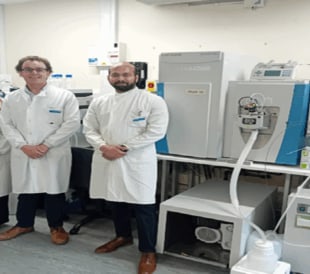
Beyond Blood: Sheffield Teaching Hospitals NHS Foundation Trust Develops HRAM-Powered Method for Post-Mortem Toxicology Analysis
In a recent study published in the Journal of Analytical Tox...
Read More