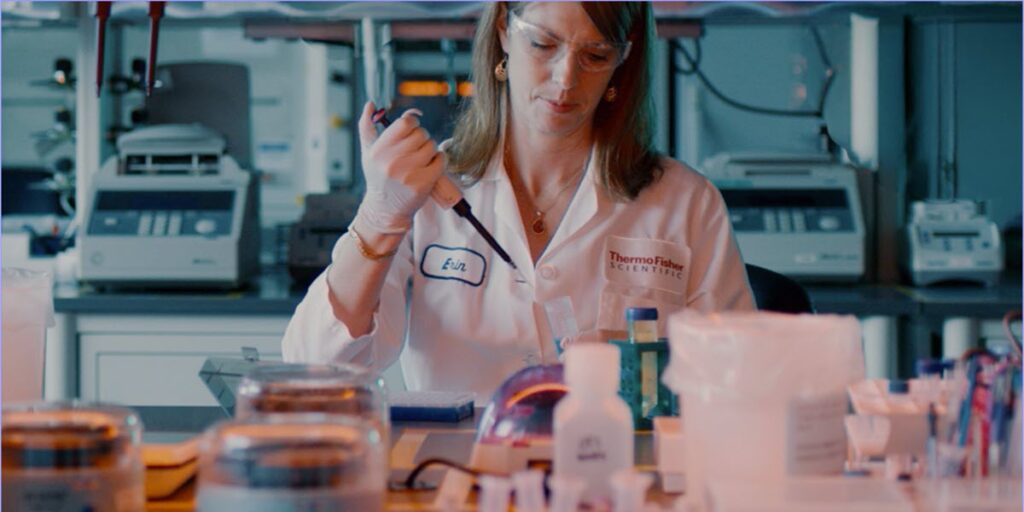
Smarter sample preparation for LC-MS: from simplicity to selectivity
In any toxicology lab, sample preparation is more than a preliminary step—it’s the foundation for accuracy, reproducibility, and workflow efficiency. In a recent webinar, we explored a range of sample preparation strategies—from minimal processing to highly selective techniques—with additional insights shared by Dr. William Clarke, PhD, MBA, DABCC, Professor of Pathology and Deputy Director of Quality and Regulatory Affairs at Johns Hopkins University School of Medicine. These discussions build on our latest white paper, “Context matters: selecting LC-MS sample preparation methods for LC-MS/MS in clinical research and toxicology applications“, authored by Prof. Alain Verstraete (University Hospital Ghent). The paper highlights commonly used LC-MS sample preparation methods and provides practical guidance to help laboratories select the most appropriate approach for their needs.
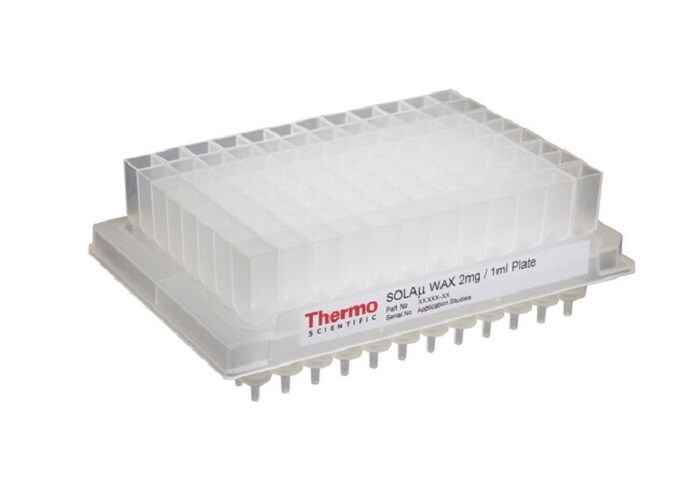
Thermo Scientific SOLAμ SPE Plates—Explore SOLA
The power of simplicity: dilute-and-shoot and protein precipitation
For relatively clean matrices like urine, a dilute-and-shoot approach can be effective. This method involves minimal handling and is low-cost but generally best suited for low-protein samples to avoid ion suppression or instrument issues.
For samples rich in proteins, such as plasma, serum, or whole blood, protein precipitation (PPT) is a common and straightforward method. It uses organic solvents—often methanol—to denature and precipitate proteins. After incubation at low temperatures and centrifugation, the supernatant is collected and may be further diluted. Additives like zinc sulfate can be added to enhance protein precipitation or aid cell lysis. While PPT is less selective, it effectively reduces matrix complexity and is compatible with robust LC-MS instrumentation.
As a plug-and-play approach, the Thermo Scientific Tox Explorer method, with over 2,000 compounds in its library, includes sample preparation recommendations for varying matrices, including dilute-and-shoot and protein precipitation.
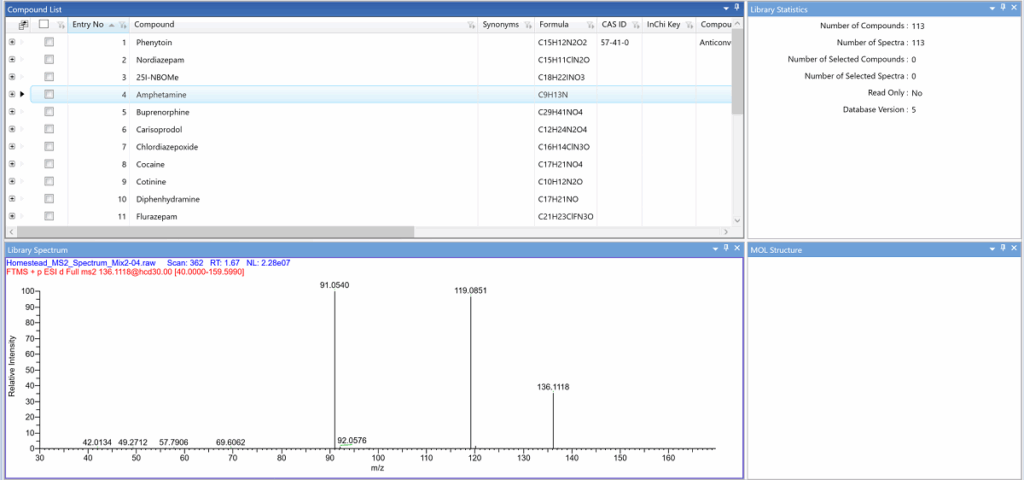
Tox Explorer compound library shown in mzVault
Enhancing selectivity: Phospholipid Removal, Liquid-Liquid Extraction (LLE), Supported Liquid Extraction (SLE), and Solid-Phase Extraction (SPE)
When higher selectivity and sensitivity are required, extraction-based methods are employed:
- Phospholipid Removal uses commercial solutions to reduce matrix components that can cause ion suppression. Though relatively simple, it requires some specialized materials and does not concentrate analytes.
- Liquid-Liquid Extraction (LLE) separates analytes based on their solubility differences between aqueous biological fluids and immiscible organic solvents. This technique removes many matrix interferences but is labor-intensive and challenging to automate.
- Supported Liquid Extraction (SLE) improves upon LLE by using a porous support to retain the aqueous phase, allowing nonpolar analytes to partition into an organic solvent, which can be collected more efficiently as flow-through. SLE offers cleaner extracts and better reproducibility, making it more compatible with higher-throughput workflows.
- Solid-Phase Extraction (SPE) selectively retains analytes on sorbent phases based on chemical characteristics such as polarity or charge. Impurities are washed away, and analytes are eluted with strong organic solvents, often followed by drying and reconstitution. SPE improves consistency and reduces matrix effects, especially in complex samples or high-throughput environments. Various sorbents, including ion exchange types, can be selected, or even combined, depending on analyte chemistry.

Common sample preparation methods for LC-MS featured in table 1 of white paper 000861
Unlocking efficiency: how automation is transforming sample preparation
As labs face staffing shortages and increasing sample volumes, automation is becoming essential. Solutions from providers like Hamilton and Tecan help streamline sample preparation tasks, including pipetting, plate transfers, and offline SPE. This can dramatically reduce hands-on time and standardize processes.
In the webinar, Dr. Clarke shares that one lab, for example, was able to cut total sample preparation time in half—from six hours to three—and reduce hands-on analyst time from three hours to just 10 minutes by using a Tecan platform with SPE plates. Each of the extraction methods discussed can be readily programmed onto these liquid handling robots.
Still, automation brings new challenges—like programming robots, accounting for sample variability, managing liquid classes (e.g., whole blood vs. serum), and replicating the precision of skilled human pipetting, which remains difficult to fully automate and underscores the continued importance of human expertise
Emerging trends: dried blood spots and microsampling
Dried blood spots (DBS) and microsampling techniques promise minimally invasive collection and improved sample logistics. Fixed-volume devices with or without pre-punched filter cards can simplify automation and downstream analysis. However, challenges remain: hematocrit effects, uneven sample spread, storage issues, and potential for contamination or hemolysis.
Capillary sampling from fingersticks may seem like a step toward decentralized testing, but it’s not without challenges—sample quality can be affected by peripheral blood differences or inconsistent collection techniques.
To address some of these limitations, particularly the need for extensive sample prep for screening purposes, direct analysis methods are gaining traction. The Thermo Scientific VeriSpray PaperSpray ion source offers a direct MS-based ionization approach for analyzing dried samples, eliminating the need for time-consuming sample preparation and chromatographic separation. This can be especially useful for complex matrices like whole blood, which often require more intensive extraction to remove proteins.

VeriSpray paper spray ionization is a rapid and user-friendly sample introduction technique that delivers samples directly to the mass spectrometer using electrospray ionization. The process is straightforward—just add the sample and solvent to the paper.
Final takeaway: clean samples, better results
The overarching message: cleaner samples drive better assay performance. Whether you’re processing high-throughput toxicology screens or quantifying small molecules and peptides, aligning your sample preparation strategy with both analytical and operational goals is essential. From simple dilute-and-shoot methods to advanced approaches or fully automated workflows, thoughtful preparation can enhance instrument uptime, improve assay accuracy, and reduce long-term operational costs.
A recent technical note—linked under the SPE section in the supporting documents below—demonstrates this effectively using a large urine drug panel. Solid-phase extraction plates improved both assay robustness and accuracy. By extracting just 200 µL of sample and minimizing solvent use, the workflow successfully reduced reagent costs and waste without sacrificing data quality.
As mass spectrometry continues to expand into more complex and decentralized applications, laboratories that invest in fit-for-purpose sample prep strategies will be best positioned to deliver confident, high-quality results at scale.
To support these efforts, Thermo Fisher Scientific offers a variety of aligned resources, including those discussed in the webinar and this blog:
- Dilute-and-shoot: See the Thermo Scientific Tox Explorer method for Orbitrap-based screening of 120 drugs of abuse and this white paper highlighting the comparison of sample prep methods.
- Protein Precipitation: Quantification of 78 drugs of abuse in human blood by liquid chromatography – HRAM Orbitrap mass spectrometry for clinical research.
- Solid phase extraction (SPE): Learn more through our tox drugs of abuse Thermo Scientific Orbitrap Exploris 120 MS and Thermo Scientific TSQ Quantis Plus MS method for clinical toxicology technical notes.
- Automation: See how oral fluid extraction is streamlined using automation in this technical note featuring Thermo Scientific Stellar MS.
- Dried sample workflows: Explore simplified prep using the Thermo Scientific VeriSpray PaperSpray Ion Source in this technical note on urine drug analysis.
Visit us on LinkedIn: #SamplePreparation, #ForensicToxicology, #toxicology, #lcms
Boosting Productivity in Toxicology Labs
In today’s forensic and clinical toxicology labs, producti...
Read More
Upcoming LC-MS Events to Watch this Fall
Mass spectrometry professionals in clinical research, forens...
Read More
Advancing Drug Analysis with VeriSpray PaperSpray Mass Spectrometry
At the January 2025 CFSRE Seized Drugs Symposium, a Thermo F...
Read More
Beyond Blood: Sheffield Teaching Hospitals NHS Foundation Trust Develops HRAM-Powered Method for Post-Mortem Toxicology Analysis
In a recent study published in the Journal of Analytical Tox...
Read More