Thermo Fisher Scientific

Your educational resource for biopharma, pharma, environmental, food and agriculture, industrial, and clinical labs

  • Categories
    • Advancing Materials
    • Advancing Mining
    • AnalyteGuru
    • Analyzing Metals
    • Ask a Scientist
    • Behind the Bench
    • Biotech at Scale
    • Clinical Conversations
    • Examining Food
    • Identifying Threats
    • Illuminating Semiconductors
    • Life in Atomic Resolution
    • Life in the Lab
    • OEMpowered
    • The Connected Lab
  • About Us
  • Contact
Accelerating ScienceAnalyteGuru / Gas Chromatography / Simplified Environmental Analysis Method Consolidation of PAH

Simplified Environmental Analysis Method Consolidation of PAH

By Adam Ladak, Global Product Marketing Manager for GC quadrupole MS 06.12.2020

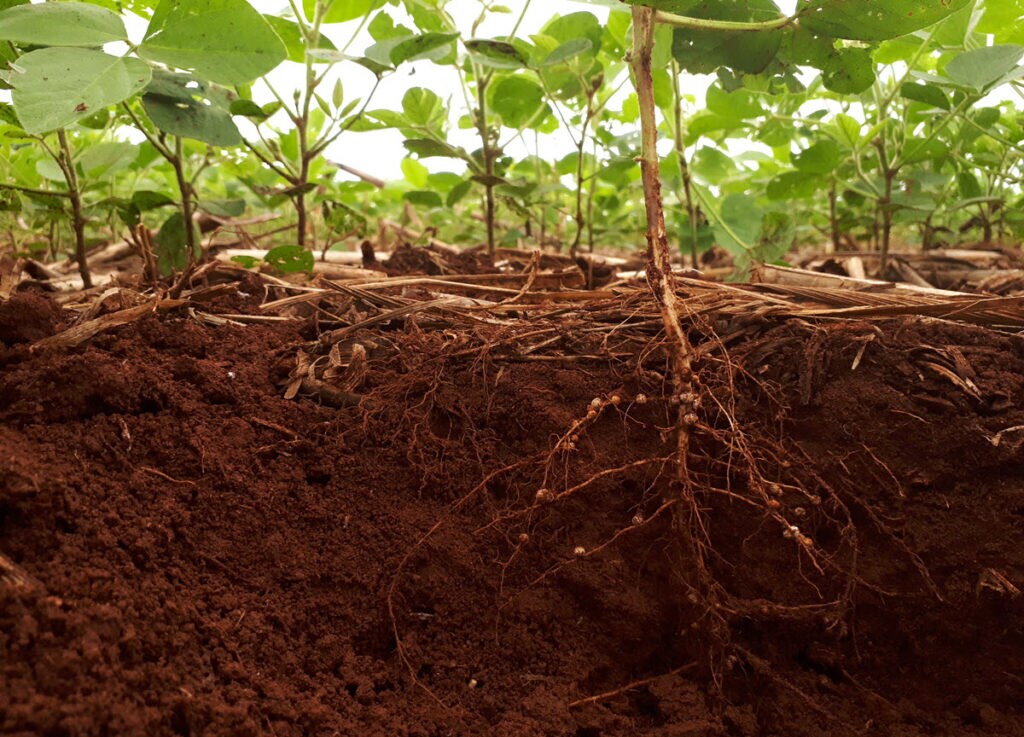
Spring is upon us and all over the world people are out in their gardens planting their seeds for harvesting in the summertime. In my garden, this is a small operation with just a few chili peppers, some other veggies and a number of hops for my homebrew (if they ever grow!). Food-producing farms work on a much larger scale and plant a vast number of crops at this time of year. But how do we know that our crops are safe from environmental contaminants? We must analyze for contaminants in the soil, water, air and sediments to ensure that consumers are not exposed to harmful contaminants that could have negative health effects.

Some examples of these toxic environmental contaminants are polychlorinated biphenyls (PCBs) and polyaromatic hydrocarbons (PAHs) which are resistant to environmental degradation and can enter the food chain where they can bio-accumulate. Often, these compounds are non-polar and have numerous congeners, many of which have identical masses that require chromatographic separation prior to detection, meaning that GC-MS is the technique of choice for this type of analysis. PAHs and PCBs are often analyzed in separate GC-MS methods to negate the complexity of the analysis.

There are numerous challenges associated with analyzing these chemicals including higher mass PAHs being prone to poor peak shape and separation, low detection limits to meet regulatory requirements and complex matrices (such as soils, sediments) causing interferences with the target analytes.
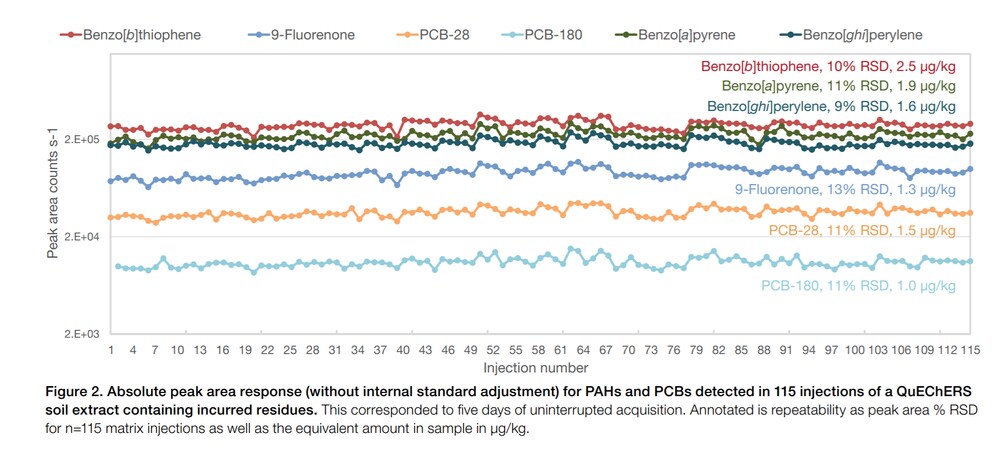
In order to overcome these challenges, Thermo Fisher Scientific scientist Aaron Lamb has developed a combined PAH and PCB method using the ISQ™ 7000 Single Quadrupole GC-MS. The soil samples were extracted with a modified QuEChERS procedure and the method has been proven to be sensitive, robust, and suitable for the long-term, routine analysis with no system maintenance. Using this analytical approach, we can guarantee the timely analysis of hundreds of samples and ultimately ensure that our crops are not exposed to environmental pollutants. For more information on the full analytical method read the full application note here.

Food packaging

Enhancing PFAS Analysis in Food Contact Materials Using Combustion Ion Chromatography

Per- and polyfluoroalkyl substances (PFAS) have been used in...

Read More
Robust Analysis of Halogens and Sulfur in Industrial and Environmental Samples

Robust Analysis of Halogens and Sulfur in Industrial and Environmental Samples

In industrial processes, accurately determining halogens and...

Read More
The Benefits of Charged Aerosol Detection (CAD) in High-Performance Liquid Chromatography (HPLC)

Episode 1: The Benefits of Charged Aerosol Detection (CAD) in High-Performance Liquid Chromatography (HPLC)

High-Performance Liquid Chromatography (HPLC) is a cornersto...

Read More
New Column for Fast Analysis of Haloacetic Acids, Bromate and Dalapon Using Ion Chromatography Coupled with Mass Spectrometry

New Column for Fast Analysis of Haloacetic Acids, Bromate and Dalapon Using Ion Chromatography Coupled with Mass Spectrometry

Haloacetic acids (HAAs) are disinfection byproducts (DBPs) f...

Read More

Adam Ladak

Adam Ladak is the global product marketing manager for GC quadrupole mass spectrometry at Thermo Fisher, based in the UK. He started his career working in a contracting testing lab analyzing sports supplements and horse feed for prohibited substances. He has over 20 years of experience in the analytical testing industry and has worked for leading instrument manufacturers in various roles from an application specialist to a global marketing role focused on food and environmental testing. Adam is passionate about utilizing our GCMS instrumentation to meet the customer needs and solve real world problems.
How GC-FID Helps Certify the Quality of Alcohol-Based Hand Sanitizers
Can I get a burger with some lead, chromium, mercury and arsenic, please?

Privacy StatementTerms & ConditionsLocationsSitemap

© 2025 Thermo Fisher Scientific. All Rights Reserved.

Talk to us