Advancing Glycoproteomics with Flexible LC-MS at the University of Washington
Understanding how cells communicate, migrate, and interact with the immune system often comes down to what is happening on their surface. For Nick Riley, Assistant Professor at the University of Washington, that surface is defined by glycans, complex sugar structures attached to proteins that play a critical role in health and disease.
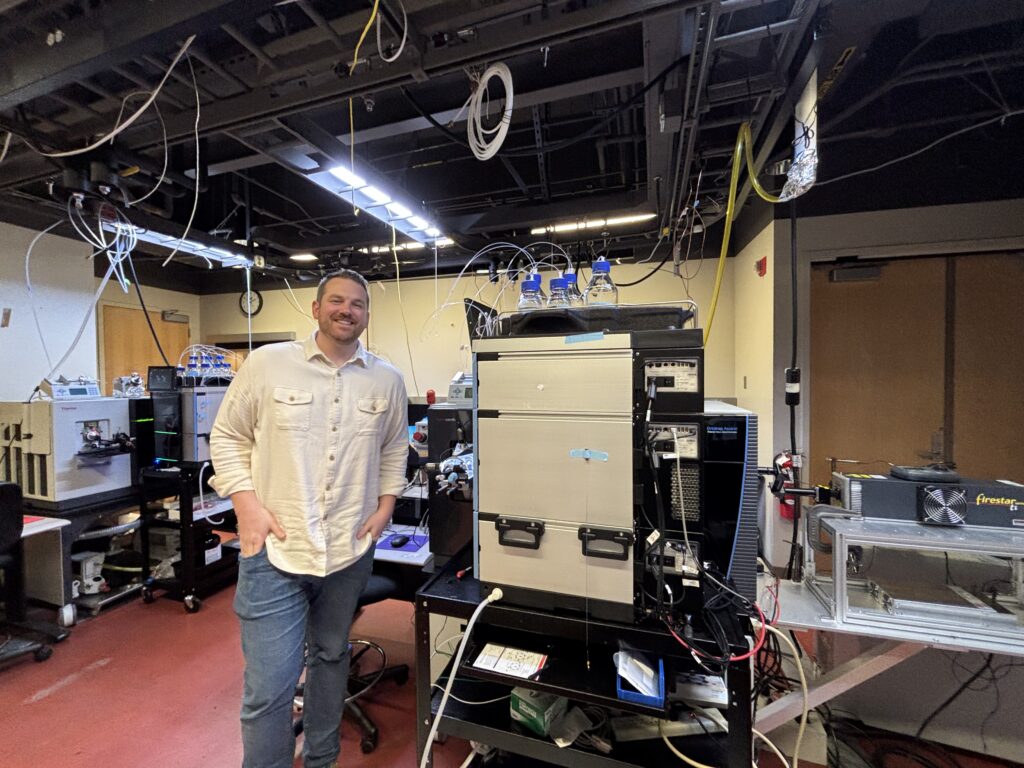
Pictured: Nick Riley, Assistant Professor Department of Chemistry, University of Washington, head of the Riley Group
The Riley Group operates at the intersection of glycobiology and mass spectrometry, developing new analytical methods to answer biological questions that were previously out of reach. Based out of one of the largest mass spectrometry hubs in the United States, the lab relies on a high-performance LC-MS workflow built around the Thermo Scientific Orbitrap Ascend MultiOmics Tribrid Mass Spectrometer coupled with a Thermo Scientific Vanquish Neo UHPLC System.
Together, these platforms deliver flexible, reproducible separations and enable the integration of ETD, HCD, PTCR, and high-mass analysis within a single experiment. This flexibility is critical when working with limited or precious samples such as enriched cell surface glycoproteins, providing the sensitivity and robustness needed to characterize highly complex glycopeptides and intact glycoproteins.
From forensics to glycoproteomics
Riley’s scientific path began in undergraduate chemistry and psychology, where an early interest in forensics led him to mass spectrometry. Rather than focusing on applications, he became interested in the instruments themselves.
That fascination took him to the University of Wisconsin-Madison, where he trained in Josh Coon’s lab and worked extensively on electron transfer dissociation. While developing new fragmentation methods, Riley encountered glycopeptides almost by accident and quickly realized their complexity and importance.
A postdoctoral position in Carolyn Bertozzi’s lab at Stanford deepened his exposure to glycobiology and reinforced his interest in building tools that allow scientists to better interrogate biological systems. That philosophy now defines his research program at the University of Washington.
Why flexibility matters in glycoproteomics
Glycoproteomics presents unique analytical challenges. Glycans increase molecular heterogeneity, complicate ionization, and require multiple fragmentation strategies to fully characterize.
“There’s no single method that can answer all of our questions,” Riley explains. “We need flexibility at every level.”
For the Riley Group, that flexibility comes from advanced LC-MS platforms, particularly Tribrid instruments like the Orbitrap Ascend Mass Spectrometer. These systems allow his team to combine ETD, HCD, PTCR, and high-mass analysis within a single workflow.
That versatility is essential when working with limited samples, especially in experiments involving cell surface glycoproteins or double enrichment strategies.
Turning technology into biological insight
One recent study highlights how instrumentation directly enables discovery. Riley’s team investigated how glycosylation affects protein corona formation using SEER nanoparticles. The workflow required two enrichment steps, leaving very little material for analysis.
Using the Orbitrap Ascend Mass Spectrometer’s real-time library search capabilities, the team developed Autonomous Dissociation Type Selection, a method that uses real-time decision making to determine the optimal fragmentation method during acquisition. This approach allowed the team to extract comprehensive information from a single LC-MS injection, preserving sample while accelerating discovery.
“That kind of experiment simply wouldn’t be possible without real-time decision making on the instrument,” says Riley.

Pictured: Kayla Markuson, B.S., is one of the grad students in the Riley Group. She was recipient of the 2025 Thermo Scientific Quantitative Proteomics Research Grant Program.
Lowering barriers, training scientists
Beyond enabling specific experiments, Riley sees advanced instrumentation as a way to democratize complex methodologies. Techniques like ETD, once difficult to reproduce, are now robust and accessible.
That shift has a direct impact on training. Students in Riley’s lab are encouraged to design experiments around unanswered biological questions rather than technical constraints.
“When the instrument isn’t the bottleneck, creativity becomes the skill you’re really teaching,” he notes. “That’s how you prepare scientists for the future.”
Looking ahead
As instrumentation continues to evolve, Riley believes the next breakthroughs will come from increased sensitivity, richer fragmentation strategies, and smarter data analysis. The ultimate goal is not just better measurements, but deeper biological understanding.
“Glycoproteomics demands multiple analytical strategies,” Riley explains. “We need to move seamlessly between different fragmentation methods, mass ranges, and separation conditions. The Ascend paired with the Vanquish Neo gives us that freedom.”
“Technology should expand the questions we can ask,” he says. “That’s when real discovery happens.”
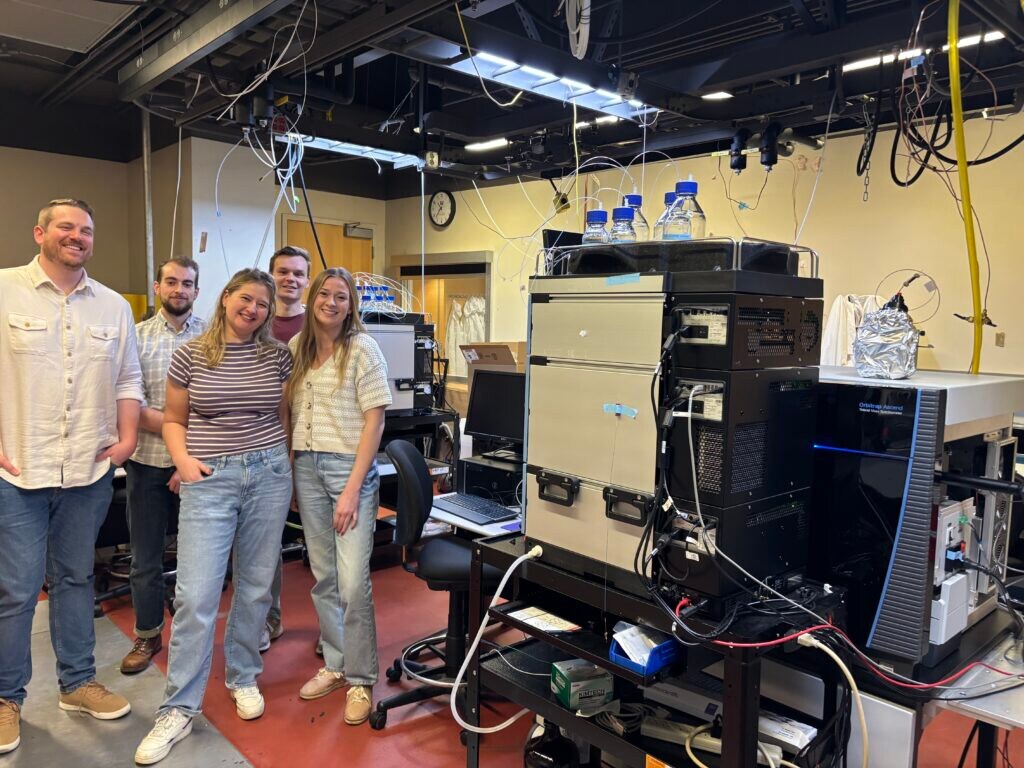
Lab members pictured left to right in front of Riley Group’s Thermo Scientific Orbitrap Ascend MultiOmics Tribrid Mass Spectrometer coupled with a Thermo Scientific Vanquish Neo UHPLC System: Nick Riley, Emmajay Sutherland, Jacob Russell, Tim Veth, Kayla Markuson
Visit us on LinkedIn: #Glycoproteomics #MassSpectrometry #LCMS

Blueprint for QC Ready mRNA Mapping
mRNA therapeutics demand analytical methods that are fast, r...
Read More
Upgrade Smarter: Trade In Your Current LC-MS System and Boost Lab Performance Without Breaking Budget
Is your current mass spectrometer limiting your lab’s capa...
Read More
Maximize Performance with Specialized LC-MS Workflows — and Save Up to 40%!
When it comes to clinical research, precision, reliability, ...
Read More
Mucinomics: The Next Frontier of Mass Spectrometry
Mucinomics, the study of mucin domain glycoproteins, is emer...
Read More