The field of cryopreservation has seen advancements, particularly with the ability to preserve human stem cell-derived neurons. This progress holds great promise for research and therapeutic applications, helping to ensure the availability of high-quality neuronal cultures.
What is Cryopreservation?
Cryopreservation involves cooling cells to sub-zero temperatures to halt biological activity and preserve cell integrity. This technique is crucial for storing cells, tissues, and organs for extended periods without compromising their viability and functionality. For human stem cell-derived neurons, effective cryopreservation helps ensure that researchers have access to consistent and reliable cell sources for various studies.
Challenges in Cryopreservation of Neurons
Neurons, being highly specialized and delicate cells, pose specific challenges for cryopreservation:
- Cell Membrane Integrity: Neuronal cell membranes are sensitive to ice formation, which can cause mechanical damage.
- Osmotic Stress: Changes in solute concentration during freezing and thawing can lead to osmotic stress, impacting cell viability.
- Cryoprotectant Toxicity: Chemicals used to prevent ice formation, known as cryoprotectants, can be toxic to cells at high concentrations.
- Differentiation State: The stage of neuronal differentiation can affect the cells’ ability to withstand cryopreservation.
Cryopreservation Protocols: How to Optimize
Recent advancements have focused on optimizing cryopreservation protocols to address these challenges:
- Cryoprotectant Formulations: Developing formulations that balance cryoprotectant efficacy and toxicity is crucial. Commonly used cryoprotectants include dimethyl sulfoxide (DMSO) and glycerol.
- Controlled-Rate Freezing: This technique involves gradually lowering the temperature to minimize ice crystal formation and reduce cell damage.
- Thawing Procedures: Rapid thawing protocols are essential to prevent ice recrystallization, which can damage cell membranes. Incorporating specialized reagents, such as CultureCEPT supplement, can further protect cells during the thawing process and enhance post-thaw recovery.
Benefits of Cryopreservation
Effective cryopreservation of human stem cell-derived neurons offers several benefits:
- Consistency: Helps provide a reliable supply of neurons for research, helping to ensure reproducibility of experiments.
- Scalability: Enables the production and storage of large batches of neurons, facilitating large-scale studies and therapeutic applications.
- Accessibility: Helps ensure that high-quality neuronal cultures are available to researchers worldwide, promoting collaboration and innovation.
Applications in Research and Therapy
The ability to cryopreserve human stem cell-derived neurons opens up numerous possibilities in both research and therapeutic contexts:
- Disease Modeling: Researchers can use preserved neurons to model neurological diseases, study disease mechanisms, and test potential treatments.
- Drug Screening: High-throughput drug screening requires large quantities of consistent neuronal cultures, which cryopreservation can help provide.
- Regenerative Medicine: Preserved neurons can be used in cell replacement therapies for neurodegenerative diseases and injuries.
Advancements in the cryopreservation of human stem cell-derived neurons are helping to drive progress in the field of neuroscience. By addressing the specific challenges associated with preserving these delicate cells, researchers can help ensure a consistent and reliable supply of high-quality neuronal cultures. This progress not only enhances research capabilities but also paves the way for innovative therapies for neurological conditions.
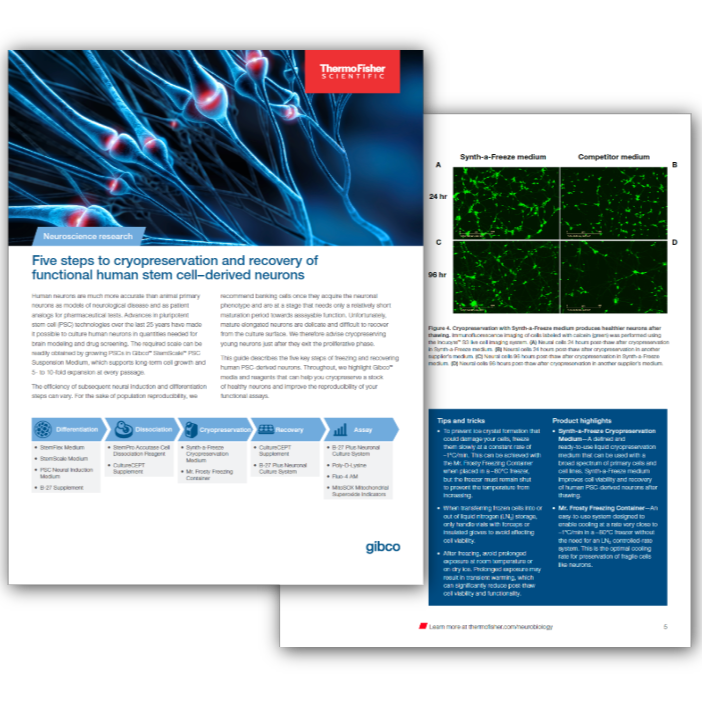
To read in further detail about effective cryopreservation and recovery within a human PSC-derived neuron workflow, download our five‑step guide.
For more information on neurobiology cell culture protocols, resources and comprehensive solutions visit thermofisher.com/neurobiology
Intended use statements may vary.

Multiplex vs. Singleplex qPCR: What do I need to know?
Real-time PCR (qPCR) has transformed how scientists detect a... John Pfeifer, PhD
Read More
Magnetic Cell Separation: How to Automate Cell Isolation
In the rapidly advancing field of medical diagnostics, liqui...
Read More
Advancing Cancer Cell-Based Assays with Assay-Ready Tumoroids
Cancer research is continually evolving, and patient-derived...
Read More
Tackling Insoluble and Difficult-to-Express Proteins
Few things in the lab can feel as challenging as working wit...
Read More
Leave a Reply