As cancer research continues to evolve, new technologies are playing an increasingly important role in advancing our understanding of the disease. Among these technologies are quantitative real-time PCR (qPCR) and, more recently, digital PCR (dPCR), which are helping researchers like Dr. Olga Vera Puente make a meaningful impact in cancer research and beyond.
Olga is a Junior Principal Investigator in the Experimental Therapies and Biomarkers in Cancer Research Group at Hospital La Paz Institute for Health Research (IdiPAZ) in Madrid, Spain. In an interview with us, she shared her journey, her motivations, and her vision for the future of cancer research and personalized medicine.

Can you tell us about your journey into cancer research?
My journey into cancer research was a bit of a happy accident. I wanted to be an actress, but my father encouraged me to study something more practical. I chose biology and thought I would become a teacher. However, when I stepped into a lab for the first time, I knew that was where I wanted to be for the rest of my life.
I reached out to Dr. Inmaculada Ibáñez de Cáceres for my Bachelor’s project, and she gave me the chance to start working in cancer research. Everything I have done in my journey is likely because she gave me that first break. I continued my Master’s thesis and PhD in her lab. I worked on lung and ovarian cancer, focusing on biomarker discovery. She then encouraged me to pursue a post-doc abroad. I followed her advice and went to the Moffitt Cancer Center in Florida, where I changed topics. I worked with mouse models to identify new biomarkers and therapeutic targets. After five years in the US, [Dr. Ibáñez] persuaded me to come back. I got a grant to do a second postdoc with her. At the beginning of the year, she took a temporary leave from research and left me in charge of the Experimental Therapies and Biomarkers in Cancer Research Group.
What questions are you trying to answer with your research?
I currently focus on melanoma research. I am interested in studying the role of non-genetic alterations in melanoma to find potential biomarkers and therapeutic targets. We also work on other cancer types. We have research lines focusing on lung cancer, glioblastoma, and ovarian cancer. In all these cancers, we want to identify biomarkers to help predict the disease and the treatment response.
How are Applied Biosystems™ technologies helping you in your research?
I have been working with Applied Biosystems’ technologies since the very beginning. They have the best systems to identify or validate biomarkers from both liquid and tissue biopsies. Since I started my research in 2012, I have been studying microRNA expression, and I’ve seen how the technology has evolved to match our needs. For example, when we were trying to identify biomarkers in liquid biopsies, some markers had very low expression levels. The Applied Biosystems™ Absolute Q™ Digital PCR System…has helped by providing better sensitivity to detect these low-frequency markers.
What are the benefits of using qPCR and dPCR, complementary to NGS, in cancer research?
qPCR and dPCR are very sensitive techniques. I started my research using [Applied Biosystems™] TaqMan™ [Arrays]. The evolution of these technologies has helped us face some of our challenges. For example, liquid biopsies have stable microRNAs, but sometimes they are hard to detect. Thanks to the…Absolute Q Digital PCR equipment, we can now detect those low-level microRNAs.* This way, we can have accurate and specific biomarkers to monitor a patient’s disease.
Any thoughts on qPCR technology? Are there any specific benefits to using qPCR?
qPCR offers benefits compared to digital PCR. For example, if we want to check or test a highly expressed biomarker, qPCR is easier to implement in clinics than digital PCR, at least at the moment. So, a highly expressed biomarker can be easily detected with qPCR technologies. But digital PCR is very useful when the frequency of that biomarker is very, very low.
Do you see cancer liquid biopsy advancing beyond cell-free DNA (cfDNA) to RNA, methylation, and protein biomarkers?
It’s very exciting to see how liquid biopsy could go beyond cell-free DNA to other molecules like RNA, methylated DNA, or even protein biomarkers. One of the things that we do in the lab is to find tumor-specific biomarkers based on microRNAs, methylated DNA, and some protein biomarkers to help predict different outcomes.
Could you comment on the increasing role of genomics in personalized medicine?
Personalized medicine has been around for 15–20 years, and we are making progress as a community every year. Genomics is playing a bigger role in personalized medicine by helping detect and predict different responses to treatment in cancer patients. However, even though genomics has helped in this way, a specific biomarker detection might be easier and less expensive to use in clinics and for a technician, nurse, or doctor to interpret and analyze the results.
How do you think genomics can be combined with proteomics and used as an omics approach to tackle the big challenge of personalized medicine?
Many labs around the world are trying to integrate genomics, proteomics, and all these omics data into personalized medicine. In our work, we use a panel of genomic and epigenetic markers to improve the diagnosis of glioblastoma and other brain tumors. However, I cannot say more about that. Personalized medicine through genomics is still probably far from being applied in the clinics, given the cost, technology, and human resources it requires. However, in the future, it may become extremely helpful for diagnosing different diseases. Also, data privacy could become a concern in this context, especially in Europe.
What challenges do you face in translational cancer research, and how have Applied Biosystems technologies helped you to address those challenges?
Funding is a big challenge. Although we have a diagnostic section in the lab, we mainly work in research. Our research is supported by public grants, while the diagnosis is partly funded by the hospital.
The diagnosis that we perform right now is for glioblastoma. We detect the methylation of the gene MGMT, the only one approved by the FDA and other regulatory agencies for the diagnosis and measurement of treatment response. We have been using qPCR technologies to diagnose these patients, and the difficulties we face mostly come from the source of the sample. We take a tumor sample, extract the DNA, and then process it to analyze the methylation of the gene MGMT.
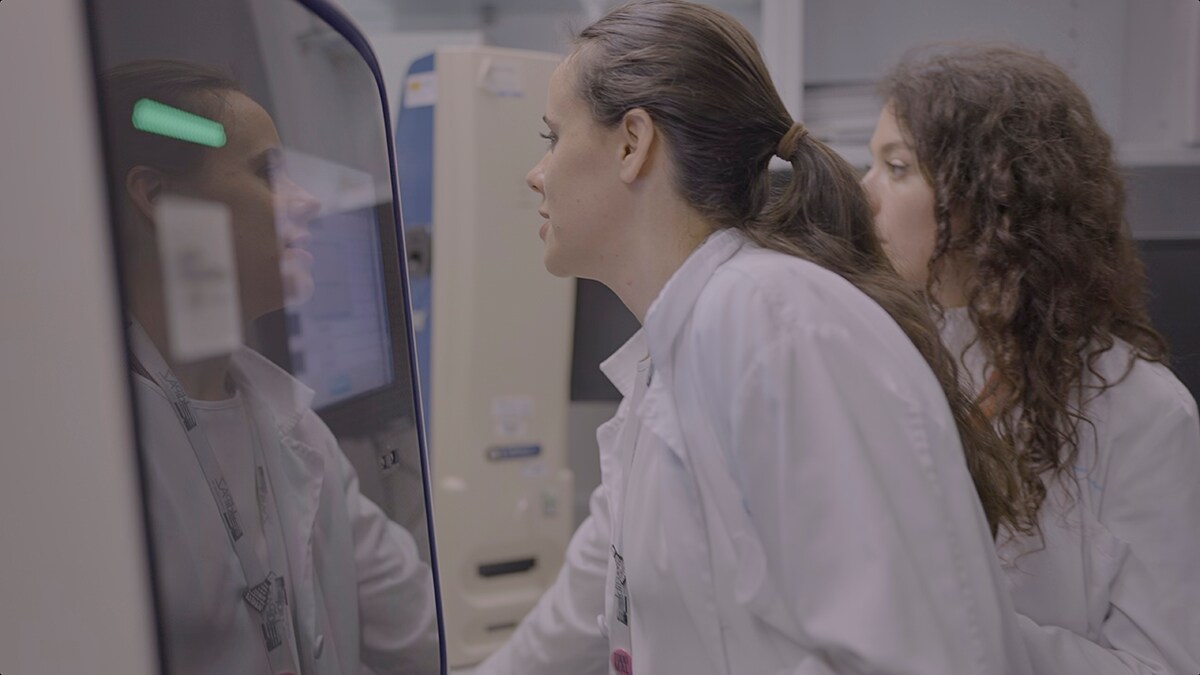
However, to better monitor these patients and predict their response to treatment or relapse, we are trying to detect this biomarker in their blood. We have a project that is still in the research phase, in which we are using both qPCR and Absolute Q Digital PCR [instruments] to detect the methylation of MGMT in blood. So far, the results have been promising, showing consistency between qPCR and dPCR. We think this can be translated to the clinic in the future. Applied Biosystems technologies have shown to be very robust, specific and sensitive for the biomarkers we are testing, even though there is still a lot of work to do. We are very happy and excited with the results so far.
What is your vision for the future of your field and biomedical research in general?
By the age of 30, people might expect to have their DNA sequenced, know their biomarkers, and identify potential diseases they might develop. But, the only way to achieve something like that is through research, the development of technologies, and the improvement of the methods that we already have. I think Applied Biosystems [technologies] is doing a great job supporting research to move towards that future.
I feel that technological progress is happening very fast, which is exciting, especially with new technologies like AI. Also, some countries are working to improve liquid biopsy biomarkers to help detect cancer early or predict response to treatments. We are getting better at monitoring patients with cancer and other diseases, which will benefit everyone.
How do you spend your free time when you’re not busy planning the next biomarker discovery or thinking about funding?
In my free time, I enjoy going to the mountains. I grew up in a house in the mountains my parents own. I love going there and just appreciate nature. I used to play guitar, but not anymore. I also enjoy writing.
What is something you would tell a young scientist just starting?
Be curious and try things out. Our work is sometimes hard. There are times when you want to give up, and it’s overwhelming. But on the other hand, it’s very rewarding when you see that what you do can actually help other people and benefit patients.
This interview has been edited for length and clarity.
Want to see how you can apply qPCR and dPCR technologies in your research?
To learn more about how you can harness the power of dPCR, visit thermofisher.com/absoluteq
To learn more about our latest innovations in qPCR, visit thermofisher.com/studioofthefuture
*When compared to RT-PCR (qPCR) technology
For Research Use Only. Not for use in diagnostic procedures.
© 2024 Thermo Fisher Scientific Inc. All rights reserved. All trademarks are the property of Thermo Fisher Scientific and its subsidiaries unless otherwise specified. TaqMan is a trademark of Roche Diagnostics, Inc.

Revolutionizing Gene Editing with CRISPR and Digital PCR – A Conversation with Dr. Dustin Rubinstein
In a recent Absolute Gene-ius podcast episode titled “CRIS...
Read More
Following the Molecular Fingerprints of Cancer with Digital PCR
For clinical researchers and scientists, the value of a biom...
Read More
Advancing Cancer Cell-Based Assays with Assay-Ready Tumoroids
Cancer research is continually evolving, and patient-derived...
Read More
From Telomeres in Space, Cancer Research to Microbes on Earth: Harnessing the Power of qPCR
Conversation with Dr. Christopher Mason from Weill Cornell M...
Read More
Leave a Reply