As the SARS-CoV-2 crisis rages worldwide, scientists are working tirelessly to understand the biology and pathogenesis of infection. With time and resources in short supply, increased efficiency is paramount to generating quality data quickly. Still, scientists must devote significant time and resources to literature reviews and study design before they can even start asking their critical questions. To address the needs of SARS-CoV-2 researchers, we’ve made it our mission to develop efficient, easy-to-use real-time PCR solutions to accelerate innovation and enhance productivity.
Learn More: Real-Time PCR Solutions for SARS-CoV-2 Research
“The greatest advantage is the simplified workflow for researchers.
We did the homework and created SARS-CoV-2 research panels that are ready to go.”
Viral infection involves complex biological processes, necessitating simultaneous multi-gene analysis. While you can create a completely custom panel of assays, performing a comprehensive literature review and identifying relevant genes takes a lot of time. To streamline the process, we designed three Applied Biosystems™ TaqMan® Flexible Content Panels for SARS-CoV-2 research.
“The greatest advantage is the simplified workflow for researchers,” says Archana Gupta, Ph.D., a member of the team that designed the panels. “We did the homework and created SARS-CoV-2 research panels that are ready to go.”
Each coronavirus panel is available for three species (human, mouse, and rat) and in multiple formats to ensure compatibility with a range of real-time PCR instruments. The arrays are also manufactured with dried-down Applied Biosystems™ TaqMan® Assays to save valuable time in the lab – just add the nucleic acid and master mix.
Learn More: TaqMan® Flexible Content Panels
We designed the panels with SARS-CoV-2 researchers in mind
Paramount to our panel design was selecting targets that are relevant to SARS-CoV-2 researchers. “We approached this with the researcher in mind,” says Archana, “thinking about what aspects of viral lifecycle and pathogenesis would be of interest.”
During their exhaustive background research, the team pored over journal articles and had in-depth discussions to identify the top SARS-CoV-2 study focus areas with real-time PCR applications. From there, they curated the panels of assays to include the most relevant and top-cited genes related to three crucial components of infection:
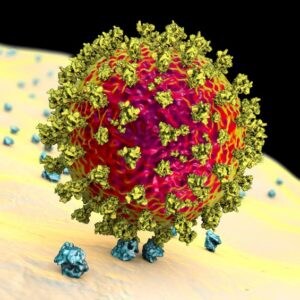 |
Entry factors Entry factors are host molecules that a virus uses to enter a cell and are critical determinants of viral tropism, infectivity, and pathogenesis. SARS-CoV-2 and other coronaviruses exhibit flexibility and redundancy in the entry factors used during cell entry1, so we identified 13 of the most-cited receptors and proteases for inclusion in the panel:·
|
 |
Restriction factors Restriction factors are antiviral molecules produced by a host cell and play a vital role in infection progression. We selected 13 genes that exhibit robust antiviral activity, including blocking virus entry and inhibiting virus replication:·
|
 |
Immune signaling Signaling molecules, including cytokines, chemokines, and growth factors, regulate a complex network of protective and destructive host immune responses to SARS-CoV-2. Our curated list of 29 genes can simultaneously analyze critical mediators of immune signaling pathways to understand host response variability and the implications for clinical outcomes15:
|
Built-in flexibility enables you to customize panels for your research
Even if you want to study a novel gene-of-interest, you can still leverage our entirely customizable TaqMan Flexible Content panels. After selecting the species and format, the pre-selected assays automatically upload to the Custom Array Configurator. From there, you can rearrange the predesigned layout or edit the pre-selected assays to suit your experiment needs better.
Designed with your research in mind, our SARS-CoV-2 TaqMan Flexible Content Panels ensure that your time and focus remain on the questions that matter.
Got an idea for a new coronavirus panel? Submit your idea.
Additional Information
We recommended the following Master Mixes for use with the TaqMan Flexible Content Panels:
- Applied Biosystems™ TaqMan® Fast Advanced Master Mix (2-step real-time RT-PCR)
- Applied Biosystems™ TaqMan® Fast Virus Master Mix (1-step real-time RT-PCR)
References
- Singh M, Bansal V, Feschotte C. A Single-Cell RNA Expression Map of Human Coronavirus Entry Factors. Cell Reports. 2020;32(12):108175. doi:10.1016/j.celrep.2020.108175
- Hoffmann M, Kleine-Weber H, Schroeder S, et al. SARS-CoV-2 Cell Entry Depends on ACE2 and TMPRSS2 and Is Blocked by a Clinically Proven Protease Inhibitor. Cell. 2020;181(2):271-280.e8. doi:10.1016/j.cell.2020.02.052
- Wang K, Chen W, Zhang Z, et al. CD147-spike protein is a novel route for SARS-CoV-2 infection to host cells. Signal Transduct Target Ther. 2020;5. doi:10.1038/s41392-020-00426-x
- Cantuti-Castelvetri L, Ojha R, Pedro LD, et al. Neuropilin-1 facilitates SARS-CoV-2 cell entry and infectivity. Science. 2020;370(6518):856-860. doi:10.1126/science.abd2985
- Vankadari N, Wilce JA. Emerging COVID-19 coronavirus: glycan shield and structure prediction of spike glycoprotein and its interaction with human CD26. Emerging Microbes & Infections. 2020;9(1):601-604. doi:10.1080/22221751.2020.1739565
- Zang R, Gomez Castro MF, McCune BT, et al. TMPRSS2 and TMPRSS4 promote SARS-CoV-2 infection of human small intestinal enterocytes. Sci Immunol. 2020;5(47):eabc3582. doi:10.1126/sciimmunol.abc3582
- Kam Y-W, Okumura Y, Kido H, Ng LFP, Bruzzone R, Altmeyer R. Cleavage of the SARS Coronavirus Spike Glycoprotein by Airway Proteases Enhances Virus Entry into Human Bronchial Epithelial Cells In Vitro. PLOS ONE. 2009;4(11):e7870. doi:10.1371/journal.pone.0007870
- Simmons G, Zmora P, Gierer S, Heurich A, Pöhlmann S. Proteolytic activation of the SARS-coronavirus spike protein: Cutting enzymes at the cutting edge of antiviral research. Antiviral Research. 2013;100(3):605-614. doi:10.1016/j.antiviral.2013.09.028
- Johnson BA, Xie X, Bailey AL, et al. Loss of furin cleavage site attenuates SARS-CoV-2 pathogenesis. Nature. Published online January 25, 2021:1-7. doi:10.1038/s41586-021-03237-4
- Pfaender S, Mar KB, Michailidis E, et al. LY6E impairs coronavirus fusion and confers immune control of viral disease. bioRxiv. Published online March 7, 2020:2020.03.05.979260. doi:10.1101/2020.03.05.979260
- Zang R, Case JB, Yutuc E, et al. Cholesterol 25-hydroxylase suppresses SARS-CoV-2 replication by blocking membrane fusion. Proc Natl Acad Sci USA. 2020;117(50):32105-32113. doi:10.1073/pnas.2012197117
- Zhang L, Jackson CB, Mou H, et al. SARS-CoV-2 spike-protein D614G mutation increases virion spike density and infectivity. Nature Communications. 2020;11(1):6013. doi:10.1038/s41467-020-19808-4
- Martin-Sancho L, Lewinski MK, Pache L, et al. Functional Landscape of SARS-CoV-2 Cellular Restriction. :29.
- Nchioua R, Kmiec D, Müller JA, et al. SARS-CoV-2 Is Restricted by Zinc Finger Antiviral Protein despite Preadaptation to the Low-CpG Environment in Humans. Luban J, Goff SP, eds. mBio. 2020;11(5):e01930-20, /mbio/11/5/mBio.01930-20.atom. doi:10.1128/mBio.01930-20
- Costela-Ruiz VJ, Illescas-Montes R, Puerta-Puerta JM, Ruiz C, Melguizo-Rodríguez L. SARS-CoV-2 infection: The role of cytokines in COVID-19 disease. Cytokine & Growth Factor Reviews. 2020;54:62-75. doi:10.1016/j.cytogfr.2020.06.001
For Research Use Only. Not for use in diagnostic procedures.

Tracking grape pathogens from air to vine – a conversation with Lexi Heger
On the Absolute Gene-ius podcast, Lexi Heger, PhD candidate ...
Read More
From Bottlenecks to Breakthroughs: Scaling Molecular Testing with OpenArray
At Livingston Med Lab in central Texas, the team has long pr... John Pfeifer, PhD
Read More
How to Achieve More Sustainable mRNA Synthesis and Purification
mRNA therapeutics have delivered on the promise of simple an...
Read More
Utilizing Digital PCR for Wastewater Surveillance: An Interview with Dr. Sarah Philo
Exploring Wastewater Surveillance for SARS-CoV-2 with Dr. Sa...
Read More
Leave a Reply