Viral vector gene therapy is a growing therapeutic field. While the first clinical success in viral vector gene therapy was in 19901, it hasn’t been an easy path to bring this treatment modality to market.
Given the novelty of this therapeutic approach, the safety as well as the long-term effects of gene therapy are yet to be fully understood. Serious adverse events that have occurred during clinical trials of several gene therapies in development reinforce the complexity of this treatment modality, and highlight the need to execute every development phase with utmost scientific rigor and adherence to regulatory guidelines.
However, through the challenges and failures, gene therapy development has evolved and is on its way to becoming a potential treatment option for a variety of diseases, such as hemoglobinopathies, genetic eye diseases, HIV, cancers, and more.2
We chatted with Sushma Ogram, Strategic Key Accounts Director, and Meagan Spychala, Executive Director, at Thermo Fisher Scientific about gene therapy in clinical trials.
Hi Sushma and Meagan! Thank you for chatting with us. Please introduce yourself and your role at Thermo Fisher Scientific.
Sushma: I am a Director of Scientific Collaborations in the Enterprise Science and Innovation team. In this role, I support our strategic partners with their technical and scientific challenges, providing innovative solutions that leverage Thermo Fisher Scientific’s enterprise capabilities. Previously, I served as the Global Head of Analytical Development for our Viral Vector Services.
Meagan: I’m an Executive Director of Project Delivery in our Clinical Research Group. I support clinical trials in rare neuroscience indications and am the Chair of our Gene Therapy Operational Center of Excellence, a cross-functional group that ensures our project teams successfully support the patients, sites, and our sponsors in gene therapy research.

In your words, what is gene therapy and why is it important for the future of science and healthcare?
Sushma: Gene therapy is an innovative therapeutic approach to treat and potentially cure genetic diseases and cancer. It delivers specific genetic material to replace a malfunctioning gene, insert a new gene or to modify expression of an existing gene. Gene therapy is important because it has the potential to cure patients, offering them hope and making it a compelling therapeutic approach.
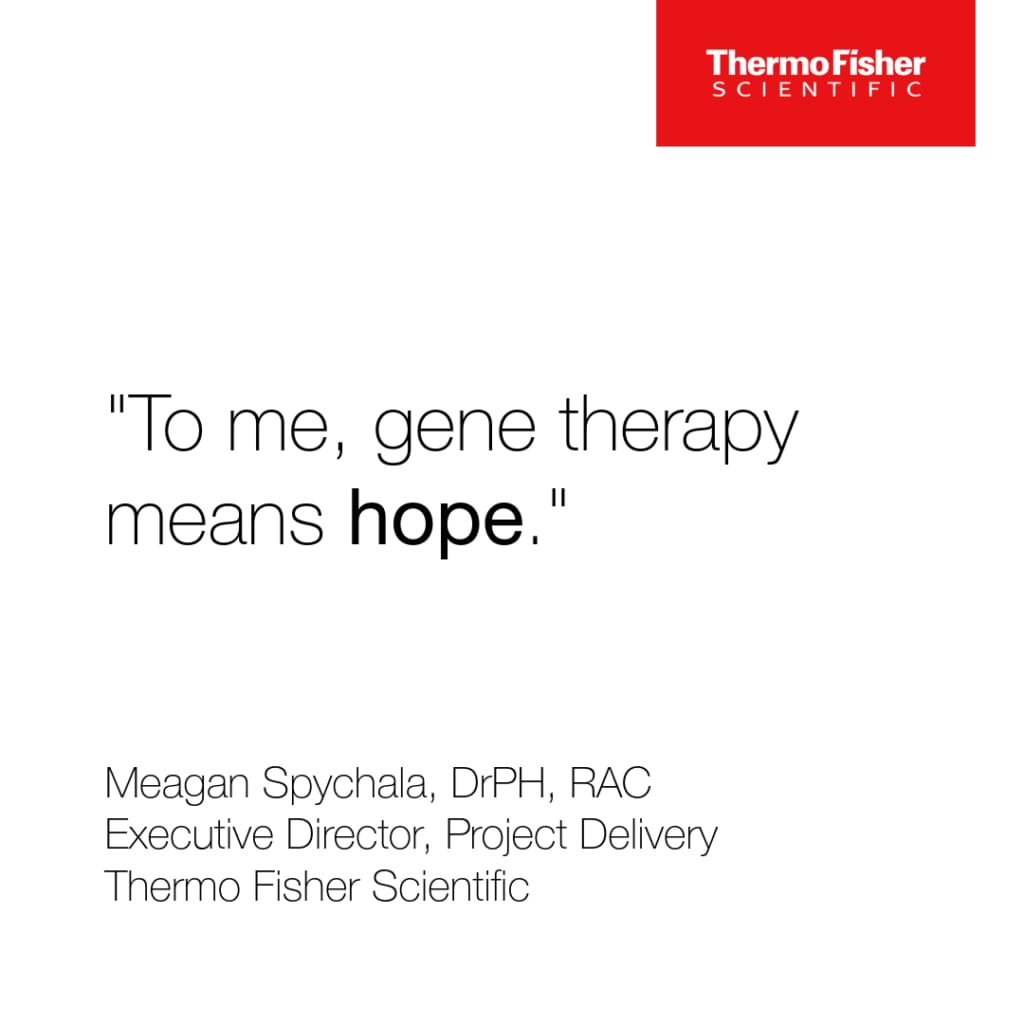
Meagan: Gene therapy is a product that tries to fix or replace a faulty gene with one that would work correctly in order to treat or to cure a disease. But to me, gene therapy means hope. I’ve spent most of my time in rare disease research. Currently, there are over 7,000 documented rare diseases and almost 80% of those have a genetic component, so gene therapy can mean hope to these patients and families that a cure could exist.
Gene therapy has changed a lot in recent years. How has the COVID vaccine and therapeutics development influenced the way we develop drugs?
Sushma: Yes, there has been a lot of emphasis on safety and efficacy of these novel therapies. With the commercialization of the approved products, more control strategies are now in place.
More platform processes are being made available to expedite development and manufacturing of the viral vectors. There is significant focus on chemistry and manufacturing controls (CMC) and there is strong emphasis in partnering with experienced CDMOs and CROs for testing. There is also more data from clinical trials monitoring adverse events. Use of AI for retrospective data analysis of all preclinical and clinical data will support better design of the clinical development process and clinical trials.
Although viral vectors are the preferred delivery vehicle, there is now a lot of interest in developing non-viral mediated gene delivery in particular Lipid Nanoparticles. This approach overcomes the immunogenicity associated with viral vectors. The ease of manufacturing may also provide a cost-effective alternative. However, targeted delivery and the effectiveness of using LNPs in gene therapy is still a challenge and needs to be optimized.
The fast development of the COVID vaccine was a clear example of when we all work together towards a common goal, we can expedite development and reduce timelines significantly. Adoption of automation and digital technologies during vaccine development including virtual clinical trials and remote monitoring also accelerated bringing the COVID vaccine to market. COVID vaccine has allowed the adoption of newer technologies and approaches such as mRNA therapies. It has highlighted the need for collaboration, coordination and harmonization between different stakeholders, academia, industry, regulators and public health agencies.
These approaches can now be made standard for expedited drug development. We also need to credit the regulatory agencies who adapted their processes to support accelerated approval pathways to bring the vaccine to market faster. It also revealed the gaps and bottlenecks for manufacturing especially with regards to supply chain and distribution. Building sustainable relationships with experienced vendors who can support you from early development to commercialization as well as lifecycle management will streamline development and commercialization.
Meagan: I agree with everything Sushma noted, and I think from an advanced therapy perspective, the COVID vaccine helped with education around therapies that use nucleic material, like mRNA vaccines. Additionally, the biggest change in gene therapy really came with the first FDA approval for a gene therapy product, as this showed us there was a path forward for these novel therapeutics.
What are some benefits and limitations of gene therapy?
Sushma: Gene therapy provides hope for patients with debilitating diseases to potentially find a treatment. It can provide long-term benefits or even cure.
There are some limitations, too. The treatment follows a complex regimen and can cause an immune response that could impact the safety and effectiveness of the therapy in an already sick individual. There’s a definite benefit vs. risk ratio, and long-term follow-up data is key. The last limitation is the cost. The high cost makes them inaccessible to some patients.
Meagan: Yes, as said before, gene therapy provides hope in so many ways. A key benefit would be to provide a cure to a disease, allowing patients to no longer decline physically and mentally. But there are limitations. We’re still studying the durability of gene therapies, which is how long the gene therapy will be effective. Additionally, with viral vectors, patients can have immunity to those vectors which limits the number of people who could be eligible for treatment. Currently, there is research underway looking into non-viral vectors or ways to reduce the patient’s current antibodies to address this risk.
Clinical trials can be a daunting stage of the drug development lifecycle. What are your tips to emerging and established biotech companies that are getting ready for FIH clinical trials?
Sushma: Biotech companies need to have strong preclinical data, which is comprehensive, including in vitro and in vivo studies. Some keys tips:
- Make sure the studies address the safety and efficacy of the treatment by using good applicable model systems.
- Perform pharmacokinetics and pharmacodynamics studies early in drug development to help with the translation of findings from preclinical to clinical settings.
- Conduct well designed toxicology studies to understand and identify potential adverse effects and get suitable data for starting doses that are safe and efficacious.
- Use experienced consulting services to help guide you to transition from preclinical to clinical stages.
- Importantly, engage early with regulatory agencies to get their feedback and make sure your application is complete and meets regulatory standards.
Meagan: I think a big part of it is to expect the unexpected as you start on your clinical trial journey. You must plan for all the risks you can think of prior to the study starting, and then be comfortable pivoting once enrollment starts, especially with the first in-human trials.
For example, we had one study where a serious adverse event occurred during the first patient’s dosing. Because we had risk mitigation plans in place, we were able to work quickly with the site to ensure patient safety, get this safety data to the Data Safety Monitoring Board, and implement expedited reviews to understand the appropriate next steps. We worked to efficiently implement the protocol amendment to support the DSMB recommendations and, while awaiting approval, worked to fill all the additional cohort slots, so that we could fully enroll the remaining cohort upon approval.
By working with a CRO that has experience, knowledge, and resources, a biotech can ensure that they have a plan to prevent risks and resolve issues that arise effectively.
How do you support gene therapy developers through the clinical phases?
Meagan: We work to understand the integrated product development plan and identify the key decision points. Our goal is not only to support the process but identify efficiencies so the client can minimize the gaps between studies. The earlier we’re able to get involved, the better.
For example, we have supported sponsors with planning for and setting up their Phase III clinical trial before the first in-human study was done enrolling. This allowed us to achieve first site activated five months after their Phase I study had last patient in.
We were able to achieve a more efficient site activation due to early collaboration with sites to understand their timelines, obstacles, and constraints, preventing risks that could delay activation. This involves working with sites on their equipment and infrastructure set up, such as ensuring freezers for clinical trials are functional and using tools like protocol-specific IP flows to identify gaps and ensure site readiness. By mapping out the steps from manufacturer to administration, we ensure smooth operations which helps to minimize risks and positively impact the patient experience.
Ultimately, if you’re collaborating with an experienced CRO, you’ll be able to find ways to expedite the process, where able. You’ll also be able to mitigate potential patient recruitment issues by supporting access to an appropriate patient population, utilizing established relationships with the patient community to support patient-centered solutions. And so much more.
Sushma: Overall, we function as a one-stop shop for our gene therapy customers from early development, preclinical, clinical, and into commercialization with a variety of products and services.
What are the key challenges with patient recruitment and follow-up for gene therapy clinical trials?
Meagan: It can be inherently difficult to find patients for clinical trials—and then to keep them through years of follow-up; creating a patient-centric experience is vital.
It’s important for us to support the patients and their caregivers/families as best we can. And I think the only way to really do that is through education and empathy. It’s important to remember what we’re asking of them.
To best support the family experience, we conduct patient dry-run visits, on-site education, and more to help the site prepare. Additionally, we work with patient advocacy groups to understand the challenges that a given patient community can face when thinking about clinical research to make it easier to enroll and stay in the trial.
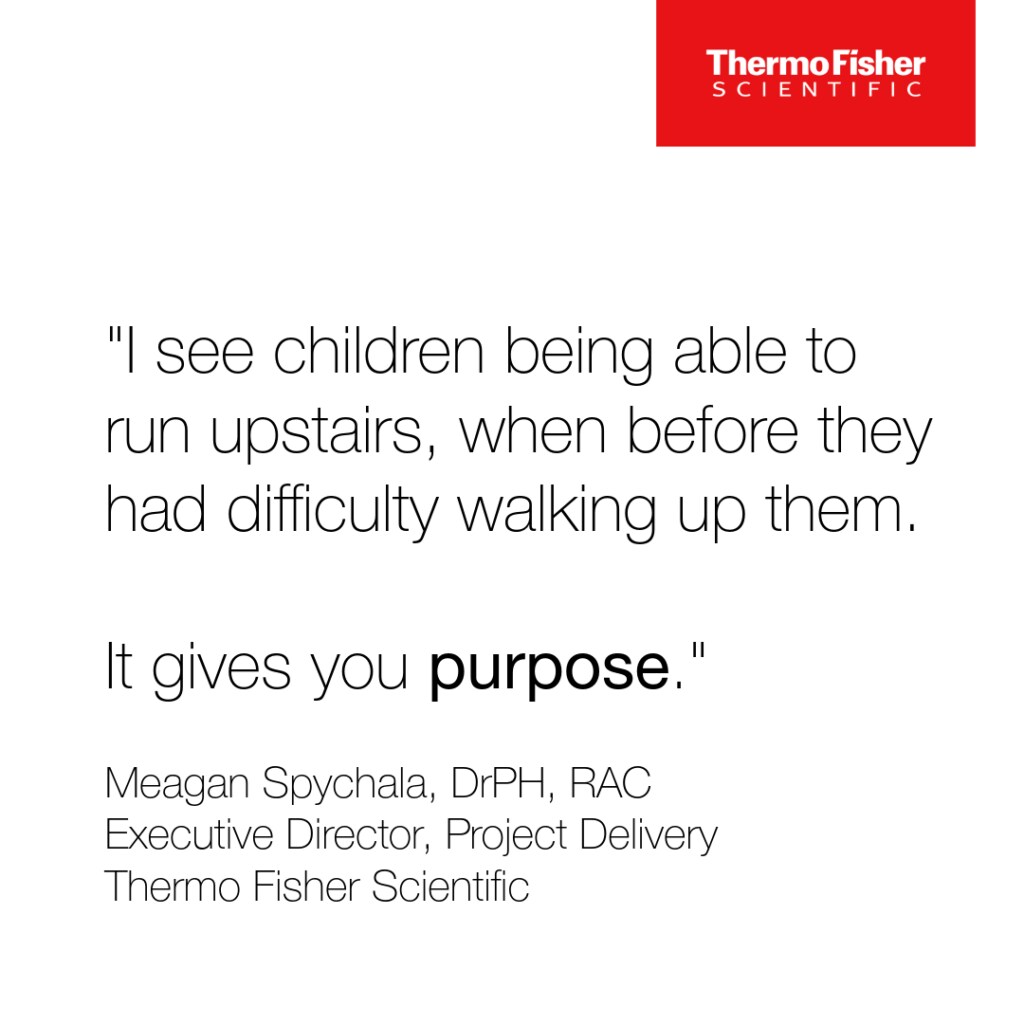
For example, we typically discuss how to best provide patient travel and reimbursement services, which are incredibly helpful for the patients. However, by understanding the patient population, we can better tailor these approaches. For one gene therapy study, the pediatric participants needed to stay in-clinic for several days after dosing. We knew that the children would have difficulty in the hospital without their guardian, so we didn’t consider hotel costs for that study, but rather the ability to have private rooms where the guardians could also stay overnight to benefit the participant. Also, working on solutions tailored to the patient population is crucial to support the trial.
How long do the different phases of a gene therapy clinical trial typically take? Are the timelines different for other modalities such as small molecules?
Meagan: The timelines depend on a variety of things, including the indication, the competitive landscape, and the product development plan. Utilizing natural history studies to provide insights into the disease, as well as a potential feeder for clinical trials can support with timely patient recruitment and in bringing in timelines for a given clinical trial. The regulatory pathway you plan to use can also reduce time. Some sponsors are using validated biomarkers to show potential benefit to support an accelerated approval prior to the registrational trials being completed, then provide additional data from their registrational trials to obtain traditional approval later.
What strategies do you employ to ensure that clinical trial data meets regulatory standards and is effectively managed?
Meagan: There are a lot of things you can do to effectively manage data in clinical trials. We aim to ensure the sites are appropriately trained to reduce variability. We also create data monitoring and validation plans to ensure appropriate data reviews occur and trends are being analyzed.
This does not differ much from a trial utilizing a small molecule. What does differ is the amount of data we collect in an advanced therapy trial, especially between screening and the first three to six months following dosing. It is important to ensure that data reviews and our monitoring approach are aligned with the increase in data collection early in the trial so that we can identify any potential areas for re-training before issues arise.
Additionally, we utilize tools like our Preclarus dashboards to be able to review the data and be alerted to issues. For example, we can get timely information about lab samples that were not able to be analyzed to ensure we can have timely redraws if a key safety parameter was not analyzable.
At Thermo Fisher, we support our project teams through our operational Centers of Excellence. We share lessons learned, best practices, case studies, new information in the field, and hear from patients and families who have been involved in gene therapy research, so that as an organization we are learning from each other to support our clients in this ever-evolving field.
What new opportunities in the clinical trials space do you see emerging in the gene therapy field, and how is Thermo Fisher Scientific preparing to leverage them?
Meagan: A lot of the opportunities are really in line with the challenges that we discussed earlier. Looking at how to treat patients that have neutralizing antibodies to the vector is something that some sponsors are already researching that will have a large impact on patient access. While that is ongoing, it is also critical to review the current immunosuppression regimens used in clinical trials. In a review of gene therapy trials that we conducted, we found that 62% of protocols have changes to the dosing, timing, or types of immunosuppressant used. Learning from all the gene therapy clinical trials being conducted to support best practices in immunosuppression regimes will help the safety of these patients moving forward.
What are you most looking forward to with this technology, and what does gene therapy development mean for the future of health?
Meagan: I’m most looking forward to the profound impact this technology will have on the world and on the lives of patients and their families. With gene therapy, we have the ability to treat so many different diseases and benefit the broader global community. I am so grateful to be a part of it.
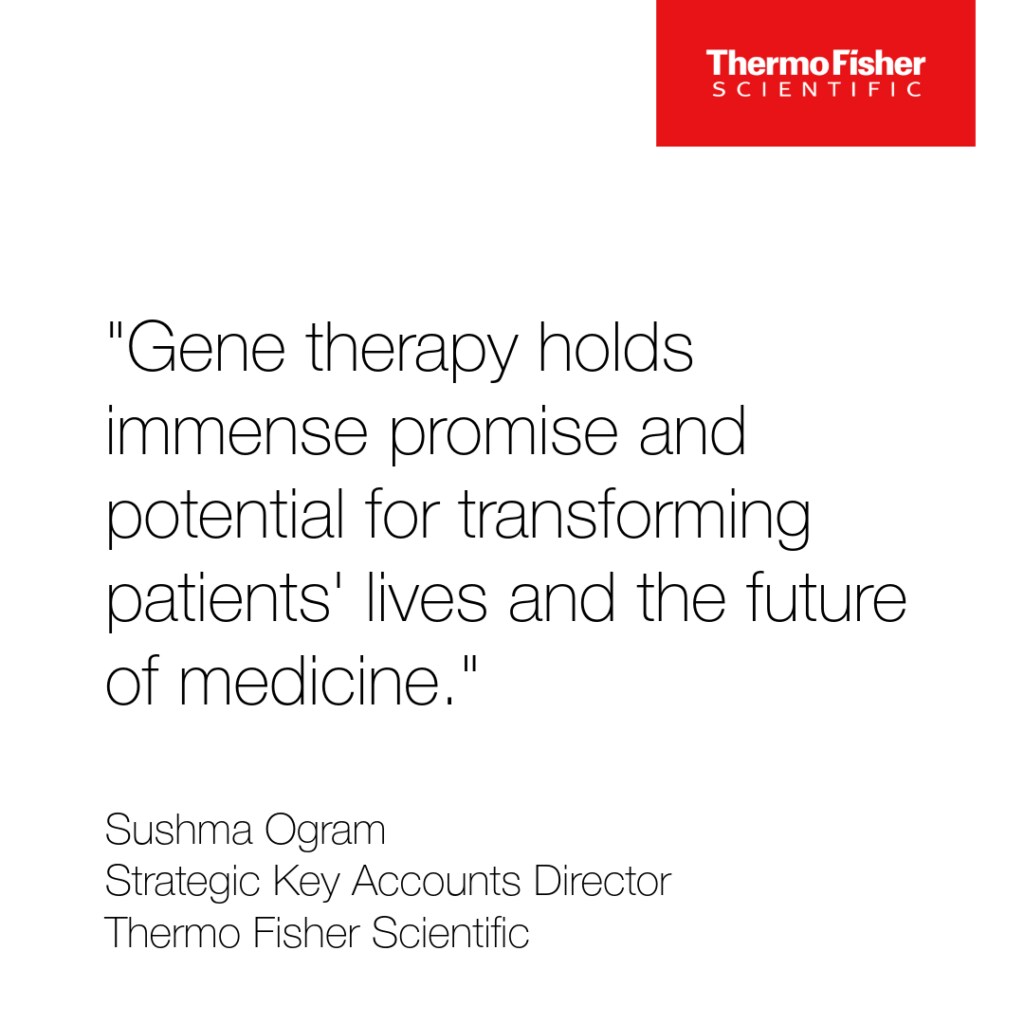
Sushma: Yes, gene therapy holds immense promise and potential for transforming patients’ lives and the future of medicine. I believe this technology will become more of a personalized treatment tailored to an individual’s genetic make-up. I look forward to this therapy fundamentally changing how we treat and cure diseases resulting in improved outcomes for patients and leading to a healthier future.
What do you see in the future for gene therapies?
Meagan: I think the next large changes will be non-viral vector therapies and research in antibody and immune system response to gene therapies. This is going to continue to develop in gene therapies, the patients we can treat, and their safety.
We are excited to offer you our comprehensive eBook, packed with valuable insights and solutions your peers are utilizing to drive gene therapy from discovery to commercialization.

Gene therapy holds immense promise. We aim to help you bring your therapies to market faster, and with more confidence.
Read more from the Thermo Fisher Scientific team on commercialization of a gene therapy.
Citations
- Limberis MP. Phoenix rising: gene therapy makes a comeback. Acta Biochim Biophys Sin (Shanghai). 2012 Aug;44(8):632-40. doi: 10.1093/abbs/gms036. Epub 2012 May 23. PMID: 22623503; PMCID: PMC7109785.
- “The History and Evolution of Gene Therapy.” The Gene Home, https://www.thegenehome.com/what-is-gene-therapy/history.

How Biotech Companies Can Determine Landmark Clinical Trial Guidelines
Landmark clinical trials shape regulatory pathways, funding ... Archana Gupta, Ph.D.
Read More
Molecule to Market: What Biotech Leaders Need Most at Each Phase of Drug Development
Most biotech companies share a similar ambition throughout d... Jenny Ro
Read More
Top Five Tips for Clinical Trial Design
In the race to develop innovative therapies, clinical trial ... Jenny Ro
Read More
How Biotech Innovators are Using Integrated CDMO and CRO Services to Help Reach Patients Faster
A recent Tufts Center for the Study of Drug Development (CSD... Jenny Ro
Read More
Leave a Reply