The opioid crisis in the United States continues to evolve, and law enforcement agencies face an increasingly complex challenge as new synthetic substances enter the drug supply. Among the most concerning of these are nitazenes, a class of opioids first synthesized in the 1950s but never approved for medical use.
For decades they were little more than obscure chemical entries in pharmacological archives, but today they are emerging as a powerful and dangerous presence in illicit drug markets. The DEA’s 2025 National Drug Threat Assessment warns that, beyond fentanyl, “powerful synthetic drugs like nitazenes” are now being encountered with growing frequency, often disguised in counterfeit pills or mixed into other narcotics (source: DEA NDTA 2025).
Background and Emergence
Nitazenes belong to the benzimidazole-opioid structural class. Initially investigated for pain relief, their toxicity and extreme potency prevented clinical use. Decades later, their reappearance in illicit channels has created a new layer of risk. According to the DEA Diversion Control Division, nitazenes are “synthetic opioids that can match or surpass the potency of fentanyl” (source: DEA Diversion). That potency is what makes them so dangerous. Even minuscule quantities can be lethal.
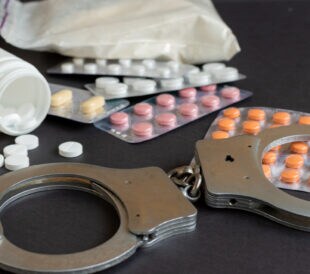
In overdose situations, naloxone can be effective, but multiple doses are often required, and the respiratory depression they cause can last longer than fentanyl’s effects. The DEA cautions that “even trace contamination can result in overdose and death” (source: DEA Street Report, 2024). Compounding the risk is the fact that users rarely know they are ingesting nitazenes, as they are commonly pressed into counterfeit oxycodone or alprazolam pills.
Increasing Presence in the Drug Supply
Nitazenes began to appear in the U.S. drug supply around 2019, when isotonitazene was first identified in overdose cases. Since then, their presence has steadily grown. Between 2023 and 2024, laboratory data showed a 17 percent rise in nitazene detections among fentanyl-positive drug samples, and in nearly all cases the substances were found together. Crime labs have increasingly reported nitazenes in counterfeit prescription pills seized from the street. In June 2022, the DEA issued a public alert that nitazenes were emerging in the Tri-State area, noting their role in driving fatal overdoses (source: DEA Story, 2022).
The spread of nitazenes is not limited to the United States. A 2025 global alert reported that nitazenes were being shipped through international mail in small parcels, some containing enough for hundreds of lethal doses. Alarmingly, some analogs were found to be up to 20 times stronger than fentanyl. In one case, seized tablets contained an average of 29 milligrams of metonitazene—equivalent to about 145 times the estimated fatal dose of fentanyl (source: DFAF Global Alert 2025). Because only tiny amounts are required to produce powerful effects, nitazenes are easy to smuggle, highly profitable to traffickers, and extraordinarily dangerous to those who encounter them.
DEA Scheduling Actions
Recognizing the imminent hazard, the DEA has moved swiftly to control these substances through emergency scheduling. In August 2025, N-pyrrolidino metonitazene and N-pyrrolidino protonitazene were placed temporarily in Schedule I of the Controlled Substances Act (source: Federal Register, Aug 2025). Two months earlier, the agency took similar action against seven other benzimidazole opioids (source: Federal Register, June 2025). These steps highlight how quickly analogs are appearing and the difficulty of regulating substances that evolve faster than the law can keep up.
Operational and Investigative Challenges Met with Technology
For law enforcement, nitazenes present operational and investigative challenges beyond those already posed by fentanyl. Detection is a major issue. Standard field test kits and many laboratory assays do not identify nitazenes, leaving officers and medical examiners in the dark until more advanced analyses are performed. Even then, forensic laboratories often have to update their reference libraries to keep pace with new analogs. This creates dangerous lag times in recognizing outbreaks or confirming causes of overdoses.
However, technology does exist now that can identify nitazenes as well as fentanyl and other illicit substances. There are currently handheld narcotics analyzers that use Raman technology to identify multiple controlled substances including narcotics, synthetic drugs, cutting agents, and precursor chemicals in a single test, without direct contact for most samples. These instruments equip officers, customs, border control, and other personnel with the accuracy and dependability of a narcotics testing lab, right in the field. Because these analyzers employ non-destructive, non-contact Raman technology, they can scan directly through sealed glass and plastic containers. This feature helps ensure officer safety by reducing exposure and is particularly useful for preserving evidence. Depending on the jurisdiction, the test results may be used as presumptive evidence.
Analysis Technology
Raman spectroscopy is a vibrational spectroscopy technique where a single wavelength laser is focused on a sample. The laser excites the bonds of a molecule, which generates measurable scattered light to identify the material in question. Raman is a highly effective method for reliable identification of an unknown substance based on its underlying chemistry.
Raman spectroscopy has been extensively deployed for use in homeland security applications, largely due to the high chemical specificity, with each chemical substance having a unique spectral fingerprint.
Overdose Response
Overdose response is another challenge. Officers and emergency medical personnel must be prepared for cases that require multiple doses of naloxone and longer monitoring periods than with fentanyl alone. The risks extend to first responders themselves. Handling powders or counterfeit pills without proper protective equipment can result in accidental exposure. As the DEA emphasizes, responders must “use extreme caution with powders or counterfeit pills” and be ready for prolonged effects in suspected nitazene cases (source: DEA Street Report, 2024).
As we noted above, with some handheld narcotics analyzers you can scan directly through plastic or glass for most drug test samples to minimize contamination, reduce exposure and preserve evidence.
Smuggling and Trafficking
Small size and high potency make nitazenes well suited for smuggling and trafficking. International packages containing only a few grams can represent thousands of doses, slipping through traditional interdiction systems with ease. For trafficking organizations, the financial incentive is obvious; for law enforcement, the challenges are steep. As one global alert noted, “an envelope in the mail may contain enough nitazenes to fuel dozens of overdoses” (source: DFAF Global Alert 2025). Many countries utilize handheld narcotics analyzers and chemical identification analyzers at their borders. (We wrote about border captures in a previous article, Drugs in Disguise and how airports are using spectroscopy instruments for incoming drugs.)
Summary
The broader picture is clear: nitazenes are adding another layer of danger to an already volatile drug landscape. Their potency, concealment in counterfeit pills, difficulty of detection, and rapid appearance of new analogs combine to make them a particularly insidious threat. Law enforcement officers must remain vigilant and informed, working with the latest technology to detect and respond to this evolving hazard.
Additional Resources
- eBook: Safer Narcotics Identification: A Guide for Communities and Agencies
- Online Resources: Threat Detection Solutions for Public Safety and Security
- Blog article: Using Spectroscopy Instruments at the Airport to Screen for Incoming Drugs
- Blog article: Drugs in Disguise
- U.S. Department of Justice, Drug Enforcement Administration, Nitazenes Drug Summary
- DEA 2025 National Drug Threat Assessment (PDF)
- Emerging Threat Report (2024) (PDF)
- Washington, D.C. 2022 Nitazenes Emergence (2022)
- Federal Register Notice: Temporary Placement of Seven Benzimidazole-Opioids in Schedule I (June 26, 2025)
- Federal Register Notice: Temporary Placement of N-pyrrolidino metonitazene and N-pyrrolidino protonitazene in Schedule I (August 15, 2025)
How Arkansas Combats the Opioid Crisis with Advanced Raman Technology
The ongoing opioid crisis poses a significant challenge for ... Christopher Orf
Read More
Presumptive Field-Testing During Narcotics Investigations
Presumptive field-testing refers to the initial testing of a... Sue Woods
Read More
Audit Addresses Prevention of Controlled Substances (Drugs) from Entering Prisons
I was recently looking over a 2023 report from the Office of...
Read More
Jailers Using Narcotics Analyzers to Help Detect Drug Contraband
We recently learned that a prison system on the U.S. West Co...
Read More

Leave a Reply