In today’s world, sustainability isn’t a buzzword—it’s a critical objective that requires precise measurement and analysis. Understanding the numbers behind sustainability efforts allows us to track progress, identify areas for improvement, and make data-driven decisions.
From carbon footprints to resource usage, these metrics provide a clear picture of our environmental impact. Join us as we delve into the statistics and figures that are shaping the future of sustainable living.
Understanding greener design
Greener design in bioprocessing involves creating processes and products that help reduce environmental impact while maintaining efficiency and effectiveness. This approach encompasses various strategies, including reducing waste, conserving energy, and utilizing more sustainable materials. By integrating these principles, bioprocessing facilities can significantly lower their carbon footprint and contribute to a healthier planet.
The role of single-use technologies
The choice of materials plays a significant role in the sustainability of bioprocessing processes. Greener design encourages the use of more sustainable materials that have a lower environmental impact. This includes recycled materials and sourcing raw materials that are more sustainable. By opting for these alternatives, bioprocessing facilities can reduce their reliance on non-renewable resources and decrease their overall environmental footprint.
The adoption of single-use technologies (SUT) enables a lower consumption of key resources (e.g. water, electricity, and space) compared to traditional stainless-steel systems. For instance, single-use bioreactors (SUBs) can drastically cut down water usage and facility energy consumption, offering an advantage in resource efficiency. By integrating these more sustainable practices, you can reduce environmental impact while helping enhance operational efficiency for bioprocessing facilities.
Thermo Fisher Scientific’s dedication to greener design extends beyond bioreactors to encompass a broad range of products and packaging. By embedding environmental principles at every stage of the design process, we help ensure that our products contribute to a reduced carbon footprint from inception to end of life.
Examples of packaging and waste reductions by the numbers:
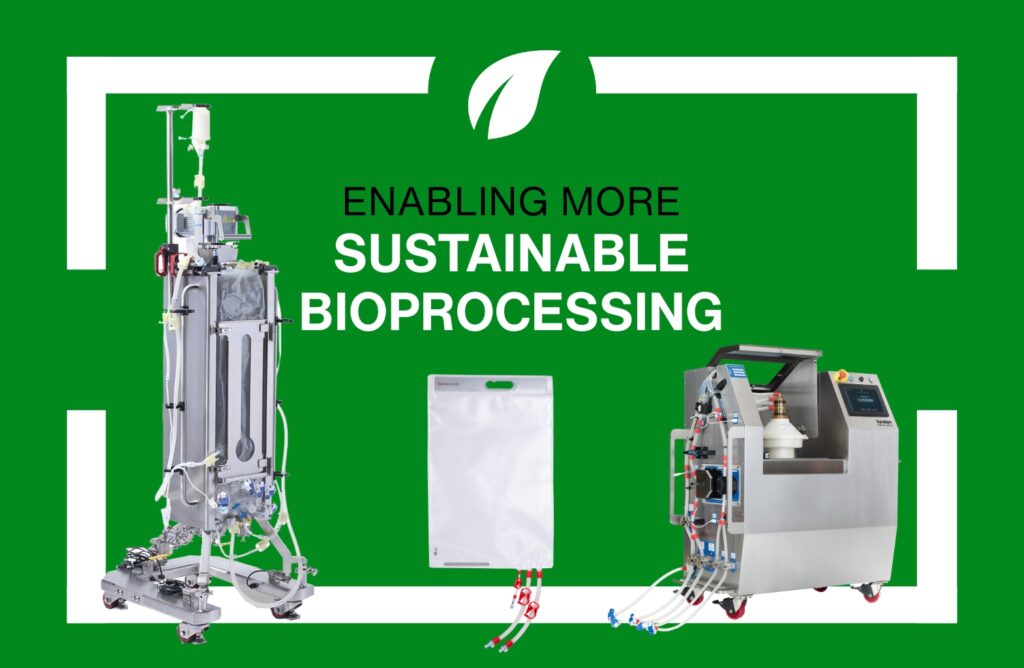
- 27% less packaging and plastic waste with Thermo Scientific DynaDrive Single-Use Bioreactor
- 74% less liquid waste per batch with Thermo Scientific DynaSpin Single-Use Centrifuge1
- 24% less packaging waste with Thermo Scientific Labtainer Pro BPC with BioTitan device
Learn more about our greener designs for bioprocessing
Conclusion
Sustainability by the numbers clearly illustrates the significant impact that greener design can have on the bioprocessing industry. By adopting energy-efficient technologies, reducing waste, conserving water, using more sustainable materials, and considering the entire life cycle of products, bioprocessing facilities can make substantial strides towards environmental sustainability. These practices not only benefit the planet but also contribute to the long-term viability and success of the industry. As we continue to advance in bioprocessing, the integration of greener design principles will be essential in creating a sustainable future for all.
Request to speak with a sustainability specialist
For Research Use or Further Manufacturing. Not for diagnostic use or direct administration into humans or animals.

Start Small to Move Fast: The Benefits of the 5 L DynaDrive Benchtop Bioreactor
In the fast-paced world of bioprocessing, innovation and eff...
Read More
Maximize Uptime and Elevate Performance with Thermo Fisher Scientific FlexCare Services
In the world of bioprocessing, reliable equipment is the bac...
Read More
Scalable Fed-Batch Bioreactor Process for Lentiviral Vector Production
In cell and gene therapy, the production of lentiviral vecto...
Read More
Enhanced Oxygen Transfer in Single-Use Fermentors Revolutionizes High-Density Cultures
In bioprocessing, the ability to cultivate fast-growing, hig...
Read More
Leave a Reply