
RNA interference (RNAi) is a highly conserved, crucial biological process that regulates gene expression by silencing mRNA molecules, preventing them from producing proteins. This mechanism plays a significant role in gene regulation and has profound implications for understanding biology and disease research applications. Understanding the difference between siRNA and miRNA, two key RNAi molecules, is essential for researchers and clinicians who aim to harness the power of RNAi, and the available tools, for scientific advancements.
Table of contents

Free download: RNAi handbook
For a deeper dive into RNAi workflows, be sure to explore our comprehensive RNAi handbook (.pdf) and learn about techniques and tools to help optimize your RNAi research.
What is siRNA?
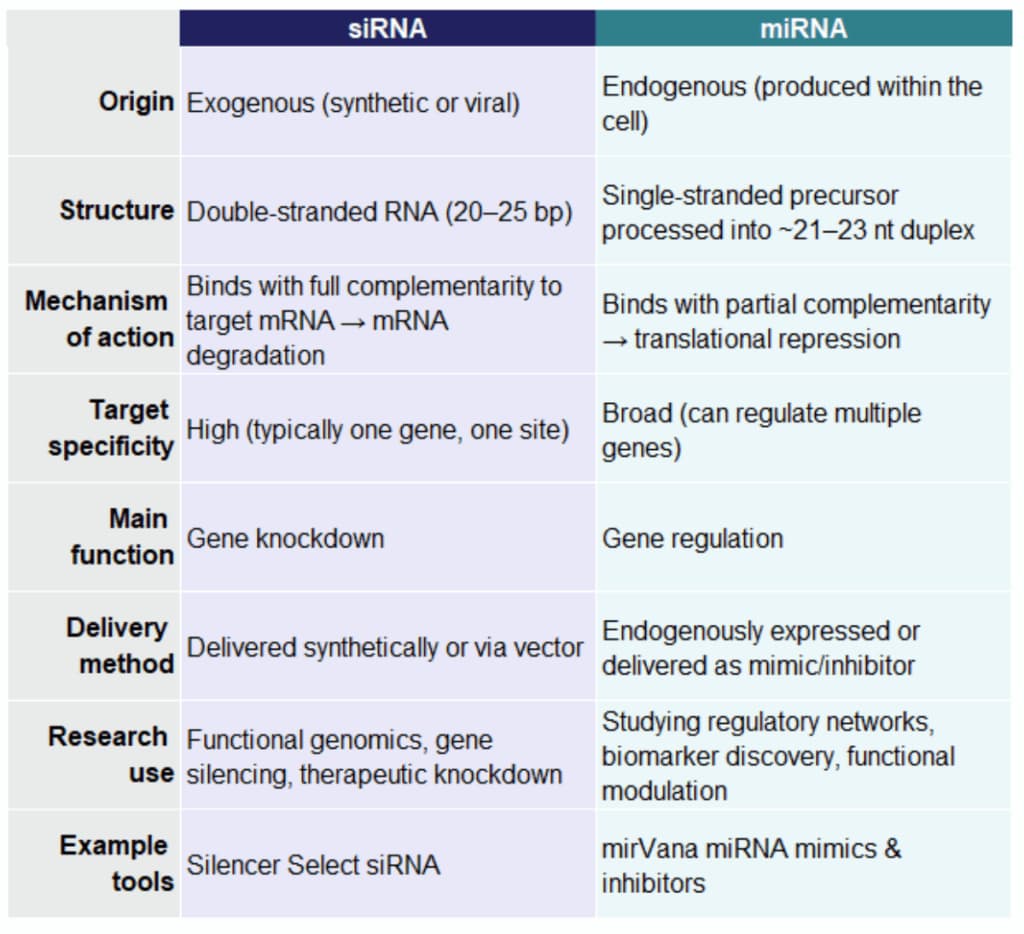
Small interfering RNA (siRNA) is a class of double-stranded RNA molecules, typically 20-25 base pairs in length, comprised of a sense (passenger) and an antisense (guide) strand. When exogenously delivered, siRNAs take advantage of the RNAi pathway by specifically targeting and degrading complementary mRNA sequences through antisense strand binding (Figure 1). This prevents translation of the target mRNA leading to mRNA degradation and knockdown of the resulting protein expression. This gene-silencing mechanism makes siRNA a powerful tool for researchers aiming to study specific gene function, dissect cellular pathways, and understand diseases mechanisms caused by aberrant gene expression.

What is miRNA?
Unlike siRNA, microRNA (miRNA) is endogenously produced as a single-stranded pre-miRNA molecule that is processed within the cell to create miRNA duplexes, typically 21-23 nucleotides in length. miRNAs regulate gene expression by binding to target mRNA, typically in the 3’ UTR, with partial complementarity of the guide strand through the seed region (Figure 2). This leads to translational repression rather than mRNA degradation where a single miRNA can regulate multiple genes or multiple miRNAs can regulate a single gene. miRNA plays a vital role in endogenous gene regulation, influencing various cellular processes such as development, differentiation, and apoptosis. miRNA dysregulation is implicated in numerous diseases, including cancer, making them valuable targets for disease intervention. miRNAs also have potential as biomarkers, serving as indicators of disease states.

siRNA vs miRNA as tools
Researchers have access to a diverse array of tools for working with siRNA and miRNA, and understanding the difference between siRNA and miRNA is key to selecting the right one for your experimental goals. Each molecule is designed to facilitate different aspects of gene silencing and regulation studies.
For siRNA-based studies, key tools include pre-designed synthetic siRNAs, which have been designed to target specific genes with high specificity and efficiency. Silencer Select siRNAs offer this high specificity and potency thanks to advanced design algorithms and chemical modifications that maximize knockdown efficiency while minimizing off-target effects.
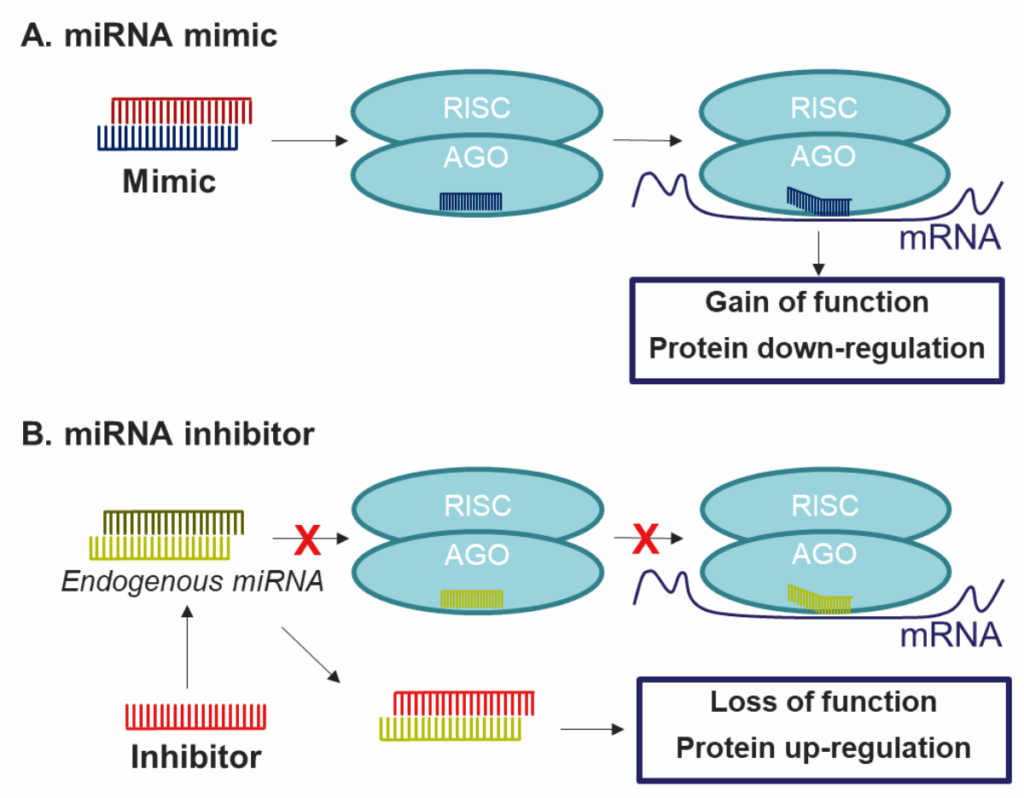
For miRNA-based studies, miRNA research tools include miRNA mimics and miRNA inhibitors. miRNA mimics, such as mirVana mimics, act as native miRNAs, supplementing endogenous miRNA levels when they are low or absent. This gain-of-function in miRNA activity allows researchers to observe and study the impact of downstream protein down-regulation (Figure 3). In contrast, miRNA inhibitors, like mirVana Inhibitors, block endogenous miRNAs by directly binding the guide strand. This enables researchers to study loss-of-function of the endogenous miRNA and the resulting protein up-regulation (Figure 3).
Deciding when to use siRNA vs miRNA
Deciding between siRNA versus miRNA for your research hinges on understanding your specific scientific goals and the nature of gene regulation you wish to study. If your objective is to achieve targeted and potent knockdown of a single gene, siRNA is the tool of choice. Since siRNAs are designed to precisely match and degrade specific mRNA sequences, they are ideal tools for studies requiring high specificity and immediate gene silencing effects. Some examples of applications for siRNA include defining genes involved in ribosome biogenesis, mechanisms of resistance to cancer therapies, or researching potential genetic targets.
On the other hand, if your research focuses on broader gene regulatory mechanisms, network interactions, or the functional roles of non-coding RNAs, miRNA tools are more suitable. Since miRNAs regulate multiple genes by binding to complementary sequences in target mRNAs, influencing their function through miRNA mimics and inhibitors makes them invaluable for studying complex biological processes and regulatory networks. Some examples of experiments that are well-suited for miRNA include investigation of gene regulation of breast cancer metastasis, cellular aging or identifying underlying pathological mechanisms for miRNA biomarkers.
Ultimately, choosing between siRNA and miRNA involves balancing specificity, research objectives, and the desired scope of gene regulation insights.
Concluding thoughts on siRNA vs miRNA
Whether you’re looking to knock down a specific gene or explore the broader complexities of gene regulation, understanding the difference between siRNA and miRNA helps you select the most effective RNAi tool for your research. siRNAs offer high precision for targeted gene silencing, while miRNAs provide powerful insight into regulatory networks and biological pathways. By aligning your experimental goals with the right RNAi strategy—and leveraging high-quality reagents like Silencer Select and mirVana—you can help accelerate discovery and generate meaningful results. Table 1. below summarizes the key differences between siRNA vs miRNA to help you decide which research tool is right for your downstream goals. For a deeper dive into RNAi workflows, be sure to explore our comprehensive RNAi handbook and learn about techniques and tools to help optimize your RNAi research.
##
© 2025 Thermo Fisher Scientific Inc. All rights reserved. All trademarks are the property of Thermo Fisher Scientific and its subsidiaries unless otherwise specified.
For Research Use Only. Not for use in diagnostic procedures.

Custom Bioinformatics Pipelines: Turning Complex Viral Genomics into Actionable Insight
A custom bioinformatics pipeline is a purpose-built analytic... Ruth Barral Arca, PhD
Read More
When Bioinformatics Is the Bottleneck: Enabling Complex Viral Analysis Without Expanding Headcount
Bioinformatics becomes a bottleneck in biopharma R&D whe... Ruth Barral Arca, PhD
Read More
TrueDesign Genome Editor: Empowering Precision with Variant-Aware CRISPR Design
CRISPR genome editing has transformed how scientists study g...
Read More
12 Women Scientists Who Shaped STEM History
Throughout STEM history, the contributions of women scientis... Dana D'Amico
Read More