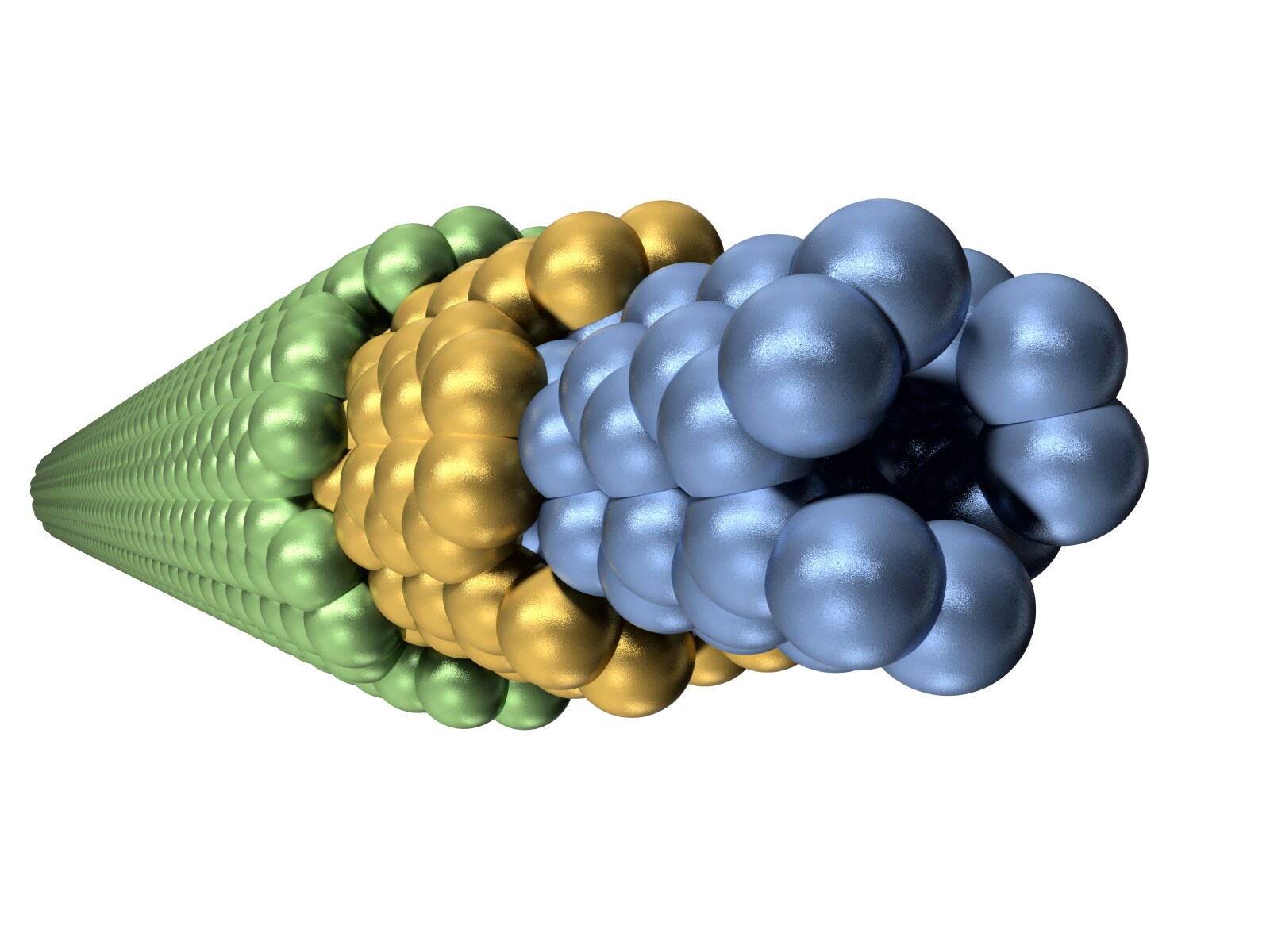
 Carbon nanotubes (CNTs) are graphite sheets rolled into seamless tubes just a few nanometers in diameter and up to several millimeters in length. CNTs have received much attention because of their unique strength and electrical and thermal conductivity, which makes them suitable for numerous applications in electronics, microelectronics, solar cells, energy storage, and in the field of polymer compounds, where they can be used to improve mechanical and electrical properties.
Here are just two recent examples of CNT applications:
According to Science Daily, in March this year scientists at Japan’s Kyushu University reported that using a technique is called non-covalent polymer wrapping, a wide variety of polymers can be used to not only disperse the CNTs but also to add new functions to them. These polymer dispersants are now widely recognized and used in many fields, including biotechnology and energy applications. CNTs that are stably wrapped with biocompatible materials are able to pass biological barriers without generating an immune response, thus there is high potential for polymer-wrapped CNTs in the area of drug delivery. Also, wrapping carbon nanotubes in polymers improves their photovoltaic functions in solar cells. The research was originally published in Science and Technology of Advanced Materials.
The website 3Ders.org reported that a company that makes electrostatic discharge (ESD)-safe materials for desktop 3D printers is using multi-wall carbon nanotubes (CNTs) to achieve a highly consistent ESD-level of conductivity. The company’s president explains that incorporating CNTs into these products allows for the filament to be more ductile and have less particulate contamination compared to traditional carbon black additives.
One key to unleashing these unique properties is to disperse (exfoliate) the CNTs thoroughly in the polymer matrix. Because the CNT particles are potentially hazardous to health, the safe handling and avoidance of CNT dust is important.
The National Institute for Occupational Safety and Health (NIOSH) discussed the health concerns regarding CNTs in their 2013 Current Intelligence Bulletin 65-Occupational Safety and Health Occupational Exposure to Carbon Nanotubes and Nanofibers, stating:
Results from recent animal studies indicate that carbon nanotubes (CNT) and carbon nanofibers (CNF) may pose a respiratory hazard. CNTs and CNFs are tiny, cylindrical, large aspect ratio, manufactured forms of carbon. There is no single type of carbon nanotube or nanofiber; one type can differ from another in shape, size, chemical composition (from residual metal catalysts or functionalization of the CNT and CNF) and other physical and chemical characteristics. Such variations in composition and size have added to the complexity of understanding their hazard potential. Occupational exposure to CNTs and CNFs can occur not only in the process of manufacturing them, but also at the point of incorporating these materials into other products and applications. A number of research studies with rodents have shown adverse lung effects at relatively low-mass doses of CNT and CNF, including pulmonary inflammation and rapidly developing, persistent fibrosis. Although it is not known whether similar adverse health effects occur in humans after exposure to CNT and CNF, the results from animal research studies indicate the need to minimize worker exposure.
One approach addressing the safe handling and avoidance of CNT dust is to have the CNTs pre-dispersed in a suspension. To do this, the CNTs are functionalized (i.e. by amination) and dispersed in a carrier liquid like ethanol by means of high shear stirring, or ultra sonic. This CNT suspension is fed into the extrusion process.
We conducted our own test to see if a lab scale twin screw compounder can be used to prepare compounds from polymers and CNTs using CNT suspensions. Our next article will outline the test, materials, equipment, conditions, procedure and results.
If you can’t wait, read Compounding of Carbon Nanotube (CNT) Suspensions with Polypropylene to learn about test conducted to prove the feasibility of CNT-suspensions as an option for safe handling of CNTs in a lab environment and for use with small scale twin screw compounders.

Revolutionizing Aerospace and Defense with Electron Microscopy and Surface Analysis of Passivated Stainless Steel Landing Gear
The aerospace and defense industry is constantly evolving, d...
Read More
Lightweight Composite Materials for Aerospace Applications: Strength, Compliance, and Precision Analysis
How multi-scale materials characterization supports safer, l...
Read More
Can Plastic Beads Cause Mardi Gras Misfortune? Investigating Toxic Metals and Materials
Plastic beads—an iconic part of Mardi Gras celebrations—... Marlene Gasdia-Cochrane, Editor
Read More
Maximizing ROI Through Uptime in Labs and Production Lines
Uptime Optimization is the New ROI Metric In today’s h... Germain Siraudin
Read More
This article says very little about real safe handling practices in the lab.
J. Kerouac — If you would like information about lab automation, including sample store and handling, automated liquid handling and dispensing, and other automated solutions for high-throughput needs, you can find it here: https://www.thermofisher.com/us/en/home/life-science/lab-equipment/lab-automation.html