New Orleans would have a lot less sparkle without the availability of mined ores.
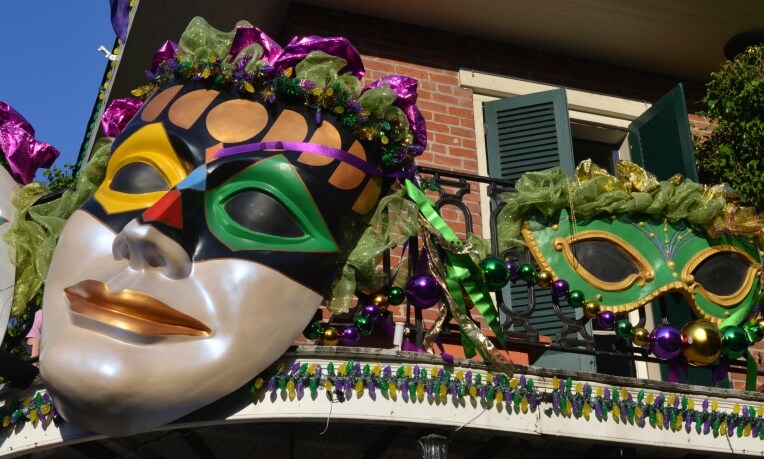
New Orleans is not considered the mining capital of the world (though they do have many salt mines). However, if it wasn’t for mining, the city’s famous Mardi Gras celebrations may not have the same look. Mardi Gras is known for its carnival atmosphere, partying, and ‘throws’. The throws are usually beaded necklaces, doubloons, and other trinkets that are tossed to spectators from floats in the New Orleans parade. There are millions of pounds of beads used in the celebration every year, and although most of those necklaces are made of plastic, their colors shine because they also contain a metallic finish. That coating is made from a paint that contains metals, a material that had to be mined from the ground. Iron oxide, stainless steel (an alloy of iron with carbon and other elements, including chromium), mica and other reflective rock powders are combined with a binder, water, and pigment to create metallic acrylic paint. Titanium dioxide is added to make a shiny appearance. Bronze, aluminum, copper or gold powders, and silver pastes containing aluminum powder or flakes are also used. Unfortunately, although they have been banned by the U.S. Consumer Product Safety Commission’s (CPSC), many cheap beads that contain toxic metals, like lead (Pb) and cadmium (Cd) are still hanging around and should be avoided. (Portable XRF analyzers are helpful in screening consumer products for lead and other toxic metals, as well as for mining.) The more expensive metallic beads have a metal surface coating, commonly made of brass (an alloy made of copper and zinc), copper, or sometimes gun metal (an alloy of copper, tin, and zinc). These beads are typically used for unique jewelry necklaces, decorative chains, and crafting. Even more expensive necklaces can contain precious metal beads but would be worn at a fancy ball, never thrown in a parade. Another metal throw that is not worn around the neck is the doubloon –coins stamped with images and logos of the sponsoring Krewe (social organization). These coins are usually made of aluminum (its chief ore being bauxite) and anodized in many different colors. Some Krewes mint special doubloons in colored bronze, or even sterling silver, as keepsakes for family and close friends. A famous Mardi Gras treat is the MoonPie (sometimes known as a whoopee pie). The MoonPie was invented in 1919 especially for miners. According to the manufacturer: a bakery salesman visited a company store that catered to coal miners. The miners said they wanted something solid and filling because they often didn’t get time to break for lunch. “About how big?” the salesman asked. A miner held out his hands, framing the moon, and said “About that big!” When the salesman returned to the bakery, he noticed some of the workers dipping graham cookies into marshmallow and laying them on the window sill to harden. The bakers added another cookie and coated it with chocolate, and it was named the MoonPie. It became a favorite snack of coal miners. Later, in the 1970s, it became a parade float throw to hungry spectators, and now millions of MoonPies are thrown from Mardi Gras floats each year. So when you are hanging those beaded necklaces around your neck, while you are munching on a MoonPie, remember the miner that helped make it happen. Mardi Gras 2014 is Tuesday, March 4 * How Is Metallic Paint Produced?http://www.ehow.com/about_6674094_metallic-paint-produced_.html



Leave a Reply