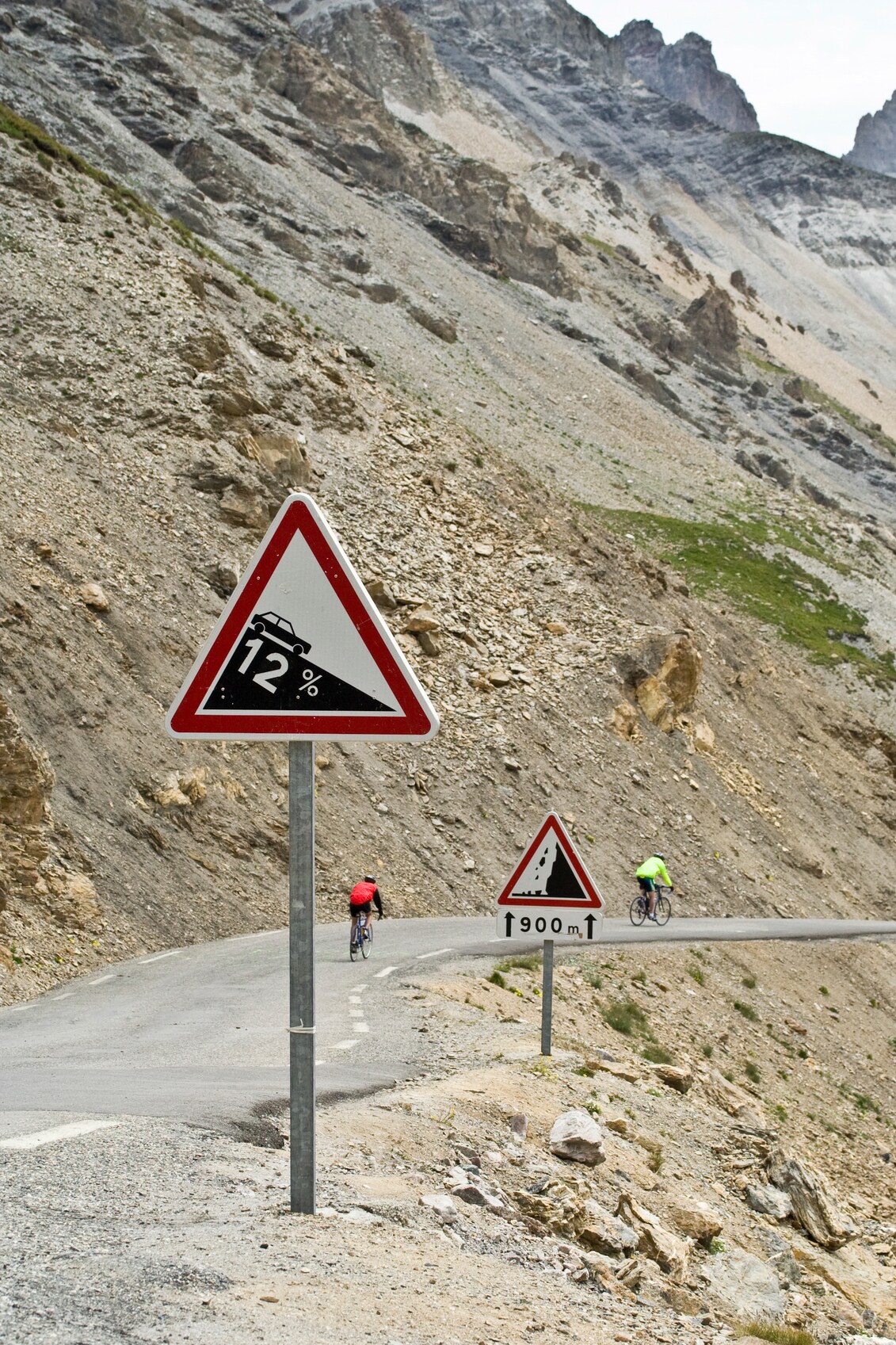
 The Tour de France is a multi-stage bicycle race that covers over 2,200 miles of ground, through the mountains, hills, and flat areas of France and surrounding areas. (Click here to see an outline of the route.) During Stage 9 of the race, the riders will be cycling through the principality of Andorra, the skiing domain of Vallnord, in the parish of Ordino.
The European Route of Industrial Heritage describes Andorra as a “tiny independent principality bordered by France and Spain, which has a population of only 86,000, and was of considerable importance as a source of iron in the 17th, 18th and 19th centuries.” Ordino is home to the ore mine at Llorts, an inactive mine that can be toured in the summer. It says on the website that one of the reasons why the mine has been preserved is that although it was not especially successful and the workings extend only about 30 m from the entrance, it nevertheless conveys a vivid impression of the working conditions of iron ore miners in the 19th century. In fact, Andorra is home to the Iron Route, a 4-km “Route of Iron” tourist walk leading through mines and forges dating from the 16th and 17th centuries. One can follow the route to discover the process of how iron evolved and transformed from the prospection and extraction of the ore to its preparation and production at the Farga Rossell Forge in la Massana.
Iron (Fe) is the most common element, by mass, forming the planet Earth, and is the fourth most common element found in the Earth’s crust.
During those earlier centuries, iron ore was important to the country, but France is not currently a world player in iron ore. The USGS estimates U.S. resources of iron ore to be 110 billion tons or iron ore containing about 27 billion tons of iron. U.S. resources are mainly low-grade taconite-type ores from the Lake Superior district that require beneficiation and agglomeration prior to commercial use. World resources are estimated to be greater than 800 billion tons of crude ore containing more than 230 billion tons of iron. The top world mine production and reserves are located in the U.S., Australia, Brazil, Canada, China, India, Iran, Kazakhstan, Russia, South Africa, Sweden, and the Ukraine. Ironically, though, France was one of the top five producers of iron oxide pigments this past year.
One of the important features of iron ore is the presence of penalty elements. A few years ago we wrote about how iron ores are rocks and minerals from which metallic iron can be economically extracted during the mining process. Waste elements other than iron (Fe) in iron ore dilute the overall grade of the ore and incur a smelter penalty. Penalty elements change the physical properties of iron and can impede the proper operation of the smelting facility. For example, Sulfur (S) can cause brittleness in hot iron and iron cannot be used in steelmaking. Small amounts of Al (< 1%) can increase the viscosity of the slag, which impedes the operation of the furnace
Here’s an infographic that outlines the 4 Penalty Elements in Iron Ore, which includes Sulfur (S), Aluminum (Al), Phosphorous (P), and Silicon.
The ore beneficiation process at a mine is designed to remove as much waste and penalty elements as possible prior to ore transport and smelting. (You can watch animated videos about the ore beneficiation process here.)
X-ray fluorescence (XRF) analyzers can help determine Fe content of the iron ore and the penalty elements that affect its overall grade. Iron ore samples can be pulverized and loaded into 32 mm XRF cups fitted with a 4 micron polypropylene suspension film, and then analyzed with a portable XRF analyzer for composition.
XRF is a non-destructive analytical technique used to determine the elemental composition of materials. XRF analyzers determine the chemistry of a sample by measuring the fluorescent (or secondary) x-ray emitted from a sample when it is excited by a primary x-ray source. Because this fluorescence is unique to the elemental composition of the sample, XRF is an excellent technology for qualitative and quantitative analysis of the material composition. Real-time analysis with handheld XRF analyzers is a good way to prequalify samples for off-site lab analysis to ensure only the best samples are evaluated. When it comes to analyzing iron ore, XRF is a real winner.
Note: If you want a quick read, but more information about Handheld XRF and how it works, download our free ebook: Portable XRF Technology for the Non-Scientist.

A Halloween Treat – Free Periodic Table
No tricks here. Download this handy periodic table and X-ray... Marlene Gasdia-Cochrane, Editor
Read More
Efficient Mining of Tantalum, Niobium, and Tin Using Handheld XRF Analyzers
Most mining operators are familiar with the importance of ta... Pete Anzalone
Read More
Why Mining Organizations are Increasing Investment in Tailings Management
Mining as an industrial activity is set to continue expandin...
Read More
What are the Largest Diamonds and How Are they Found?
In previous articles, we wrote about the January 1905 discov... Marlene Gasdia-Cochrane, Editor
Read More
Leave a Reply