Barry L. Karger, Director of the Barnett Institute of Chemical and Biological Analysis
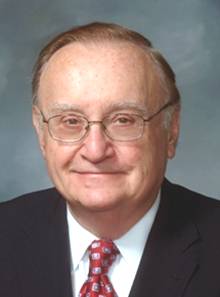
Dr. Barry Karger
Dr. Karger’s research has focused on the application of micro-scale separations to biological problems. With over 350 publications and 40 patents, he has made major contributions to the development of capillary electrophoresis (CE) and high-performance liquid chromatography (LC), the Human Genome Project and, most recently, proteomic research and protein characterization using mass spectrometry (MS). During the 1990s, he was instrumental in coupling separation technologies with MS, including micro-fluidic devices. His work on capillary electrophoresis was used to help sequence the Human Genome during the first decade of this century. Today, current research areas (among many others) include:
- Comprehensive characterization of complex proteins, including biopharmaceuticals
- Analysis of disulfide linkages and glycan heterogeneity at specific sites on proteins using a combination of Collision Induced Dissociation (CID) and Electron Transfer Dissociation (ETD) MS
- Ultra-trace analysis of proteomic samples using very narrow bore high-resolution LC columns
- Proteomic analysis of micro-dissected tissue samples for biomarker discovery
- Separation technologies for Top Down LC/MS and CE/MS
He has received numerous national and international awards for his research, including the American Chemical Society (ACS) Fisher Award in Analytical Chemistry, the ACS Supelco Award in Chromatography, and the ACS Award in Separation Sciences, as well as the Marcel Golay Medal (sponsored by Perkin Elmer), the Michael Widmer Award (Switzerland), and the Halasz Medal (Germany/Hungary). He has been made an Honorary Member of the Hungarian Academy of Sciences and awarded both the Torbern Bergman Medal from the Swedish Chemical Society and the J. Heyrovsky Honorary Medal for Merit in the Chemical Sciences from the Academy of Sciences of the Czech Republic.
After five decades, Karger gives the following advice to people entering the world of academic and industrial research in aid of answering biological problems:
“You have to be very strong in the technologies used. Without them you can’t really do anything,” says Karger. “However, it is just as important to understand the area of biology you are investigating. To study proteins either from a structural or a functional point of view, you really need to look at systems holistically — through the lenses of the technology, the chemistry and the biology. The more you can learn in each of those disciplines, as related to your area of interest, the better off you will be, and the more you can explore.”
“And,” he adds, “There is so much to discover that you need to follow every avenue and keep looking for and developing new methods. In my area, for example, we have concentrated on understanding how the sample preparation of proteins and their separation coupled to MS analysis would impact results. We keep refining and refining our methods, and the technology has improved significantly over the years. There has never been a more exciting time for researchers working with mass spectrometers on solving some of the most complex biological questions yet asked. The field is wide open and far more productive, reliable and reproducible than ever before.”
One wonders only what Dr. Karger would do with another 50 years.

Methods and Medicine: Getting More Personal
Dayana Argoti, PhD, Senior Application Scientist, Thermo Sci...
Read More
Pushing the Boundaries of Mass Spectrometry Design and Use
Helen Cooper, PhD, Birmingham University Dr. Helen J....
Read More
Proteomics Technology and Research: A Symbiotic Relationship
Amol Prakash, PhD, Group Leader, Informatics Center of Excel...
Read More
Leave a Reply