Search

c7c8 - Key/Specs/Resources/Appl/Tech/Doc/Contact
Environmental TEM with the Themis ETEM
In situ observation of structure dynamics at nanostructure-characteristic length scales is extremely important if your focus is atomic-scale research. The Thermo Scientific Themis ETEM builds on the proven Titan Environmental Transmission Electron Microscope (ETEM) concept by combining both standard TEM/STEM (TEM and scanning transmission electron microscopy) and dedicated environmental TEM capabilities for time-resolved, in situ studies of the dynamic behavior of nanomaterials. The Themis ETEM is designed as a fully integrated platform for in situ experiments, such as exposing nanostructures to gaseous reaction/operating environments.
Environmental TEM advantages
The new Themis ETEM now also benefits from Thermo Scientific Themis Z S/TEM features:
- Precise control and knowledge of sample temperature in any gas environment through the NanoEx-i/v heating stage.
- Improved sample stability, navigation, and assisted sample drift correction in x, y, and z axes using a piezo enhanced stage.
- Advanced high-quality imaging and movie acquisition functions, as well as sample navigation, by combining speed, high-sensitivity, and high-dynamic range with a large field of view in one single Thermo Scientific Ceta 16M Camera.
- Handling and processing of large data sets with a 64-bit operating system.
Automation and ease of use
Through full software control of all operational parameters - for novice users as well as advanced operators.
Window-free imaging
Through innovative differentially-pumped objective lens.
Precise control of vacuum system
Including fast switching between different vacuum modes.
Accurate monitoring of gas composition
Through built-in reactant gas analysis via mass-spectrometer (RGA).
Easy decontamination and system flushing
Via the integrated plasma cleaner.
Electron gun protection
To maintain high vacuum even during gaseous experiments.
Fine electron dose (rate) control
Using flexible gun lens and condenser settings.
Easy sample handling
Through an innovative differentially-pumped specimen area and full double-tilt capability as well as standard TEM holder compatibility.
Safe operation mode
Through full compliance with safety regulations and protocols for gas handling.
Style Sheet for Products Table Specifications
| Standard mode | ETEM mode (< 0.5 mbar nitrogen) | |||
| No corrector | Cs image corrected | No corrector | Cs image corrected | |
| TEM information limit (nm) | 0.10 | 0.10 (0.09 mono on) | 0.12 | 0.12 |
| TEM point resolution (nm) | 0.20 | 0.10 | 0.20 | 0.12 |
| Probe current @ 1 nm (nA*) | 0.6 | 0.6 | 0.6 | 0.6 |
| Probe current @ 1 nm (nA*) | 0.7 eV | 0.7 eV | 0.8 eV | 0.8 eV |
| STEM resolution (nm) | 0.136 | 0.136 | 0.16 | 0.16 |
Note: All specifications are at 300kV.
* With SFEG. The ETEM is also optionally available with X-FEG and gun monochromator. Depending on the energy filter option the energy resolution could be 0.20 eV (0.25eV in ETEM mode).
Style Sheet for Komodo Tabs

Dynamic ETEM study (2.0 mbar O2, 475°C) of soot oxidization near the soot-CeO2 interface. Soot particles observed to move with constant velocity towards CeO2. Image courtesy of S. Simonsen and S. Helveg (HTAS), as seen in S.B. Simonsen, et al., J. Catal. 225 (1), 2008.
Introducing the Thermo Scientific ETEM Solution.
Thermo Scientific ETEM is the dedicated atomic-resolution Scanning/Transmission Electron Microscope (S/TEM) solution for time-resolved studies of the behavior of nanomaterials during exposure to reactive gas environments and elevated temperatures. Designed specifically for these in-situ, dynamic experiments in catalysis.
Professor Seiji Takeda (Osaka University, Japan) explains the value of the Thermo Scientific ETEM solution for quantitative in-situ microscopy in materials science research.
Dr Hideto Yoshida (Osaka University, Japan) discusses the ease-of-use of the Thermo Scientific ETEM solution and highlights the achievement of more detailed atomic structure information in his materials research.
Publication list for Themis ETEM for Materials Science
Dynamic ETEM study (2.0 mbar O2, 475°C) of soot oxidization near the soot-CeO2 interface. Soot particles observed to move with constant velocity towards CeO2. Image courtesy of S. Simonsen and S. Helveg (HTAS), as seen in S.B. Simonsen, et al., J. Catal. 225 (1), 2008.
Introducing the Thermo Scientific ETEM Solution.
Thermo Scientific ETEM is the dedicated atomic-resolution Scanning/Transmission Electron Microscope (S/TEM) solution for time-resolved studies of the behavior of nanomaterials during exposure to reactive gas environments and elevated temperatures. Designed specifically for these in-situ, dynamic experiments in catalysis.
Professor Seiji Takeda (Osaka University, Japan) explains the value of the Thermo Scientific ETEM solution for quantitative in-situ microscopy in materials science research.
Dr Hideto Yoshida (Osaka University, Japan) discusses the ease-of-use of the Thermo Scientific ETEM solution and highlights the achievement of more detailed atomic structure information in his materials research.
Publication list for Themis ETEM for Materials Science
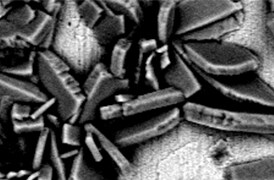
Process control using electron microscopy
Modern industry demands high throughput with superior quality, a balance that is maintained through robust process control. SEM and TEM tools with dedicated automation software provide rapid, multi-scale information for process monitoring and improvement.
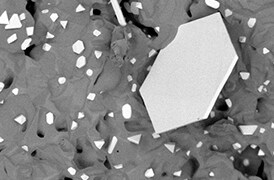
Quality control and failure analysis
Quality control and assurance are essential in modern industry. We offer a range of EM and spectroscopy tools for multi-scale and multi-modal analysis of defects, allowing you to make reliable and informed decisions for process control and improvement.
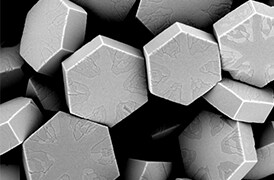
Fundamental Materials Research
Novel materials are investigated at increasingly smaller scales for maximum control of their physical and chemical properties. Electron microscopy provides researchers with key insight into a wide variety of material characteristics at the micro- to nano-scale.

In Situ experimentation
Direct, real-time observation of microstructural changes with electron microscopy is necessary to understand the underlying principles of dynamic processes such as recrystallization, grain growth, and phase transformation during heating, cooling, and wetting.

Particle analysis
Particle analysis plays a vital role in nanomaterials research and quality control. The nanometer-scale resolution and superior imaging of electron microscopy can be combined with specialized software for rapid characterization of powders and particles.

Multi-scale analysis
Novel materials must be analyzed at ever higher resolution while retaining the larger context of the sample. Multi-scale analysis allows for the correlation of various imaging tools and modalities such as X-ray microCT, DualBeam, Laser PFIB, SEM and TEM.
In Situ experimentation
Direct, real-time observation of microstructural changes with electron microscopy is necessary to understand the underlying principles of dynamic processes such as recrystallization, grain growth, and phase transformation during heating, cooling, and wetting.
Particle analysis
Particle analysis plays a vital role in nanomaterials research and quality control. The nanometer-scale resolution and superior imaging of electron microscopy can be combined with specialized software for rapid characterization of powders and particles.
Multi-scale analysis
Novel materials must be analyzed at ever higher resolution while retaining the larger context of the sample. Multi-scale analysis allows for the correlation of various imaging tools and modalities such as X-ray microCT, DualBeam, Laser PFIB, SEM and TEM.
Style Sheet to change H2 style to p with em-h2-header class

Electron microscopy services for
the materials science
To ensure optimal system performance, we provide you access to a world-class network of field service experts, technical support, and certified spare parts.

Electron microscopy support and resources
Style Sheet for Support and Service footer
Style Sheet for Fonts
Style Sheet for Cards