Search
Invitrogen
PTEN Polyclonal Antibody
{{$productOrderCtrl.translations['antibody.pdp.commerceCard.promotion.promotions']}}
{{$productOrderCtrl.translations['antibody.pdp.commerceCard.promotion.viewpromo']}}
{{$productOrderCtrl.translations['antibody.pdp.commerceCard.promotion.promocode']}}: {{promo.promoCode}} {{promo.promoTitle}} {{promo.promoDescription}}. {{$productOrderCtrl.translations['antibody.pdp.commerceCard.promotion.learnmore']}}
Additional Information:
{{banner.description}}


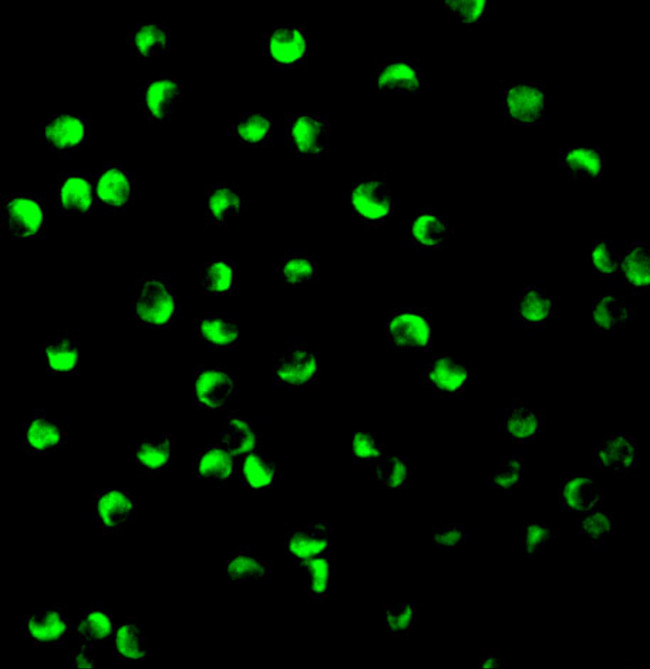
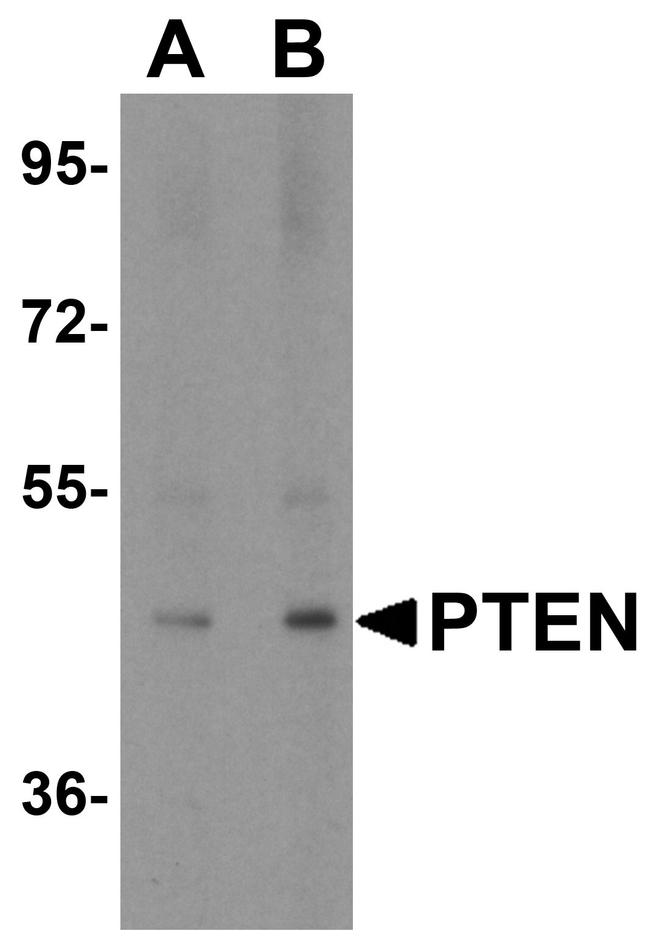

Product Details
PA5-20418
Applications
Tested Dilution
Publications
Product Specifications
Species Reactivity
Human,
Mouse
Published species
Human
Host/Isotype
Rabbit
/ IgG
Class
Polyclonal
Type
Antibody
Immunogen
A 15 amino acid peptide from near the amino terminus of human PTEN.
Conjugate
Unconjugated
Unconjugated
Unconjugated
Form
Liquid
Concentration
1 mg/mL
Amount
100 µg
Purification
Antigen affinity chromatography
Storage buffer
PBS
Contains
0.02% sodium azide
Storage conditions
Maintain refrigerated at 2-8°C for up to 3 months. For long term storage store at -20°C
Shipping conditions
Ambient (domestic); Wet ice (international)
RRID
Product Specific Information
A suggested positive control is P815 cell lysate.
PA5-20418 can be used with blocking peptide PEP-0535.
Target Information
PTEN was identified as a tumor suppressor that is mutated in a large number of cancers at high frequency. The PTEN gene is a phosphatidylinositol-3, 4, 5-trisphosphate 3-phosphatase. It contains a tensin like domain as well as a catalytic domain similar to that of the dual specificity protein tyrosine phosphatases. Unlike most of the protein tyrosine phosphatases, this protein preferentially dephosphorylates phosphoinositide substrates. PTEN negatively regulates intracellular levels of phosphatidylinositol-3, 4, 5-trisphosphate in cells and functions as a tumor suppressor by negatively regulating AKT/PKB signaling pathway. PTEN plays a role as a key modulator of the AKT-mTOR signaling pathway controlling the tempo of the process of newborn neurons integration during adult neurogenesis, including correct neuron positioning, dendritic development and synapse formation. Also, PTEN may be a negative regulator of insulin signaling and glucose metabolism in adipose tissue. The nuclear monoubiquitinated form possesses greater apoptotic potential, whereas the cytoplasmic nonubiquitinated form of PTEN induces less tumor suppressive ability.
For Research Use Only. Not for use in diagnostic procedures. Not for resale without express authorization.
Bioinformatics
Protein Aliases: Inositol polyphosphate 3-phosphatase; mitochondrial phosphatase and tensin protein alpha; mitochondrial PTENalpha; MMAC1 phosphatase and tensin homolog deleted on chromosome 10; Mutated in multiple advanced cancers 1; N-terminal extended PTEN isoform; uses an alternative ATT initiation codon in PTEN 5'UTR; phosphatidylinositol-3,4,5-trisphosphate3-phosphatase; phosphatase and tensin; Phosphatase and tensin homolog; phosphatase and tensin-like protein; phosphatidylinositol 3; Phosphatidylinositol 3,4,5-trisphosphate 3-phosphatase and dual-specificity protein phosphatase PTEN; phosphatidylinositol 3,4,5-trisphosphate 3-phosphatase and dual-specificity protein phosphatase PTEN isoform 5; phosphatidylinositol 3,4,5-trisphosphate 3-phosphatase and dual-specificity protein phosphatase PTEN isoform 6; phosphatidylinositol 3,4,5-trisphosphate 3-phosphatase and dual-specificity protein phosphatase PTEN isoform 7; phosphatidylinositol 3,4,5-trisphosphate 3-phosphatase and dual-specificity protein phosphatase PTEN, isoform 21; phosphatidylinositol 3,4,5-trisphosphate 3-phosphatase and dual-specificity protein phosphatase PTEN, isoform 22; phosphatidylinositol-3; phosphatidylinositol-3,4,5-trisphosphate 3-phosphatase and dual-specificity protein phosphatase PTEN; protein tyrosine phosphatase; protein tyrosine phosphatase and tensin homolog; PTEN; pten tumor suppressor; PTEN variant PTEN-K267Rfs*9; PTEN variant PTEN-L247*; PTEN variant PTEN-R234Afs*11; PTENepsilon; TEP1; unnamed protein product
Gene Aliases: 10q23del; 2310035O07Rik; A130070J02Rik; AI463227; B430203M17Rik; BZS; CWS1; DEC; GLM2; MHAM; MMAC1; PTEN; PTEN1; PTENbeta; PTENgama; TEP1
UniProt ID: (Human) P60484, (Mouse) O08586
Entrez Gene ID: (Human) 5728, (Mouse) 19211
phosphatidylinositol-3-phosphatase activity
phosphoprotein phosphatase activity
protein serine/threonine phosphatase activity
protein tyrosine phosphatase activity
protein binding
beta-catenin binding
lipid binding
anaphase-promoting complex binding
phosphatidylinositol-3,4,5-trisphosphate 3-phosphatase activity
hydrolase activity
phosphatase activity
enzyme binding
PDZ domain binding
inositol-1,3,4,5,6-pentakisphosphate 3-phosphatase activity
identical protein binding
inositol-1,3,4,5-tetrakisphosphate 3-phosphatase activity
phosphatidylinositol-3,4-bisphosphate 3-phosphatase activity
phosphatidylinositol phosphate phosphatase activity
molecular function inhibitor activity
ubiquitin-specific protease binding
ubiquitin ligase activator activity
magnesium ion binding
platelet-derived growth factor receptor binding
protein tyrosine/serine/threonine phosphatase activity
protein kinase binding
protein phosphatase
osteoblast differentiation
protein dephosphorylation
lipid metabolic process
phosphatidylinositol biosynthetic process
apoptotic process
spindle assembly involved in female meiosis
neuron-neuron synaptic transmission
nervous system development
synapse assembly
central nervous system development
heart development
learning or memory
locomotory behavior
positive regulation of cell proliferation
negative regulation of cell proliferation
regulation of signal transduction
positive regulation of macromolecule metabolic process
negative regulation of cell communication
negative regulation of epithelial to mesenchymal transition
regulation of neuron projection development
negative regulation of neuron projection development
cell migration
dentate gyrus development
central nervous system neuron axonogenesis
negative regulation of signaling
negative regulation of cell migration
adult behavior
regulation of protein stability
central nervous system myelin maintenance
negative regulation of peptidyl-serine phosphorylation
multicellular organismal response to stress
social behavior
maternal behavior
protein kinase B signaling
locomotor rhythm
regulation of cell differentiation
negative regulation of osteoblast differentiation
negative regulation of cell size
positive regulation of transcription from RNA polymerase II promoter
negative regulation of organ growth
phosphatidylinositol dephosphorylation
forebrain morphogenesis
cell motility
negative regulation of axonogenesis
protein stabilization
negative regulation of developmental process
negative regulation of cellular component organization
negative regulation of multicellular organismal process
negative regulation of keratinocyte migration
regulation of cell cycle
negative regulation of focal adhesion assembly
regulation of protein kinase B signaling
negative regulation of protein kinase B signaling
rhythmic synaptic transmission
synapse maturation
prepulse inhibition
dendritic spine morphogenesis
regulation of biological quality
cellular response to electrical stimulus
negative regulation of excitatory postsynaptic potential
presynaptic membrane assembly
postsynaptic density assembly
positive regulation of intracellular signal transduction
negative regulation of cell cycle G1/S phase transition
negative regulation of wound healing, spreading of epidermal cells
negative regulation of vascular smooth muscle cell proliferation
positive regulation of protein ubiquitination involved in ubiquitin-dependent protein catabolic process
negative regulation of G1/S transition of mitotic cell cycle
positive regulation of excitatory postsynaptic potential
negative regulation of cellular senescence
negative regulation of synaptic vesicle clustering
angiogenesis
negative regulation of protein phosphorylation
regulation of B cell apoptotic process
memory
dephosphorylation
neuron projection development
negative regulation of myelination
negative regulation of cyclin-dependent protein serine/threonine kinase activity involved in G1/S transition of mitotic cell cycle
regulation of synaptic transmission, GABAergic
regulation of cellular component size
regulation of myeloid cell apoptotic process
peptidyl-tyrosine dephosphorylation
cellular response to decreased oxygen levels
positive regulation of apoptotic process
negative regulation of apoptotic process
endothelial cell migration
inositol phosphate dephosphorylation
platelet-derived growth factor receptor signaling pathway
regulation of axon regeneration
cardiac muscle tissue development
brain morphogenesis
negative regulation of epithelial cell proliferation
negative regulation of phagocytosis
positive regulation of sequence-specific DNA binding transcription factor activity
canonical Wnt signaling pathway
male mating behavior
long-term synaptic potentiation
long term synaptic depression
prostate gland growth
negative regulation of dendritic spine morphogenesis
positive regulation of ERK1 and ERK2 cascade
cellular response to hypoxia
negative regulation of ribosome biogenesis
negative regulation of cell aging
positive regulation of ubiquitin protein ligase activity
positive regulation of apoptotic signaling pathway
Disclaimer

Clicking the images or links will redirect you to a website hosted by BenchSci that provides third-party scientific content. Neither the content nor the BenchSci technology and processes for selection have been evaluated by us; we are providing them as-is and without warranty of any kind, including for use or application of the Thermo Fisher Scientific products presented.

Performance Guarantee
If an Invitrogen™ antibody doesn't perform as described on our website or datasheet,we'll replace the product at no cost to you, or provide you with a credit for a future purchase.*
Learn more
We're here to help
Get expert recommendations for common problems or connect directly with an on staff expert for technical assistance related to applications, equipment and general product use.
Contact tech support