Search


Citations & References (42)
Invitrogen™
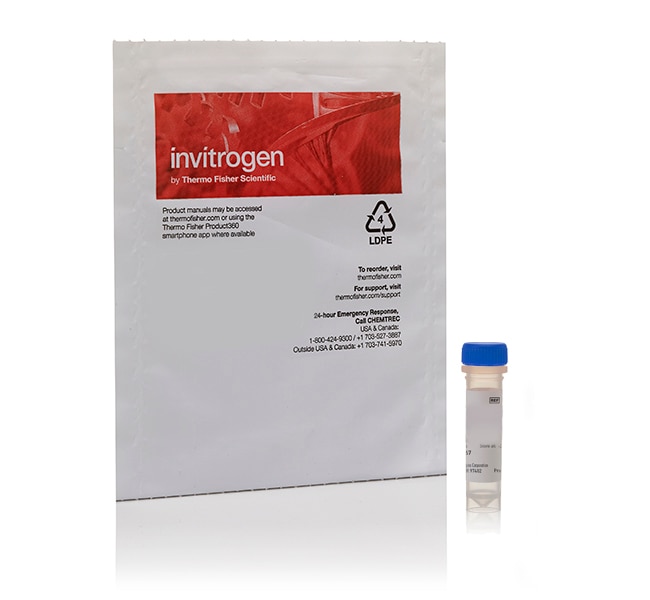
SBFI, Tetraammonium Salt, cell impermeant
Sodium-sensitive molecule used to estimate Na+ gradients in isolated mitochondria, to measure intracellular NA+ levels, or to measure Na+ efflux in cells
| Catalog Number | Quantity |
|---|---|
| S1262 also known as S-1262 | 1 mg |
Catalog number S1262
also known as S-1262
Price (USD)
718.00
Each
Quantity:
1 mg
Price (USD)
718.00
Each
SBFI is a sodium-sensitive molecule used to estimate Na+ gradients in isolated mitochondria, to measure intracellular NA+ levels, to measure Na+ efflux in cells, and, in combination with other fluorescent indicators used to correlate changes in intracellular Na+ with Ca2+ and Mg2+ concentrations, intracellular pH, and membrane potential. Although the selectivity of SBFI for Na+ is less than that of calcium indicators such as fura-2, it is sufficient for the detection of physiological concentrations of Na+ in the presence of other monovalent cations. The spectral response of SBFI upon ion binding permit excitation ratio measurements, and this indicator can be used with the same optical filters and equipment used for fura-2.
Fluorescent Ion Indicators Specifications:
- Label (Ex/Em): SBFI (∼340,380/500 nm)
- Lyophilized product may be dissolved in distilled water or aqueous buffer for use
- Product is typically loaded into cells by diffusion from a patch pipette for correlated fluorescence imaging and electrophysiological recording
Selectivity Considerations and Cell Loading Strategies
The dissociation constant (Kd) of SBFI for Na+ is 3.8 mM in the absence of K+, and 11.3 mM in solutions with a combined Na+ and K+ concentration of 135 mM (which approximates physiological ionic strength). SBFI is ∼18-fold more selective for Na+ than for K+.
SBFI is available as both cell-impermeant acid salt (Cat. No. S1262) and as cell-permeant acetoxymethyl (AM) esters (Cat. No. S1263), (Cat. No. S1264). The anionic acid forms can be loaded into cells using our Influx™ pinocytic cell-loading reagent (Cat. No. I14402), Chelators, Calibration Buffers, Ionophores and Cell-Loading Reagents—Section 19.8), or by microinjection, patch-pipette infusion or electroporation. For AM ester loading (Loading and Calibration of Intracellular Ion Indicators—Note 19.1), addition of the Pluronic™ F-127 (Cat. No. P3000MP), (Cat. No. P6866), (Cat. No. P6867) or PowerLoad™ (Cat. No. P10020) dispersing agents as well as relatively long incubation times—up to four hours—are typically necessary.
Find Fluorescent Indicators for Na+ and K+
We offer a number of fluorescent indicators for measuring Na+ and K+. Review Fluorescent Na+ and K+ Indicators—Section 21.1 in the Molecular Probes™ Handbook for more information on these products.
For Research Use. Not for human or animal therapeutic or diagnostic use.
For Research Use Only. Not for use in diagnostic procedures.
Specifications
Detection MethodFluorescence
Dye TypeSBFI
Emission Wavelength500 nm
Excitation Wavelength340, 380 nm
Quantity1 mg
Shipping ConditionRoom Temperature
For Use With (Application)Sodium Indicator
For Use With (Equipment)Fluorescence Microscope
Product TypeSBFI Tetraammonium Salt
Unit SizeEach
Contents & Storage
Store at room temperature and protect from light.
Citations & References (42)
Citations & References
Abstract
Cultured chick-embryo heart cells respond differently to ouabain as measured by the increase in their intracellular Na+ concentration.
Journal:Biochim Biophys Acta
PubMed ID:1420320
Using digital imaging microscopy with the sodium-sensitive fluorescent indicator sodium-binding benzofuran isophtalate (SBFI), we examined the cytosolic free sodium ion concentration ([Na+]i) in single chick-embryo heart cells. The distribution of the [Na+]i was homogeneous within one cell, but we found a wide cell to cell variation in the range of
The spread of Na+ spikes determines the pattern of dendritic Ca2+ entry into hippocampal neurons.
Journal:Nature
PubMed ID:1350327
'The dendrites of many types of neurons contain voltage-dependent Na+ and Ca2+ conductances that generate action potentials (see ref. 1 for review). The function of these spikes is not well understood, but the Ca2+ entry stimulated by spikes probably affects Ca(2+)-dependent processes in dendrites. These include synaptic plasticity, cytotoxicity and
Synaptically activated increases in Ca2+ concentration in hippocampal CA1 pyramidal cells are primarily due to voltage-gated Ca2+ channels.
Journal:Neuron
PubMed ID:1361128
'Changes in intracellular Ca2+ concentration ([Ca2+]i) in the soma and dendrites of hippocampal CA1 pyramidal neurons were measured using intracellularly injected fura-2. A large component of the [Ca2+]i elevation caused by high frequency stimulation of the Schaffer collaterals was correlated with the Na+ spikes triggered by the excitatory postsynaptic potentials
Fluorescence measurements of cytosolic free Na concentration, influx and efflux in gastric cells.
Journal:Cell Regul
PubMed ID:1712635
'Regulation of cytosolic free Na (Nai) was measured in isolated rabbit gastric glands with the use of a recently developed fluorescent indicator for sodium, SBFI. Intracellular loading of the indicator was achieved by incubation with an acetoxymethyl ester of the dye. Digital imaging of fluorescence was used to monitor Nai
Reconstitution, identification, purification, and immunological characterization of the 110-kDa Na+/Ca2+ antiporter from beef heart mitochondria.
Journal:J Biol Chem
PubMed ID:1517231
'The mitochondrial Na+/Ca2+ antiporter plays a key role in the physiological regulation of intramitochondrial Ca2+, which in turn attunes mitochondrial enzymes to the changing demands of the cell for ATP. We have now purified the Na+/Ca2+ antiporter from beef heart mitochondria by assaying detergent-solubilized chromatography fractions for reconstitutive activity. Na+