Search


Citations & References (262)
Invitrogen™
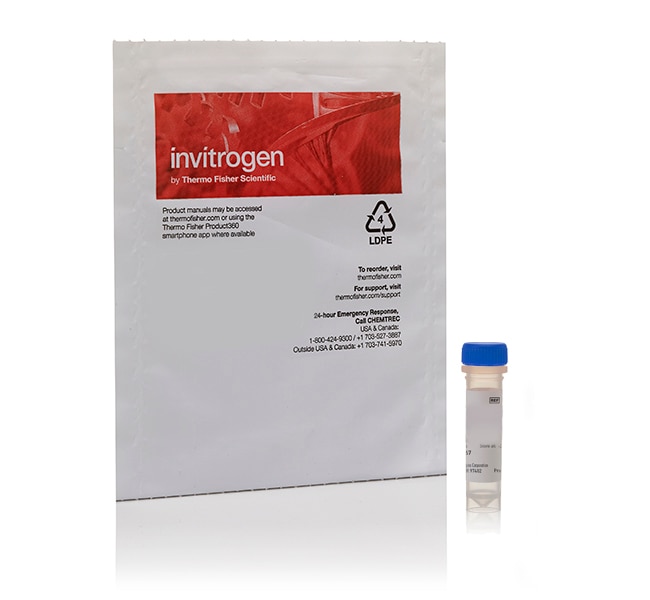
SYTOX™ Green Nucleic Acid Stain - 5 mM Solution in DMSO
SYTOX Green nucleic acid stain is an excellent green-fluorescent nuclear and chromosome counterstain that is impermeant to live cells, makingRead more
| Catalog Number | Quantity |
|---|---|
| S7020 | 250 μL |
Catalog number S7020
Price (MXN)
-
Quantity:
250 μL
SYTOX Green nucleic acid stain is an excellent green-fluorescent nuclear and chromosome counterstain that is impermeant to live cells, making it a useful indicator of dead cells within a population.
Also available as a room-temperature-stable, ready-to-use solution: NucGreen Dead 488 Ready Probes Reagent.
See other Ready Probes ready-to-use imaging reagents and accessories ›
• Impermeant to live cells
• Excitation/Emission: 504/523 nm
• Use with 488 Argon-ion laser
• Works with mammalian cells and both Gram-positive and Gram-negative bacteria
Simple Viability Determination
SYTOX Green allows quick determination of cell viability when using flow cytometers, fluorescence microscopes, fluorometers, or fluorescence microplate readers. It will not cross intact membranes, but will easily penetrate compromised membranes characteristic of dead cells. Because it exhibits >500-fold fluorescence enhancement upon binding nucleic acids, briefly incubating dead cells with SYTOX Green will result in bright green fluorescence with an emission peak of 523 nm when excited by a 488 nm argon-ion laser or any other 450–490 nm source. The exceptional brightness of the signal produced in dead cells makes SYTOX Green particularly useful for determining viability of not just mammalian cells, but both Gram-positive and Gram-negative bacteria.
Part of the Invitrogen Family of Cell Viability Stains and Assays
SYTOX stains for dead cells are available in a variety of colors, including red, blue, and orange. Additionally, Invitrogen has incorporated SYTOX stains into a number of assays for apoptosis, cell viability, and metabolism.
For Research Use Only. Not intended for any animal or human therapeutic or diagnostic use.
Related Link
• Find out more about all SYTOX Products.
Visualize staining your cell without wasting your reagents, antibodies, or time with our new Stain-iT Cell Staining Simulator.
Also available as a room-temperature-stable, ready-to-use solution: NucGreen Dead 488 Ready Probes Reagent.
See other Ready Probes ready-to-use imaging reagents and accessories ›
• Impermeant to live cells
• Excitation/Emission: 504/523 nm
• Use with 488 Argon-ion laser
• Works with mammalian cells and both Gram-positive and Gram-negative bacteria
Simple Viability Determination
SYTOX Green allows quick determination of cell viability when using flow cytometers, fluorescence microscopes, fluorometers, or fluorescence microplate readers. It will not cross intact membranes, but will easily penetrate compromised membranes characteristic of dead cells. Because it exhibits >500-fold fluorescence enhancement upon binding nucleic acids, briefly incubating dead cells with SYTOX Green will result in bright green fluorescence with an emission peak of 523 nm when excited by a 488 nm argon-ion laser or any other 450–490 nm source. The exceptional brightness of the signal produced in dead cells makes SYTOX Green particularly useful for determining viability of not just mammalian cells, but both Gram-positive and Gram-negative bacteria.
Part of the Invitrogen Family of Cell Viability Stains and Assays
SYTOX stains for dead cells are available in a variety of colors, including red, blue, and orange. Additionally, Invitrogen has incorporated SYTOX stains into a number of assays for apoptosis, cell viability, and metabolism.
For Research Use Only. Not intended for any animal or human therapeutic or diagnostic use.
Related Link
• Find out more about all SYTOX Products.
Visualize staining your cell without wasting your reagents, antibodies, or time with our new Stain-iT Cell Staining Simulator.
For Research Use Only. Not for use in diagnostic procedures.
Specifications
ColorGreen
Detection MethodFluorescence
Dye TypeCell-Permeant
Emission523 nm
Excitation Wavelength Range504 nm
For Use With (Equipment)Flow Cytometer
FormSolution
FormatTube(s)
Product LineSYTOX
Quantity250 μL
Shipping ConditionRoom Temperature
Volume (Metric)250 μL
Label TypeFluorescent Dye
Product TypeNucleic Acid Stain
Sub Cellular LocalizationNucleic Acids, Nucleus
Unit SizeEach
Contents & Storage
Store in freezer at -5°C to -30°C and protect from light.
Frequently asked questions (FAQs)
How do SYTO dyes bind to DNA?
I need to mount my Qdot secondary-labeled tissue samples in HistoMount mounting medium, but my Qdot 705 conjugate overlaps with your Qnuclear Deep Red nuclear label. What other nuclear label would you recommend, that is compatible with HistoMount mounting medium?
I am using SYTOX AAdvanced as a dead cell stain, but all of my cells are labeling even though I am certain that they are supposed to be alive. These are adherent cells that I have trypsinized. Why am I getting false-dead signals?
Citations & References (262)
Citations & References
Abstract
Unique catabolic pathway of glycosphingolipids in a hydrozoan, Hydra magnipapillata, involving endoglycoceramidase.
Journal:J Biol Chem
PubMed ID:15320336
Endoglycoceramidase (EGCase; EC 3.2.1.123) is an enzyme capable of cleaving the glycosidic linkage between oligosaccharides and ceramides of various glycosphingolipids. We detected strong EGCase activity in animals belonging to Cnidaria, Mollusca, and Annelida and cloned the enzyme from a hydra, Hydra magnipapillata. The hydra EGCase, consisting of 517 amino acid
Cell death during ischemia: relationship to mitochondrial depolarization and ROS generation.
Journal:Am J Physiol Heart Circ Physiol
PubMed ID:12388276
Ischemia-reperfusion injury induces cell death, but the responsible mechanisms are not understood. This study examined mitochondrial depolarization and cell death during ischemia and reperfusion. Contracting cardiomyocytes were subjected to 60-min ischemia followed by 3-h reperfusion. Mitochondrial membrane potential (DeltaPsi(m)) was assessed with tetramethylrhodamine methyl ester. During ischemia, DeltaPsi(m) decreased to
Identification and characterization of two subpopulations of Encephalitozoon intestinalis.
Journal:Appl Environ Microbiol
PubMed ID:12902292
Microsporidia are obligate intracellular protozoa that have been shown to be pathogenic to most living creatures. The development of in vitro cell culture propagation methods has provided researchers with large numbers of spores and facilitated the study of these organisms. Here, we describe heterogeneity within cell culture-propagated Encephalitozoon intestinalis suspensions.
Use of SYTOX green dye in the flow cytometric analysis of bacterial phagocytosis.
Journal:Cytometry
PubMed ID:12116370
BACKGROUND: Fluorescein isothiocyanate (FITC) is used widely to label the targets used in flow cytometric phagocytosis assays. Unfortunately, the fluorescence intensity of phagocytosed FITC-labeled targets is influenced by changes in intracellular pH level, making quantitative measurements with this fluorophore problematic. We describe the use of SYTOX green nucleic acid stain
Up-regulation of cyclooxygenase-2 and apoptosis resistance by p38 MAPK in hypericin-mediated photodynamic therapy of human cancer cells.
Journal:J Biol Chem
PubMed ID:14557269
Photodynamic Therapy (PDT) is an approved anticancer therapy that kills cancer cells by the photochemical generation of reactive oxygen species following absorption of visible light by a photosensitizer, which selectively accumulates in tumors. We report that hypericin-mediated PDT of human cancer cells leads to up-regulation of the inducible cyclooxygenase-2 (COX-2)