Search


Citations & References (43)
Invitrogen™
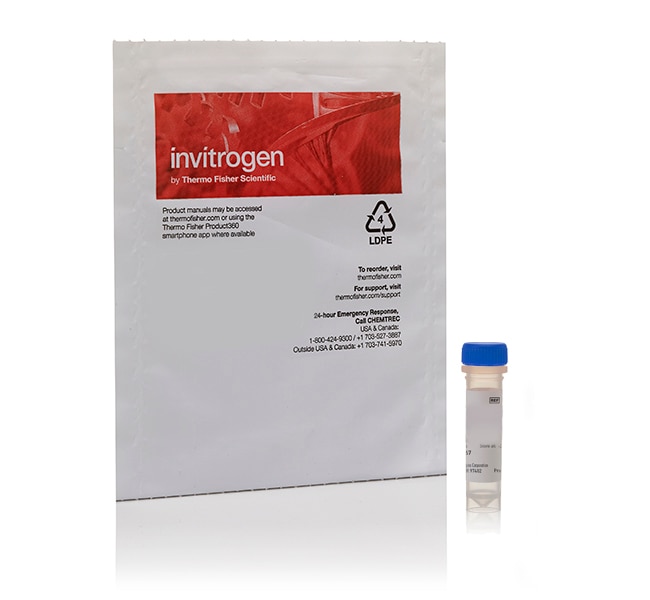
FluoZin™-3, AM, cell permeant
The FluoZin™-3 indicator is a Zn2+-selective indicator with a structure that resembles fluo-4. FluoZin™-3 exhibits high Zn2+-binding affinity that isRead more
| Catalog Number | Quantity |
|---|---|
| F24195 | 100 μg |
Catalog number F24195
Price (EUR)
792,00
Each
Quantity:
100 μg
Price (EUR)
792,00
Each
The FluoZin™-3 indicator is a Zn2+-selective indicator with a structure that resembles fluo-4. FluoZin™-3 exhibits high Zn2+-binding affinity that is unperturbed by Ca2+ concentrations up to at least 1 μM. In addition, FluoZin™-3 exhibits a >50-fold increase in fluorescence in response to saturating levels of Zn2+. Although imaging applications of FluoZin™-3 are predominant, cell-based microplate assays and flow cytometry protocols have also been developed. FluoZin™-3 indicator is available in a cell-permeant and a cell-impermeant form.
Fluorescent Zinc Indicators Specifications:
Find Fluorescent Indicators for Zinc and Other Metal Ions
We offer a number of fluorescent indicators to determine polyvalent cation concentrations inside cells, to follow metal ion transport through ion channels, to make measurements in environmental samples, and more. Review Fluorescent Indicators for Zn2+ and Other Metal Ions—Section 19.7 in the Molecular Probes™ Handbook for more information on these products.
For Research Use Only. Not for human or animal therapeutic or diagnostic use.
For Research Use Only. Not for use in diagnostic procedures.
Specifications
Detection MethodFluorescence
Dye TypeZinc Indicator
Molecular Weight (g/mol)982.85 g/mol
Quantity100 μg
Shipping ConditionRoom Temperature
For Use With (Application)Cell Viability and Proliferation
For Use With (Equipment)Fluorescence Microscope
Product LineFluoZin
Product TypeZinc Indicator
Unit SizeEach
Contents & Storage
Store in freezer -5°C to -30°C and protect from light.
Frequently asked questions (FAQs)
Why don't I see a significant change in signal for my live-cell fluorescent indicator dye?
Citations & References (43)
Citations & References
Abstract
Demand for Zn2+ in acid-secreting gastric mucosa and its requirement for intracellular Ca2+.
Journal:PLoS One
PubMed ID:21698273
'Recent work has suggested that Zn(2+) plays a critical role in regulating acidity within the secretory compartments of isolated gastric glands. Here, we investigate the content, distribution and demand for Zn(2+) in gastric mucosa under baseline conditions and its regulation during secretory stimulation. Content and distribution of zinc were evaluated
The amyloid precursor protein (APP) of Alzheimer disease and its paralog, APLP2, modulate the Cu/Zn-Nitric Oxide-catalyzed degradation of glypican-1 heparan sulfate in vivo.
Journal:J Biol Chem
PubMed ID:15677459
'Processing of the recycling proteoglycan glypican-1 involves the release of its heparan sulfate chains by copper ion- and nitric oxide-catalyzed ascorbate-triggered autodegradation. The Alzheimer disease amyloid precursor protein (APP) and its paralogue, the amyloid precursor-like protein 2 (APLP2), contain copper ion-, zinc ion-, and heparan sulfate-binding domains. We have investigated
Clioquinol and pyrithione activate TRPA1 by increasing intracellular Zn2+.
Journal:Proc Natl Acad Sci U S A
PubMed ID:19416844
'The antifungal and amoebicidal drug clioquinol (CQ) was withdrawn from the market when it was linked to an epidemic of subacute myelo-optico-neuropathy (SMON). Clioquinol exerts its anti-parasitic actions by acting as a Cu/Zn chelator and ionophore. Here we show that local injections of CQ produce mechanical hyperalgesia and cold hypersensitivity
Intracellular zinc fluctuations modulate protein tyrosine phosphatase activity in insulin/insulin-like growth factor-1 signaling.
Journal:Exp Cell Res
PubMed ID:14644152
'Zinc is an effector of insulin/IGF-1 signaling and has insulinomimetic effects, the molecular basis of which is not understood. The present study establishes the capacity of zinc to inhibit protein tyrosine phosphatases (PTPs) as a cause for these effects and, moreover, demonstrates modulation of the insulin response by changes in
Interleukin-6 regulates the zinc transporter Zip14 in liver and contributes to the hypozincemia of the acute-phase response.
Journal:Proc Natl Acad Sci U S A
PubMed ID:15863613
'Infection and inflammation produce systemic responses that include hypozincemia and hypoferremia. The latter involves regulation of the iron transporter ferroportin 1 by hepcidin. The mechanism of reduced plasma zinc is not known. Transcripts of the two zinc transporter gene families (ZnT and Zip) were screened for regulation in mouse liver