Search


Citas y referencias (148)
Invitrogen™
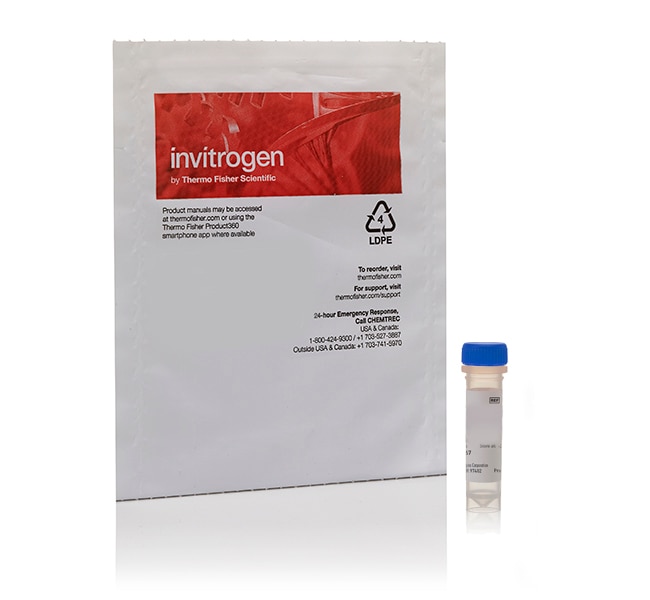
Fura Red™, AM, cell permeant
Rojo Fura, AM es un analógico fura 2 excitable y visible a la luz que forece posibilidades únicas para laMás información
Have Questions?
Cambiar vista

| Número de catálogo | Cantidad |
|---|---|
| F3020 | 500 μg |
| F3021 | 10 x 50 μg |
Número de catálogo F3020
Precio (EUR)
810,00
Each
Cantidad:
500 μg
Precio (EUR)
810,00
Each
Rojo Fura, AM es un analógico fura 2 excitable y visible a la luz que forece posibilidades únicas para la medición radiomérica de Ca2+ en células únicas mediante microfotometría, adquisición de imágenes o citometría de flujo cuando se utiliza con indicadores de calcio verde fluorescente de excitación única. Esta forma de acetoximetil (AM) éster es útil para la carga intracelular no invasiva y está disponible en cantidades de 1 mg (F-3020).
Para uso exclusivo en investigación. No apto para uso en procedimientos diagnósticos.
Especificaciones
Método de detecciónFluorescente
Tipo de coloranteA base de colorantes fluorescentes
Cantidad500 μg
Condiciones de envíoTemperatura ambiente
Para utilizar con (aplicación)Viabilidad y proliferación celulares
Para utilizar con (equipo)Microscopio de fluorescencia, Microfotómetro, Citómetro de flujo
Línea de productosRojo Fura
Tipo de productoIndicador de calcio
Unit SizeEach
Contenido y almacenamiento
Almacenar en el congelador de -5 °C a -30 °C y proteger de la luz.
Preguntas frecuentes
I am doing calcium flux imaging with your Fura-2 calibration kit, but am seeing a large variability in ratio in different places around the slide. I am correcting for uniform illumination, using the product as directed, and sealing the coverslip with nail polish.
I need to label cells with Fluo-4, AM, for a calcium flux assay. How long after labeling will the dye be retained?
Where can I find the manual for the Fura Red, AM, cell permeant (Cat. No. F3020, F3021)?
Citations & References (148)
Citations & References
Abstract
Mechanism of collagen activation in human platelets.
Journal:J Biol Chem
PubMed ID:14981087
The mechanism of collagen-induced human platelet activation was examined using Ca2+, Na+, and the pH-sensitive fluorescent dyes calcium green/fura red, sodium-binding benzofuran isophthalate, and 2',7'-bis(2-carboxyethyl)-5(6)-carboxyfluorescein. Administration of a moderate dose of collagen (10 microg/ml) to human platelets resulted in an increase in [Ca2+](i) and platelet aggregation. The majority of this
Cluster formation of inositol 1,4,5-trisphosphate receptor requires its transition to open state.
Journal:J Biol Chem
PubMed ID:15583010
'The inositol 1,4,5-trisphosphate (IP(3)) receptor (IP(3)R) Ca(2+) channel plays pivotal roles in many aspects of physiological and pathological events. It was previously reported that IP(3)R forms clusters on the endoplasmic reticulum when cytosolic Ca(2+) concentration ([Ca(2+)](C)) is elevated. However, the molecular mechanism of IP(3)R clustering remains largely unknown, and thus
Triad formation: organization and function of the sarcoplasmic reticulum calcium release channel and triadin in normal and dysgenic muscle in vitro.
Journal:J Cell Biol
PubMed ID:8245124
'Excitation-contraction (E-C) coupling is thought to involve close interactions between the calcium release channel (ryanodine receptor; RyR) of the sarcoplasmic reticulum (SR) and the dihydropyridine receptor (DHPR) alpha 1 subunit in the T-tubule membrane. Triadin, a 95-kD protein isolated from heavy SR, binds both the RyR and DHPR and may
Real time fluorescence imaging of PLC gamma translocation and its interaction with the epidermal growth factor receptor.
Journal:J Cell Biol
PubMed ID:11331309
'The translocation of fluorescently tagged PLC gamma and requirements for this process in cells stimulated with EGF were analyzed using real time fluorescence microscopy applied for the first time to monitor growth factor receptor--effector interactions. The translocation of PLC gamma to the plasma membrane required the functional Src homology 2
Vav1 and Ly-GDI two regulators of Rho GTPases, function cooperatively as signal transducers in T cell antigen receptor-induced pathways.
Journal:J Biol Chem
PubMed ID:12386169
'The Rho family GTPases are pivotal for T cell signaling; however, the regulation of these proteins is not fully known. One well studied regulator of Rho GTPases is Vav1; a hematopoietic cell-specific guanine nucleotide exchange factor critical for signaling in T cells, including stimulation of the nuclear factor of activated