Search

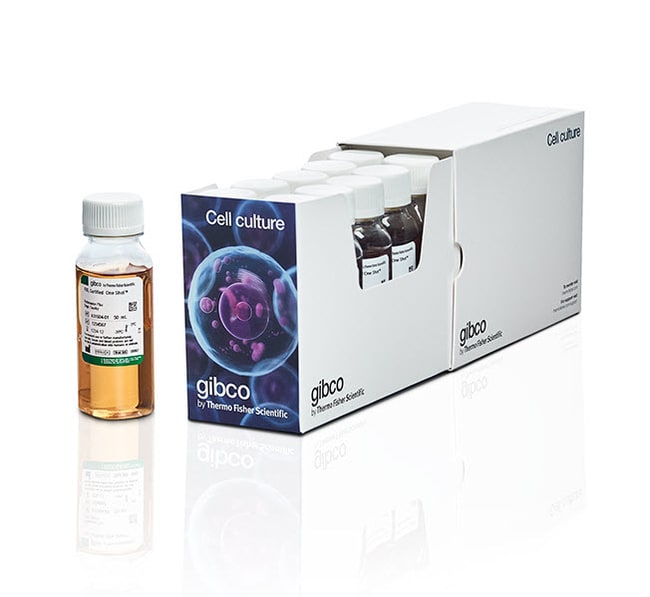
Gibco™
Sérum de veau fœtal, qualifié, États-Unis
Les sérums de veau fœtal Gibco offrent une excellente valeur pour la culture cellulaire de base, la recherche spécialisée etAfficher plus
Have Questions?
Modifier l'affichage

| Référence | Quantité | Format |
|---|---|---|
| A3160502 | 10 x 50 mL | One Shot |
| A3160501 | 50 mL | One Shot |
| 26140079 | 500 mL | Flacon |
Our improved Premium Fetal Bovine Serum (FBS) features enhanced specifications with unchanged stability, manufacturing, storage, and transport processes.
Référence A3160502
Les sérums de veau fœtal Gibco offrent une excellente valeur pour la culture cellulaire de base, la recherche spécialisée et les dosages spécifiques. Ils bénéficient de la confiance des chercheurs grâce à un soutien primé et d’une qualité constante, répondant à vos besoins en matière de recherche et de budget
Sérums Gibco : Qualité fiable pour une performance constante
Catégorie du sérum Gibco : Valeur plus élevée (performance)
• À utiliser pour la culture cellulaire générale avec des lignées cellulaires courantes
• Niveaux faibles d’endotoxine et d’hémoglobine
• Niveau d’endotoxine : < 10 UE/ml
• Niveau d’hémoglobine : < 25 mg/dl
• Origine : États-Unis
Les sérum Gibco sont
• Certifiés ISO 13485 et traités dans des installations homologuées par la FDA
• Marqués pour le diagnostic in vitro (conformes aux niveaux de contrôles de stérilité USP les plus élevés)
• Filtrés trois fois à 0,1 µm
• Le flacon Gibco est plus facile à utiliser dans la hotte, réduisant le risque de contamination et vous aidant à réaliser une culture cellulaire plus régulière
• L’autocollant détachable sur l’étiquette fournit une référence pratique permettant d’enregistrer le numéro de lot et la date de péremption dans le cahier de laboratoire
Sérums Gibco : Qualité fiable pour une performance constante
Catégorie du sérum Gibco : Valeur plus élevée (performance)
• À utiliser pour la culture cellulaire générale avec des lignées cellulaires courantes
• Niveaux faibles d’endotoxine et d’hémoglobine
• Niveau d’endotoxine : < 10 UE/ml
• Niveau d’hémoglobine : < 25 mg/dl
• Origine : États-Unis
Les sérum Gibco sont
• Certifiés ISO 13485 et traités dans des installations homologuées par la FDA
• Marqués pour le diagnostic in vitro (conformes aux niveaux de contrôles de stérilité USP les plus élevés)
• Filtrés trois fois à 0,1 µm
• Le flacon Gibco est plus facile à utiliser dans la hotte, réduisant le risque de contamination et vous aidant à réaliser une culture cellulaire plus régulière
• L’autocollant détachable sur l’étiquette fournit une référence pratique permettant d’enregistrer le numéro de lot et la date de péremption dans le cahier de laboratoire
For research use or further manufacturing use only. Serum and blood proteins are not for direct administration into humans or animals.
Spécifications
DescriptionSérum de veau fœtal, qualifié, format One Shot™, États-Unis
Concentration en endotoxines≤10 EU/mL
Concentration d’hémoglobine≤ 25 mg/dl
Gamme de produitsOne Shot
Pureté ou qualitéQualifié
Conditions d’expéditionCongelé
EspècesBovins
AgeFœtal
Pays d’origineÉtats-Unis
FormeLiquide
FormatOne Shot
Type de produitSérum de veau fœtal
Quantité10 x 50 mL
Serum TreatmentStandard (filtration stérile)
StérilitéStérile
Sterilization MethodTriple-filtered, 0.1 μm
Unit SizeEach
Contenu et stockage
Conditions de stockage : ≤-10°C
Conditions d’expédition : Congelé
Conditions d’expédition : Congelé