Search


Citations et références (17)
Invitrogen™
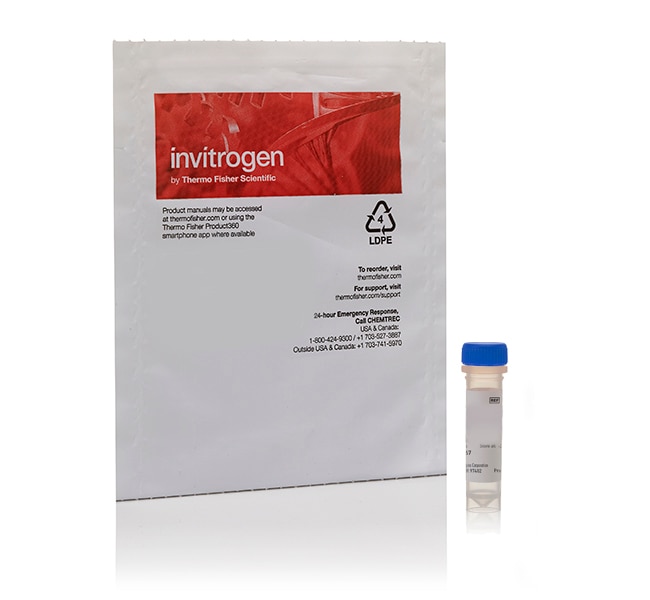
APF (Hydroxyl Radical, Hypochlorite or Peroxynitrite Sensor)
La fluorescéine d’aminophényl (APF) et la fluorescéine d’hydroxyphényl (HPF, H36004), deux indicateurs réactifs d’espèces d’oxygène (DRO) développés par T. Nagano,Afficher plus
| Référence | Quantité |
|---|---|
| A36003 | 470 μl |
Référence A36003
Prix (EUR)
1 144,00
Each
Quantité:
470 μl
Prix (EUR)
1 144,00
Each
La fluorescéine d’aminophényl (APF) et la fluorescéine d’hydroxyphényl (HPF, H36004), deux indicateurs réactifs d’espèces d’oxygène (DRO) développés par T. Nagano, offrent une plus grande spécificité et une plus grande stabilité que le diacétate de dididididichlorofluorescéine (H2DCFDA, D399). L’APF et le HPF montrent une réactivité non sélective limitée et une résistance relativement élevée à l’oxydation induite par la lumière. Ces deux nouveaux dérivés de la fluorescéine sont non fluorescents jusqu’à ce qu’ils réagissent avec le radical hydroxyle ou l’anion peroxynitrite ; l’APF réagit également avec l’anion hypochlorite. Utilisés ensemble, ces deux indicateurs ROS permettent de détecter sélectivement l’anion hypochlorite. Lors de l’oxydation, l’APF et l’HPF présentent une fluorescence vert vif (maxima d’excitation/émission ∼ 490/515 nm), ce qui les rend compatibles avec tout instrument capable de détecter la fluorescéine
Usage exclusivement réservé à la recherche. Ne pas utiliser pour des procédures de diagnostic.
Spécifications
Quantité470 μl
Méthode de détectionFluorescence
Type de produitROS Indicator
Unit SizeEach
Citations et références (17)
Citations et références
Abstract
Measuring reactive species and oxidative damage in vivo and in cell culture: how should you do it and what do the results mean?
Journal:Br J Pharmacol
PubMed ID:15155533
'Free radicals and other reactive species (RS) are thought to play an important role in many human diseases. Establishing their precise role requires the ability to measure them and the oxidative damage that they cause. This article first reviews what is meant by the terms free radical, RS, antioxidant, oxidative
Externally applied pressure activates pancreatic stellate cells through the generation of intracellular reactive oxygen species.
Journal:Am J Physiol Gastrointest Liver Physiol
PubMed ID:17761838
'Local tissue pressure is higher in chronic pancreatitis than in the normal pancreas. We reported recently that pressure application induces synthesis of extracellular matrix (ECM) and cytokines in pancreatic stellate cells (PSCs) and that epigallocatechin gallate (EGCG), a potent antioxidant, inhibits the transformation of PSCs from quiescent to activated phenotype
Fluorescence probes used for detection of reactive oxygen species.
Journal:J Biochem Biophys Methods
PubMed ID:16297980
'Endogenously produced pro-oxidant reactive species are essential to life, being involved in several biological functions. However, when overproduced (e.g. due to exogenous stimulation), or when the levels of antioxidants become severely depleted, these reactive species become highly harmful, causing oxidative stress through the oxidation of biomolecules, leading to cellular damage
Monitoring singlet oxygen and hydroxyl radical formation with fluorescent probes during photodynamic therapy.
Journal:Photochem Photobiol
PubMed ID:19508643
'Singlet oxygen (1O2) is the primary oxidant generated in photodynamic therapy (PDT) protocols involving sensitizers resulting in type II reactions. 1O2 can give rise to additional reactive oxygen species (ROS) such as the hydroxyl radical (*OH). The current study was designed to assess 3''-p-(aminophenyl) fluorescein (APF) and 3''-p-(hydroxyphenyl) fluorescein (HPF)
Myeloperoxidase is a key regulator of oxidative stress mediated apoptosis in myeloid leukemic cells.
Journal:Clin Cancer Res
PubMed ID:17875773
'PURPOSE: We reported previously that reactive oxygen species (ROS) are key mediators of apoptosis induced by a polyphenol, (-)-epigallocatechin-3-gallate (EGCG), in myeloid leukemic cells. This study aimed to further examine the mechanism of ROS-mediated apoptosis induced by EGCG and its relationship to the heme enzyme myeloperoxidase (MPO). EXPERIMENTAL DESIGN: We