Search


Citations et références (6)
Invitrogen™
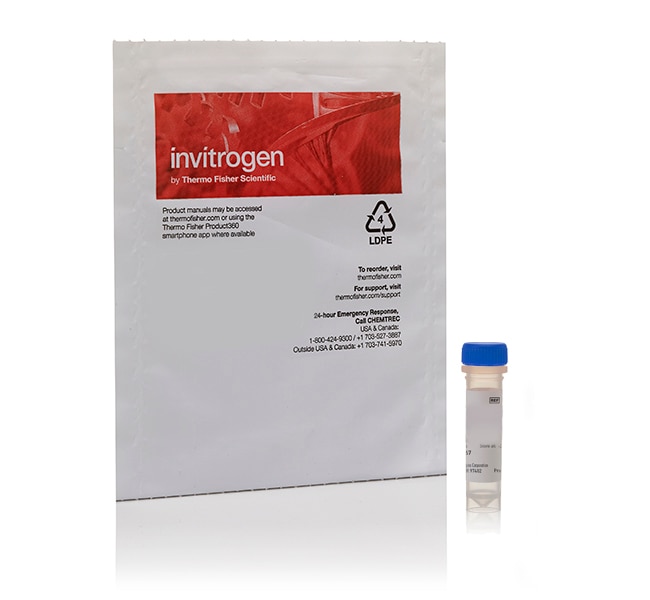
CellMask™ Plasma Membrane Stains
Les colorations pour membrane plasmique Invitrogen CellMask™ permettent un marquage rapide et uniforme de la membrane plasmique dans presque tous les types de cellules. Ces colorations agissent rapidement et peuvent être détectées en utilisant des ensembles de filtres pour microscope standard avec n’importe quel instrument d’imagerie.
Have Questions?
Modifier l'affichage

| Référence | Couleur |
|---|---|
| C37608 | Vert, Vert |
| C10046 | Rouge profond, Rouge profond |
| C10045 | Orange, Orange |
| C56129 | Proche infrarouge |
Référence C37608
Prix (EUR)
307,65
Precio exclusivo en nuestra web
362,00Économisez 54,35 (15%)
Each
Couleur:
Vert, Vert
Prix (EUR)
307,65
Precio exclusivo en nuestra web
362,00Économisez 54,35 (15%)
Each
Les colorations pour membrane plasmique Invitrogen CellMask™ permettent un marquage rapide et uniforme de la membrane plasmique dans presque tous les types de cellules. Ces colorations agissent rapidement et peuvent être détectées en utilisant des ensembles de filtres pour microscope standard avec n’importe quel instrument d’imagerie. En fonction du type de cellule et des conditions expérimentales, la coloration de la membrane plasmique durera de 60 à 90 minutes sans internalisation détectable, offrant suffisamment de temps pour la plupart des études dynamiques de cellules vivantes. Le colorant survit à la fixation, mais pas à la perméabilisation.
Les colorations pour membrane plasmique Invitrogen CellMask™ permettent un marquage rapide et uniforme de la membrane plasmique dans presque tous les types de cellules. Ces colorations agissent rapidement et peuvent être détectées en utilisant des ensembles de filtres pour microscope standard avec n’importe quel instrument d’imagerie. En fonction du type de cellule et des conditions expérimentales, la coloration de la membrane plasmique durera de 60 à 90 minutes sans internalisation détectable, offrant suffisamment de temps pour la plupart des études dynamiques de cellules vivantes. La coloration survit à la fixation, mais pas à la perméabilisation.
Caractéristiques des colorations pour membrane plasmique CellMask™ :
• Sensibilité : coloration spécifique et rapide de la membrane plasmique
• Rétention excellente : coloration durant entre 60 et 90 minutes
• Disponibles dans les canaux microscopiques les plus communs, vert, orange, rouge profond et proche infrarouge
Inconvénients des autres méthodes
La membrane plasmique étant un marqueur pratique des limites cellulaires, un certain nombre de sondes ont été utilisées pour la coloration de la membrane. En général, des colorants de nature lipophile sont utilisés ; toutefois, ils s’internalisent rapidement, offrant une fenêtre très étroite pour l’imagerie. Des lectines marquées de manière fluorescente, telles que l’agglutinine de germe de blé, ont également été utilisées comme colorants pour membrane plasmique. Les lectines conjuguées dépendent des sucres en surface de cellule pour la coloration et, par conséquent, colorent de façon non uniforme, avec une variation entre les types de cellules. Une coloration de membrane plasmique fiable est importante pour un éventail d’applications, notamment pour les dosages de translocation et la dynamique de membrane plasmique, et comme outil général pour l’identification cellulaire en imagerie et analyse traditionnelles et automatisées.
Fonctionnement des colorations pour membrane plasmique CellMask™
Les colorations pour membrane plasmique CellMask™ sont conçues pour offrir une coloration uniforme de la membrane plasmique dans un large éventail de types de cellules de mammifères ; de plus, elles sont lentes à s’internaliser, en particulier par rapport aux approches traditionnelles telles que le DiI, le DiO et l’agglutinine de germe de blé marquée.
Les colorations pour membrane plasmique CellMask™ sont des molécules amphipathiques contenant une partie lipophile pour un excellent chargement de la membrane et un colorant hydrophile chargé négativement pour “ancrer” la sonde dans la membrane plasmique. Les colorations pour membrane plasmique CellMask™ offrent de larges opportunités pour l’imagerie de cellules vivantes ; de plus, le schéma de coloration est conservé après la fixation avec du formaldéhyde, permettant des options d’imagerie multiparamètre supplémentaires. Toutefois, la coloration avec les colorants pour membrane plasmique CellMask™ ne survit pas à l’extraction de détergents et ne peut donc pas être utilisée conjointement avec des sondes qui nécessitent une perméabilisation.
Caractéristiques des colorations pour membrane plasmique CellMask™ :
• Sensibilité : coloration spécifique et rapide de la membrane plasmique
• Rétention excellente : coloration durant entre 60 et 90 minutes
• Disponibles dans les canaux microscopiques les plus communs, vert, orange, rouge profond et proche infrarouge
Inconvénients des autres méthodes
La membrane plasmique étant un marqueur pratique des limites cellulaires, un certain nombre de sondes ont été utilisées pour la coloration de la membrane. En général, des colorants de nature lipophile sont utilisés ; toutefois, ils s’internalisent rapidement, offrant une fenêtre très étroite pour l’imagerie. Des lectines marquées de manière fluorescente, telles que l’agglutinine de germe de blé, ont également été utilisées comme colorants pour membrane plasmique. Les lectines conjuguées dépendent des sucres en surface de cellule pour la coloration et, par conséquent, colorent de façon non uniforme, avec une variation entre les types de cellules. Une coloration de membrane plasmique fiable est importante pour un éventail d’applications, notamment pour les dosages de translocation et la dynamique de membrane plasmique, et comme outil général pour l’identification cellulaire en imagerie et analyse traditionnelles et automatisées.
Fonctionnement des colorations pour membrane plasmique CellMask™
Les colorations pour membrane plasmique CellMask™ sont conçues pour offrir une coloration uniforme de la membrane plasmique dans un large éventail de types de cellules de mammifères ; de plus, elles sont lentes à s’internaliser, en particulier par rapport aux approches traditionnelles telles que le DiI, le DiO et l’agglutinine de germe de blé marquée.
Les colorations pour membrane plasmique CellMask™ sont des molécules amphipathiques contenant une partie lipophile pour un excellent chargement de la membrane et un colorant hydrophile chargé négativement pour “ancrer” la sonde dans la membrane plasmique. Les colorations pour membrane plasmique CellMask™ offrent de larges opportunités pour l’imagerie de cellules vivantes ; de plus, le schéma de coloration est conservé après la fixation avec du formaldéhyde, permettant des options d’imagerie multiparamètre supplémentaires. Toutefois, la coloration avec les colorants pour membrane plasmique CellMask™ ne survit pas à l’extraction de détergents et ne peut donc pas être utilisée conjointement avec des sondes qui nécessitent une perméabilisation.
For Research Use Only. Not for use in diagnostic procedures.
Spécifications
CouleurVert, Vert
DescriptionColoration pour membrane plasmique verte CellMask™
À utiliser avec (équipement)Microscope confocal, microscope à fluorescence
Gamme de produitsCellmask
Quantité100 μL
Volume (métrique)100 μl
Type d’étiquetteColorant fluorescent
Type de produitColoration pour membrane plasmique
SubCellular LocalizationMembrane plasmique
Unit SizeEach
Contenu et stockage
Conserver au congélateur (–5° à –30°C) à l’abri de la lumière.
Foire aux questions (FAQ)
Can I use CellMask Plasma membrane stains or Alexa Fluor dye labeled wheat germ agglutinin to label the plasma membrane of my paraffin sections?
How long does the staining last with CellMask Plasma Membrane Stains?
What dyes are used to make the CellMask stains?
I want to label the plasma membrane of my cells, but there are several dyes to choose from. Which one should I use?
Citations et références (6)
Citations et références
Abstract
BAR scaffolds drive membrane fission by crowding disordered domains.
Journal:J Cell Biol
PubMed ID:30504247
'Cellular membranes are continuously remodeled. The crescent-shaped bin-amphiphysin-rvs (BAR) domains remodel membranes in multiple cellular pathways. Based on studies of isolated BAR domains in vitro, the current paradigm is that BAR domain-containing proteins polymerize into cylindrical scaffolds that stabilize lipid tubules. But in nature, proteins that contain BAR domains often
Altering integrin engagement regulates membrane localization of K
Journal:J Cell Sci
PubMed ID:31391240
How ion channels localize and distribute on the cell membrane remains incompletely understood. We show that interventions that vary cell adhesion proteins and cell size also affect the membrane current density of inward-rectifier K
Anchoring cortical granules in the cortex ensures trafficking to the plasma membrane for post-fertilization exocytosis.
Journal:Nat Commun
PubMed ID:31118423
Following fertilization, cortical granules exocytose ovastacin, a metalloendopeptidase that cleaves ZP2 in the zona pellucida surrounding mouse eggs to prevent additional sperm binding. Using high- and super-resolution imaging with ovastacin
Membrane Mechanical Properties Regulate the Effect of Strain on Spontaneous Electrophysiology in Human iPSC-Derived Neurons.
Journal:Neuroscience
PubMed ID:30817953
Peripheral nerves contain neuron fibers vital for movement and sensation and are subject to continuous elongation and compression during everyday movement. At supraphysiological strains conduction blocks occur, resulting in permanent or temporary loss of function. The mechanisms underpinning these alterations in electrophysiological activity remain unclear; however, there is evidence that
Novel Analytical Platform For Robust Identification of Cell Migration Inhibitors.
Journal:Sci Rep
PubMed ID:31969633
Wound healing assay is a simple and cost-effective in vitro assay for assessing therapeutic impacts on cell migration. Its key limitation is the possible confoundment by other cellular phenotypes, causing misinterpretation of the experimental outcome. In this study, we attempted to address this problem by developing a simple analytical approach