Search

Invitrogen™
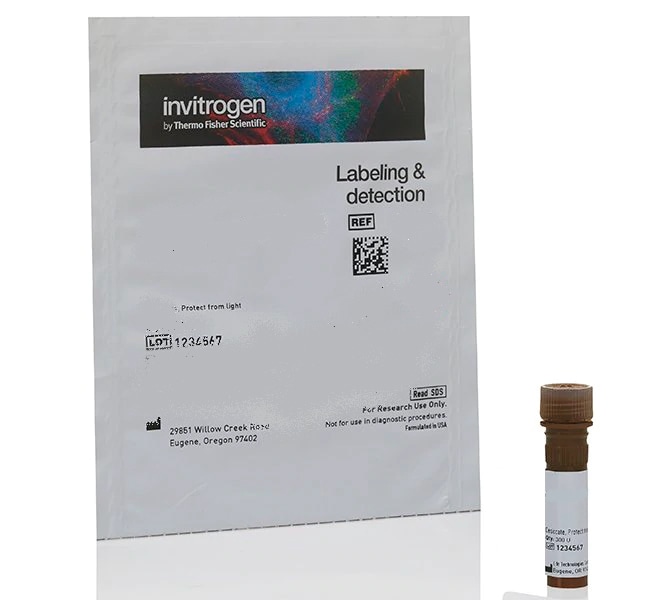
Lycopersicon Esculentum (Tomato) Lectin (LEL, TL), fluorescein (FITC)
Lycopersicon esculentum (Tomato) Lectin (LEL, TL), fluorescein (FITC), is a bright-green LEL-fluorophore conjugate. The tomato lectin LEL is widely usedAfficher plus
| Référence | Quantité |
|---|---|
| L32478 | 1 mg |
Référence L32478
Prix (EUR)
198,00
Each
Quantité:
1 mg
Prix (EUR)
198,00
Each
Lycopersicon esculentum (Tomato) Lectin (LEL, TL), fluorescein (FITC), is a bright-green LEL-fluorophore conjugate. The tomato lectin LEL is widely used as marker of blood vessels and microglial cells in rodents and in neuroscience research. It is a valuable tool in studies of rodent tumor angiogenesis and the tracing of neovascular development in xenograft models and brain research. LEL-FITC can be applied directly to tissue sections, or it can be introduced through intravascular perfusion for fluorescence detection.
View complete list of fluorescent dye-conjugated lectins ›
• Very bright FITC conjugate detected with traditional FITC filter set, Ex/Em: 495/515 nm
• Applications: immunofluorescence, glycobiology
• Sugar specificity: [GlcNAc] 1,3-N-acetylglucosamine
• Inhibiting/eluting sugar: chitin hydrolysate
• Blood group specificity: non-specific
• Unconjugated lectin molecular weight: 71 KDa.
• Immunofluorescence working concentration: 5–20 μg/mL
LEL is a very stable single-subunit glycoprotein containing ∼50 percent arabinose and galactose and may form multimeric aggregates in solution. It is provided at a 2 mg/mL concentration in 10 mM HEPES, 0.15 M NaCl, pH 7.5, 0.08% sodium azide, 0.1 mM Ca2+. If a precipitate forms upon long-term storage, warm to 37°C.
View complete list of fluorescent dye-conjugated lectins ›
• Very bright FITC conjugate detected with traditional FITC filter set, Ex/Em: 495/515 nm
• Applications: immunofluorescence, glycobiology
• Sugar specificity: [GlcNAc] 1,3-N-acetylglucosamine
• Inhibiting/eluting sugar: chitin hydrolysate
• Blood group specificity: non-specific
• Unconjugated lectin molecular weight: 71 KDa.
• Immunofluorescence working concentration: 5–20 μg/mL
LEL is a very stable single-subunit glycoprotein containing ∼50 percent arabinose and galactose and may form multimeric aggregates in solution. It is provided at a 2 mg/mL concentration in 10 mM HEPES, 0.15 M NaCl, pH 7.5, 0.08% sodium azide, 0.1 mM Ca2+. If a precipitate forms upon long-term storage, warm to 37°C.
For Research Use Only. Not for use in diagnostic procedures.
Spécifications
Type d’étiquetteClassic Dyes
Sous-type de protéineLectins
Quantité1 mg
Conditions d’expéditionApproved for shipment at Room Temperature or on Wet Ice
SourceTomato
ConjuguéFluorescein
FormeSolution
Unit SizeEach
Contenu et stockage
When stored at or below 2–8°C in the dark, the product is stable for 6 months after reciept.